Food
Where Thailand’s Premiumization Takes Root|Immersive Dining and Everyday Indulgences
Across Thailand’s food and beverage market, operators are finding ways to deepen special dining experiences and add a small sense of occasion to everyday meals. Premiumization, with its emphasis on the quality of ingredients, preparation, and service, can take both forms. Understanding the trend means looking at the situations in which guests perceive something as special, and the details that create that impression.
In December 2025, the U.S. Department of Agriculture published a report looking ahead to Thailand’s food and beverage trends for 2026. It offers a way to understand these two directions. Alongside dining experiences that engage the senses, it describes interest in individual meals and desserts that offer something special amid increasing pressure on household budgets. For restaurant buyers, the question is how to communicate a product’s quality through the guest experience.
For Special Dining Occasions: Provenance as Part of the Experience
The report describes a Bangkok event introducing the food culture of Northern Thailand. Regional dishes were combined with images, sound, and aromas to communicate the origins of their ingredients. Through the food, guests could learn about the region’s culinary culture.
The connection between the presentation and the plate matters here. When featuring an ingredient from a particular region, a restaurant can explain what grows there and how local people have traditionally prepared it. Giving aromas and sounds a role in that explanation helps connect the ingredient’s character with its regional background.
In settings where guests spend more time over a meal, restaurants can build an explanation around each course. Learning about preparation and culinary techniques helps guests notice differences that appearance alone may not reveal. Enhancing a dining experience also means carefully creating opportunities for guests to understand the food.
Everyday Dining: Distilling Quality into a Single Defining Detail
The same report also describes efforts to improve the quality of convenient meals. Even frozen and instant foods include examples of products developed around their ingredients and textures. These approaches respond to two needs at once: saving time and improving the quality of a meal.
It also identifies a tendency to choose an individual, higher-quality meal or a small dessert while limiting larger spending on dining out. The desire for something special extends to short, everyday meals.
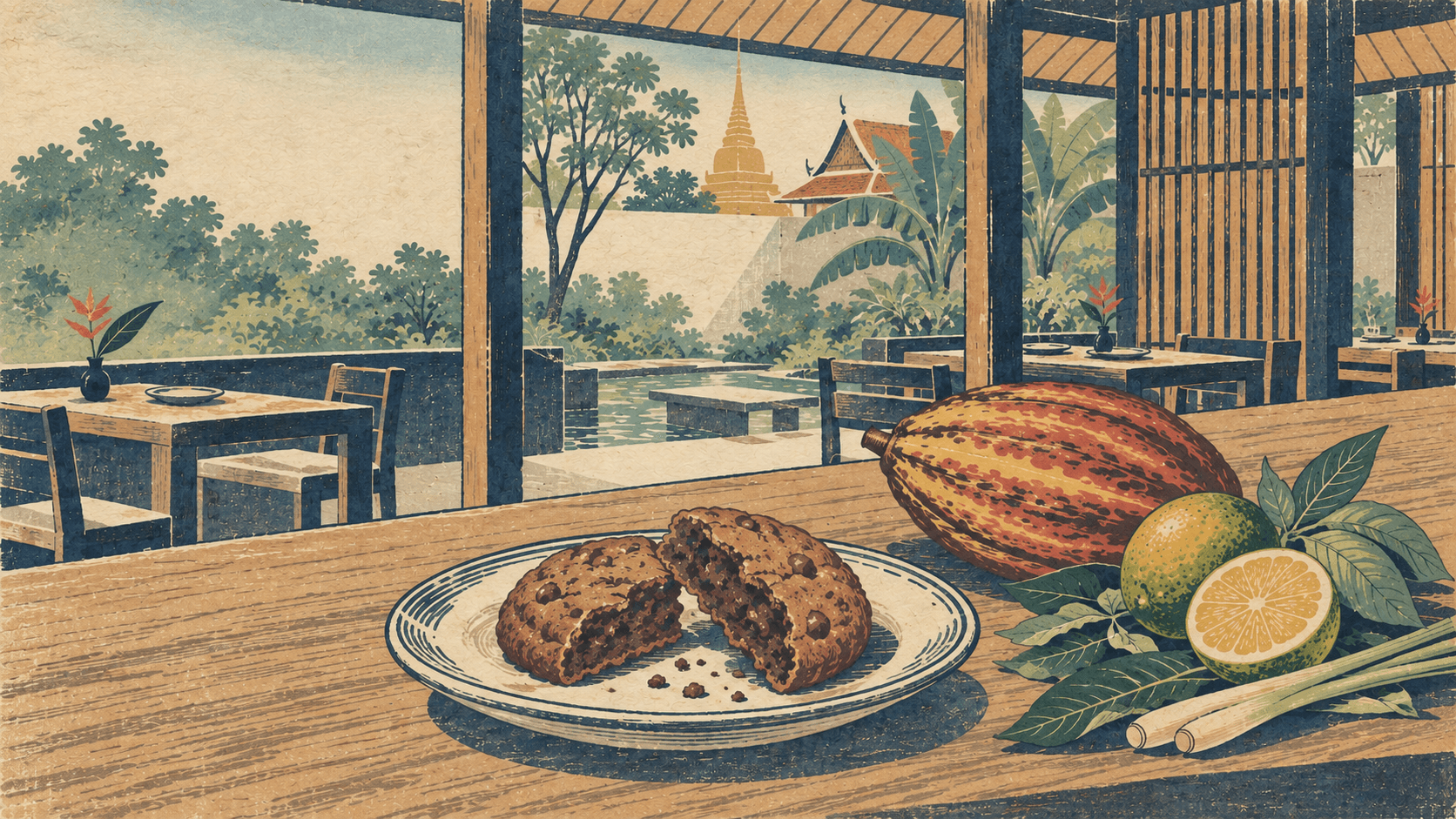
One example is a cookie that combines a crisp exterior with a soft center. Even a small confection can be designed to make a contrast in texture clearly perceptible.
In these settings, communicating one defining feature can help. Is it cacao from a particular origin, or a texture achieved through a baking technique? If guests can understand that detail from a brief explanation, the care and craft behind a single product become clearer.
Strategic Sourcing: Aligning Product Character with Time for Explanation
Distinguishing between these two directions makes sourcing decisions more concrete. For restaurants serving multi-course meals, buyers can consider products whose ingredients and production methods can be explained alongside the order and presentation of the dishes. Where guests stay only briefly, a useful question is whether a product’s defining feature is easy to communicate.
The same questions apply to sake and shochu. Buyers can trace ingredient selection and processing, then consider how those features relate to the restaurant’s food or theme. One approach may explain the role of koji or the characteristics of a distillation method in detail; another may focus on one feature of an ingredient. The explanation can be adapted to the time available.
This means considering what guests can understand as well as adding a description to a product. A statement such as “made with good ingredients” becomes more concrete when it explains how those ingredients are processed and how they contribute to the finished product. Buyers need to consider product characteristics and the way the restaurant communicates them together.
The October International Meetings: Observing How Food Experiences Communicate
The Annual Meetings of the International Monetary Fund (IMF) and the World Bank Group are scheduled to take place in Bangkok from October 12 to 18, 2026, at the Queen Sirikit National Convention Center. This will be Bangkok’s first time hosting the meetings since 1991, a gap of 35 years.
The Thai government plans to serve food that communicates Thai culture through local ingredients and regional specialties. Introducing the background of those ingredients is also planned as part of the food experience at this international gathering.
For restaurant operators, the period offers an opportunity to observe what visiting guests understand. Do ingredients explained in detail attract questions? Can a short description communicate the care behind a single dish? These responses can help restaurants reconsider their explanations and service.
Some dining experiences develop through time spent at the table; others add a small sense of occasion to daily life. In either case, a restaurant can choose where to concentrate its effort and make that work clear to guests. This offers a practical way to read Thailand’s premiumization.
Related articles
This article examines food culture and dining trends in Thailand for educational purposes. It is intended for readers aged 20 and over and does not promote the purchase or consumption of alcoholic beverages.
บทความนี้นำเสนอวัฒนธรรมอาหารและแนวโน้มการรับประทานอาหารในประเทศไทยเพื่อการเรียนรู้ สำหรับผู้อ่านที่มีอายุ 20 ปีขึ้นไป มิได้มีวัตถุประสงค์เพื่อส่งเสริมการซื้อหรือการบริโภคเครื่องดื่มแอลกอฮอล์
Discover the culture behind every bottle
We share brewery stories, tasting notes and the craft of koji & fermentation — for educational and cultural purposes only.
เราถ่ายทอดเรื่องราวจากผู้ผลิต บันทึกรสชาติ และศาสตร์แห่งโคจิและการหมัก — เพื่อการศึกษาและวัฒนธรรมเท่านั้น
Follow on Instagram Facebook