News
From Boom to Culture: Saburomaru Distillery’s Challenge for the Next 100 Years
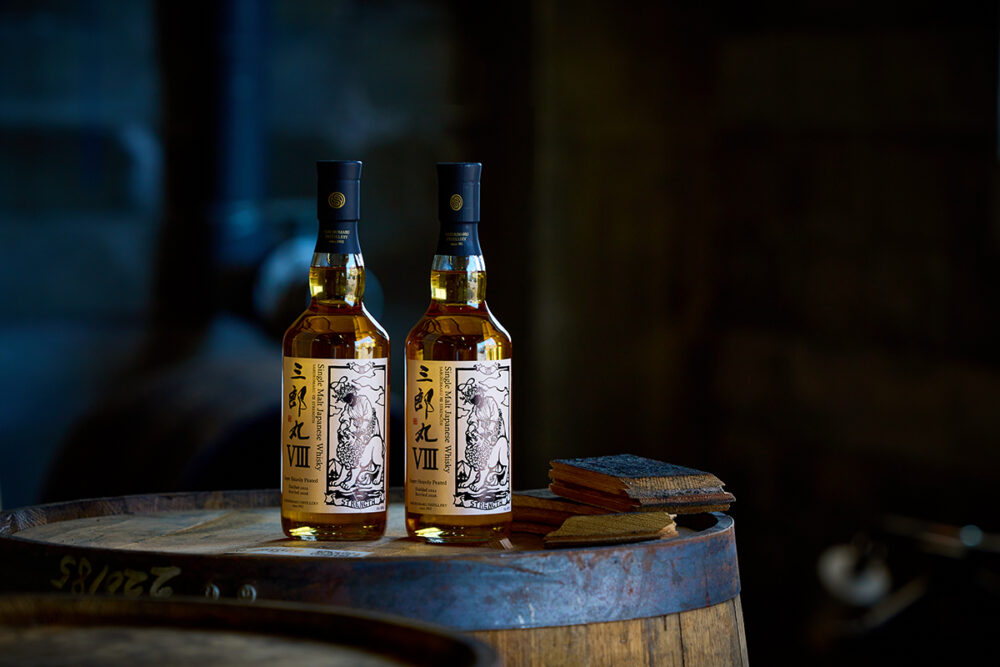
Saburomaru Distillery, operated by Wakatsuru Shuzo in Tonami, Toyama Prefecture, received the PREMIUM JAPAN AWARD 2026. Published by Premium Japan on August 6, 2026, the article profiles Wakatsuru Shuzo President Takahiko Inagaki and his efforts to build the foundations needed for Japanese whisky to develop from a global boom into a culture that can continue for the next 100 years.
The Challenge Beyond the Japanese Whisky Boom
Japan had only around ten whisky distilleries in 2013. In just over a decade, that number has grown to more than 100. The rapid expansion has also exposed structural challenges, including shortages of production equipment, casks, skilled craftspeople and training opportunities.
Inagaki’s objective is not limited to the success of one producer. He argues that Japanese whisky can become a lasting culture only when the wider industry has the infrastructure and relationships required to grow together.
Wakatsuru Shuzo’s Legacy and the Revival of Saburomaru
Wakatsuru Shuzo was founded in 1862 and has brewed sake in the Tonami Plain for more than 160 years. The company began making whisky in 1952, when post-war rice shortages limited sake production. Its first release, Sunshine Whisky, followed in 1953, carrying a wish for brighter times in post-war Japan.
After working for an IT company in Tokyo, Inagaki returned to Toyama when whisky represented only about five per cent of Wakatsuru Shuzo’s sales. A turning point came when he discovered malt whisky distilled by his great-grandfather in 1960. The experience convinced him that whisky could connect generations by preserving the work and time of people who were no longer present.
The historic spirit was released as Saburomaru 1960. Demand exceeded the planned quantity by more than four times, helping establish the Saburomaru single-malt identity. Proceeds from the release, together with crowdfunding support, enabled the company to restore and modernise the distillery.
ZEMON: Regional Craftsmanship Applied to Whisky
A central symbol of the revival is ZEMON, completed in 2019 as the world’s first cast-metal pot still. It was jointly developed with Oigo Seisakusho using the casting knowledge of Takaoka copperware, a craft tradition maintained in Toyama for more than 400 years.
The copper-and-tin alloy and cast construction make it possible to create a thicker still with improved durability and maintenance characteristics, while reducing manufacturing time and cost. Inagaki emphasises that ZEMON was not developed only for Saburomaru. It was also intended to give Japanese distilleries another domestic option for sourcing essential equipment.
Infrastructure for the Wider Whisky Industry
Saburomaru’s Re:COOPERAGE workshop repairs, rebuilds and rechars casks. As cask prices rise and the number of skilled coopers declines, the workshop helps prevent mature spirit from being lost through damaged barrels. It also accepts work from distilleries across Japan and contributes to training the next generation of craftspeople.
In 2021, Saburomaru also helped establish the independent bottler T&T TOYAMA. By purchasing, maturing, blending and presenting spirit from different producers, the bottling business supports diversity, access to market and cooperation among craft distilleries.
An Open Distillery and the Japanese Whisky Passport
Saburomaru welcomes visitors to learn about its history and production process. The site includes a shop, tasting space and restaurant, creating a place where whisky, local water, food and regional culture can be experienced together.
The Japanese Whisky Passport “Copper Stamp Book” extends that idea nationwide. The project introduces 28 craft distilleries and encourages travellers to visit them and collect a copper stamp at each location. It connects whisky with architecture, craftsmanship, food and the culture of different regions.
Building the Next 100 Years
The Premium Japan article presents Saburomaru’s award as recognition of a broader vision: preserving inherited knowledge while creating shared equipment, skills, repair services, distribution networks and opportunities for people to visit distilleries. The number of Japanese distilleries has increased, but Inagaki’s focus is now on how the industry can be nurtured so that Japanese whisky remains part of the country’s culture for generations to come.