Stories Behind the Bottle
Save Wines of the Loire: What Does It Mean to Save a Vineyard?
The family bid did not win. The estate did not disappear. Between those facts lies a harder question about what living heritage really is.
In early 2026, the words “Save Wines of the Loire” gathered around one estate in Savennières: Domaine du Closel | Château des Vaults. Three members of the family sought to keep it within a lineage that had shaped the property for generations. Their proposal did not prevail. On 5 May 2026, the Angers Judicial Court selected a takeover offer led by Ivan Massonnat, founder of Domaine Belargus.
That outcome prevents an easy ending. The family takeover proposal did not prevail, but Massonnat later said that the two family branches remained owners of the land while he took over the operating business. The useful story is therefore not a rescue slogan. It is the relationship between owning a place, controlling its business and keeping its work alive.
A Landscape Older Than Its Present Name
Domaine du Closel traces its vineyard history to 1495. At the centre of the property stands Château des Vaults, a classical 17th-century building surrounded by an agricultural park, old trees and a former kitchen garden. Today the estate extends across fourteen hectares of vines on hillsides and wooded gullies beside a branch of the Loire.
The physical setting matters because it is more than scenery. Savennières lies on the Loire’s right bank, where Chenin grows over schist and other volcanic and metamorphic rocks. Vineyard parcels, wooded coulées, water and parkland form one working landscape. A transfer of ownership can move legal control quickly. None of these relationships can be rebuilt quickly.
Five Generations of Women, One Long Work
The estate’s official history records five generations of women inheriting the property after the French Revolution. Zélie Brichet shaped the agricultural park. Marie Louise expanded the château’s cultural role. Marque de Las Cases passed the property to her niece Michèle de Féligonde, who developed the vineyard, formalised the operating company and chaired the Savennières appellation.
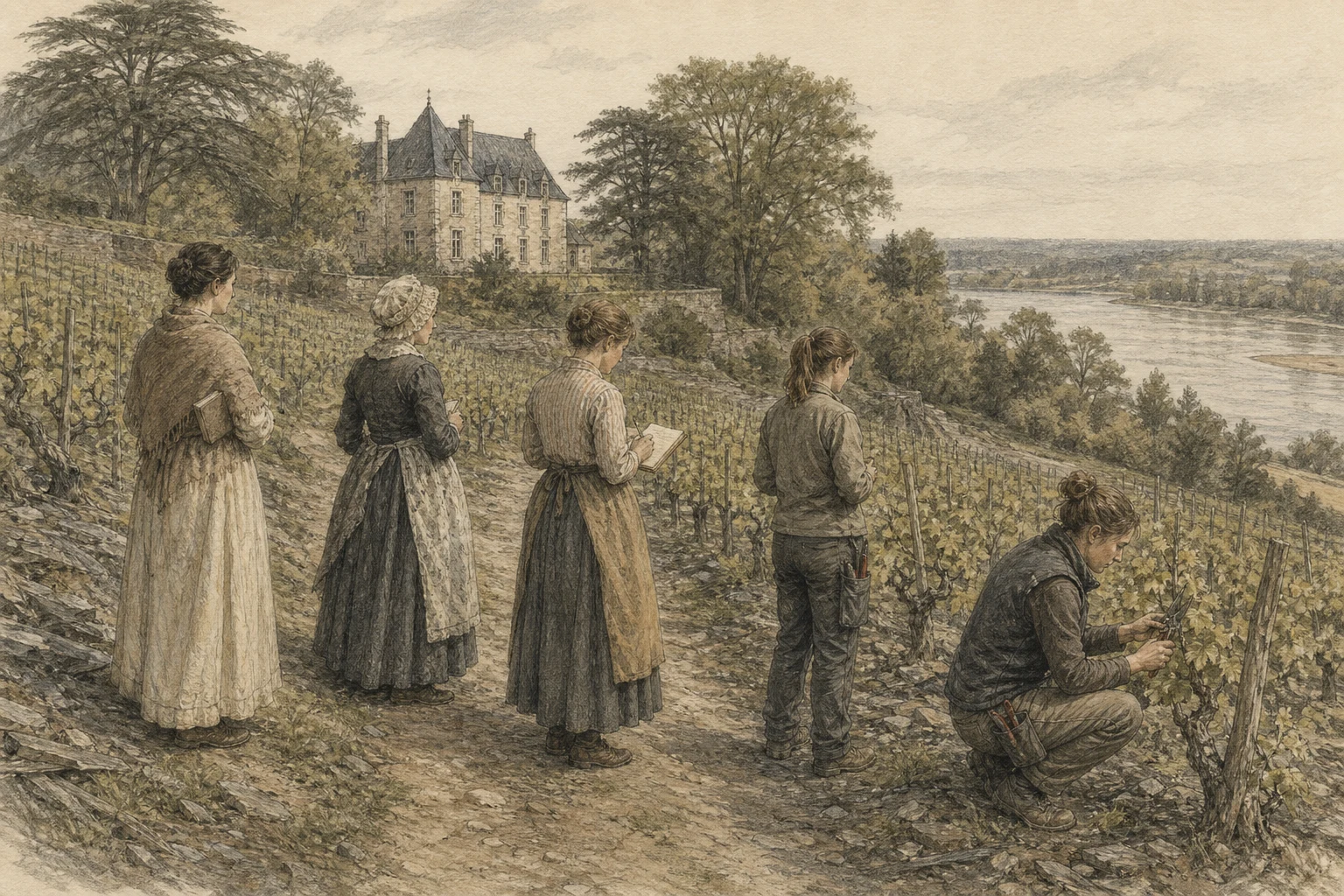
Évelyne de Pontbriand continued that work from 2001 to 2024. Under her direction, the estate was certified organic in 2007 and describes its biodynamic practice from 2015. She also built a young technical team and worked collectively within Savennières. The inheritance was therefore not only a family tree. It included farming choices, institutions and people capable of carrying them forward.
The Crisis Was Not in the Soil
Évelyne de Pontbriand died in November 2024. La Revue du vin de France reported that a governance deadlock followed between the family branches that jointly held the estate’s land and buildings. An external administrator was appointed. Despite the work of the team, the company entered court-supervised reorganisation proceedings (redressement judiciaire) in the summer of 2025 and four takeover offers were eventually submitted.
Nothing in that sequence began with an agricultural failure of Chenin, schist or the vineyard’s history. The reported governance impasse preceded the administrator’s appointment and the company’s legal proceedings. That distinction matters. A recognised vineyard can remain agriculturally alive while the organisation responsible for its operation becomes fragile. Heritage is not protected by reputation alone.
A Campaign That Did Not Decide the Result
Amaury, Mayeul and Aloïs Bazin de Jessey, three nephews of Évelyne de Pontbriand, returned with a family takeover proposal. A public support campaign accompanied their bid. It brought unusual attention to a question normally confined to lawyers, banks and courts: who should be allowed to continue a vineyard’s history?
The court selected a different proposal. On 5 May 2026, it approved the transfer plan led by Ivan Massonnat, with Domaine Belargus as the transferee under the plan. The family campaign was meaningful, but it did not determine the legal outcome. Saying so clearly respects both the effort and the result.
What Continued, and What Changed?
Massonnat stated that Domaine du Closel would retain its identity and autonomy rather than be absorbed into Belargus. He said the five existing employees would be retained and that he would manage alongside Antoine Fardeau, the estate’s technical director. Checked on 8 August 2026, the estate’s current self-published site identifies Fardeau as head of cultivation and presents the vineyard as an active fourteen-hectare domaine.
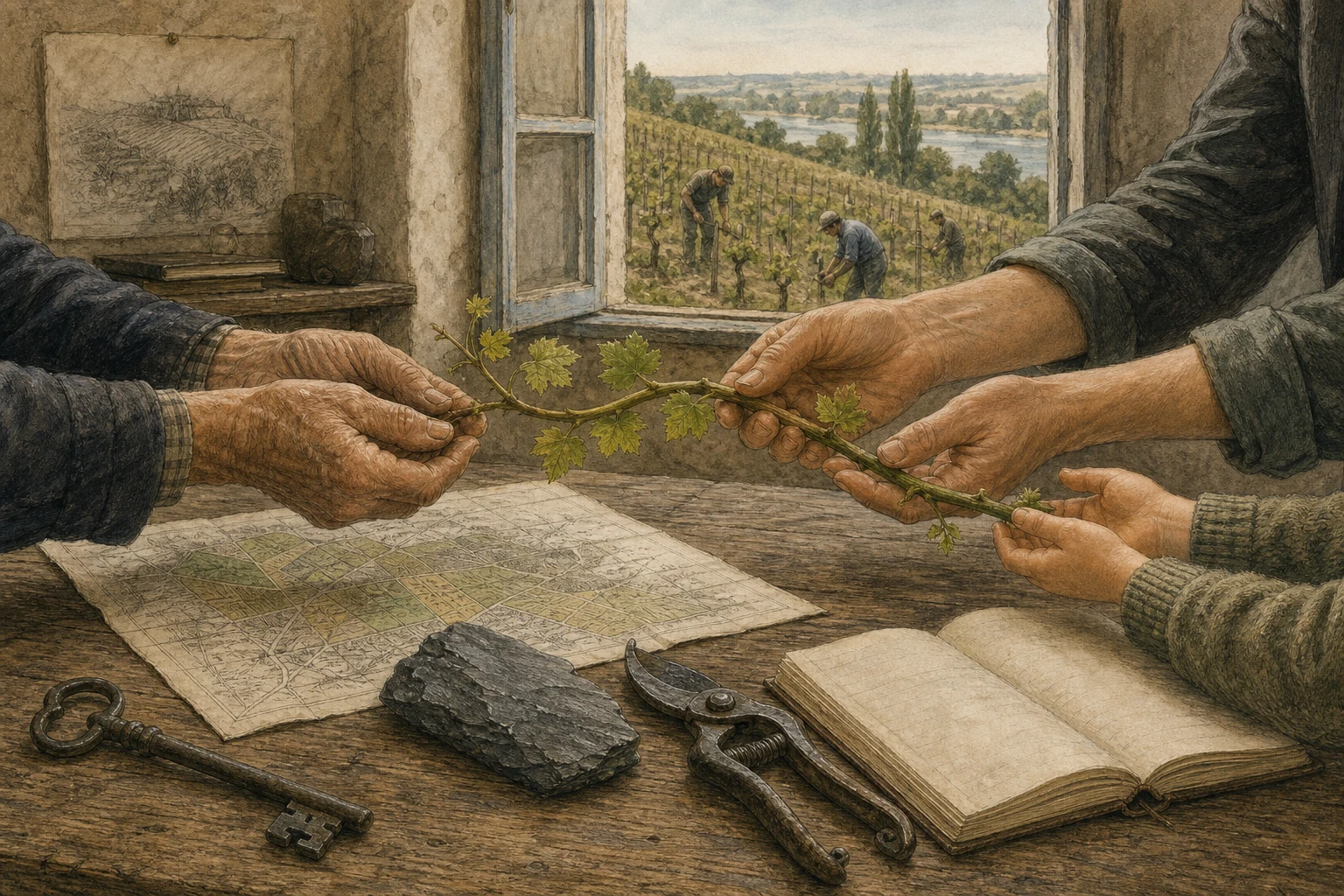
The new structure separates several forms of continuity. Control of the operating business passed under the court-approved plan. In Massonnat’s account, the two family branches remained owners of the land. The estate’s name and Fardeau’s technical role continued, while retention of the full team and future autonomy remain reported commitments. Their fulfilment will be visible over time in staffing, parcel work, farming and decisions in the cellar.
Three BG stories widen the Loire context: Patrick Baudouin: The Long Return to Chenin, Muscadet Renaissance and The Wines of the Loire Valley.
To save a vineyard is therefore not one action. It can mean preserving ownership, but it can also mean protecting the soil, keeping a team intact, retaining a name, and allowing hard-won knowledge to remain attached to a place. Domaine du Closel shows why these forms of continuity can overlap without being identical.
Source note: Estate history, the five-generation inheritance, present area and farming chronology follow the estate’s self-published current history and overview. The 5 May 2026 ruling follows the PwC legal deal note; PwC advised Massonnat in the transaction. Governance and the family proposal were checked against La Revue du vin de France. The distinction between the transferred operation and continuing family land ownership follows Massonnat’s interview with Terre de Vins. Autonomy and retention of all five employees are reported commitments, not guarantees. Sources checked 8 August 2026.
This article presents vineyard history, succession and governance for educational and cultural purposes. It is not intended to advertise alcoholic beverages or encourage their purchase or consumption. It is intended for readers aged 20 and over.
บทความนี้นำเสนอประวัติของไร่องุ่น การสืบทอด และการบริหารจัดการ เพื่อการศึกษาและวัฒนธรรมเท่านั้น มิได้มีวัตถุประสงค์เพื่อโฆษณา หรือส่งเสริมการซื้อหรือการบริโภคเครื่องดื่มแอลกอฮอล์ บทความนี้จัดทำขึ้นสำหรับผู้อ่านอายุ 20 ปีขึ้นไป
Discover the culture behind every bottle
We share brewery stories, tasting notes and the craft of koji & fermentation | for educational and cultural purposes only.
เราถ่ายทอดเรื่องราวจากผู้ผลิต บันทึกรสชาติ และศาสตร์แห่งโคจิและการหมัก | เพื่อการศึกษาและวัฒนธรรมเท่านั้น
Follow on Instagram Facebook