Drink
Why does Japanese sake need an art bottle? Romero Britto brings color to SAKE HUNDRED “Byakko,” the brand’s first sake aged for five years.
SAKE HUNDRED
A new kind of value for sake through bottle design.
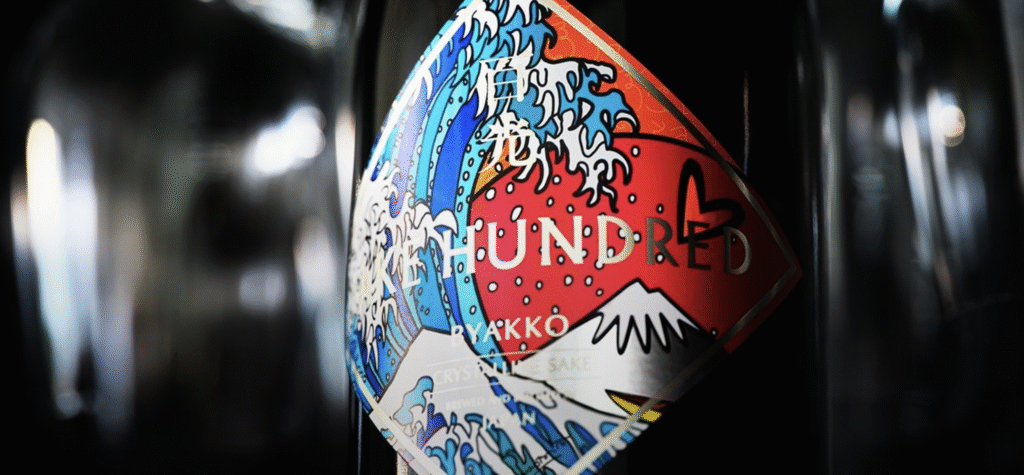
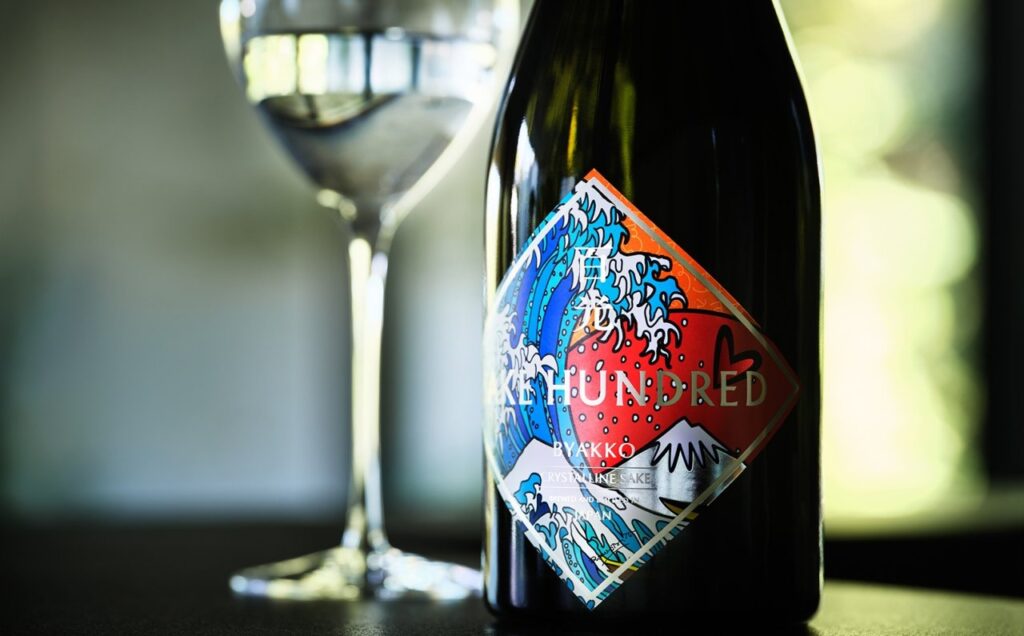
On November 5, 2025, SAKE HUNDRED released a special bottle, created in collaboration with world-renowned pop artist Romero Britto. The vivid artwork, inspired by Hokusai Katsushika’s famous print “The Great Wave off Kanagawa” from the series “Thirty-six Views of Mount Fuji,” turns the bottle into a work of art. But why does sake need an art bottle now? The answer lies in creating a completely new kind of value: making an emotional experience last.
Text by TSUCHIDA Takashi
Making emotion last forever: the art bottle as an answer
“Art, on the other hand, keeps touching our senses through sight and form. When these two come together, the emotion you feel in that moment can remain forever as a visual memory,” he says.
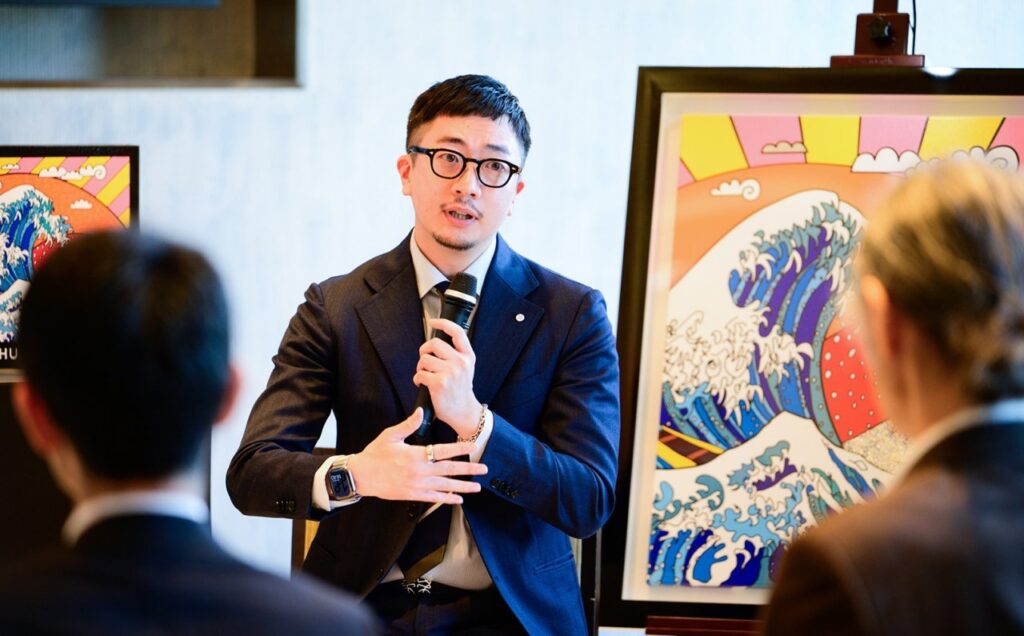
At a media presentation held in Tokyo on November 4, Ryushi Ikoma, brand owner of SAKE HUNDRED and CEO of Clear, spoke these words. For him, this bottle becomes something irreplaceable that marks the special moments in a person’s life. That is what SAKE HUNDRED sees as the true value of an art bottle.
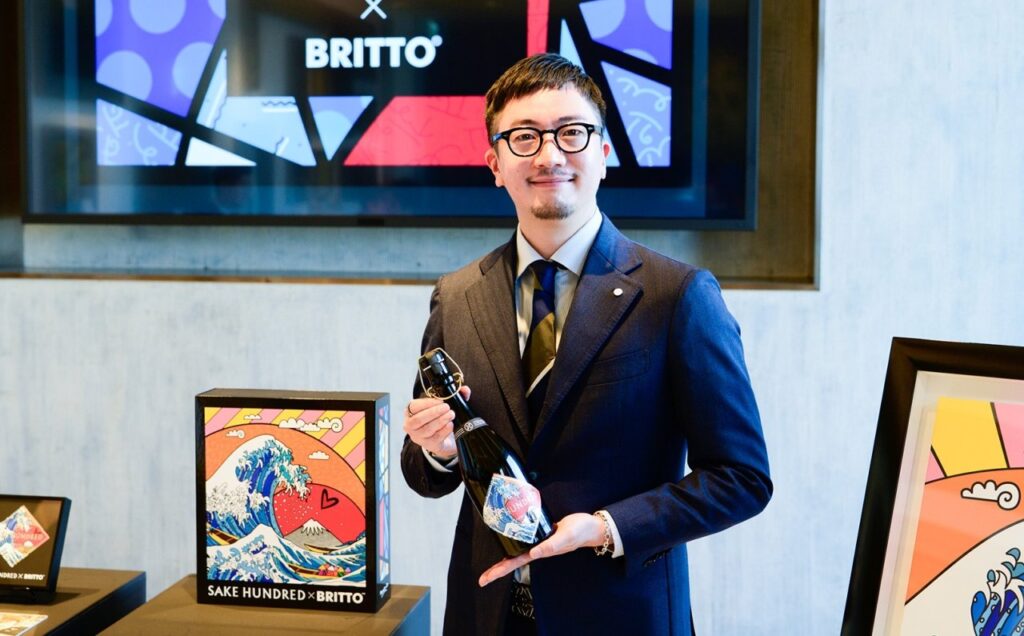
CEO Ryushi Ikoma took the stage at the media presentation held at The Prince Gallery Tokyo Kioicho.
“The pure white label of SAKE HUNDRED is a finished design, but at the same time I always thought it could also be a canvas. I kept thinking about how we could collaborate with someone who would use that white diamond-shaped label as a canvas and express their creativity in a meaningful way.”
This time, the person who brought color to that white canvas was none other than world-famous pop artist Romero Britto.
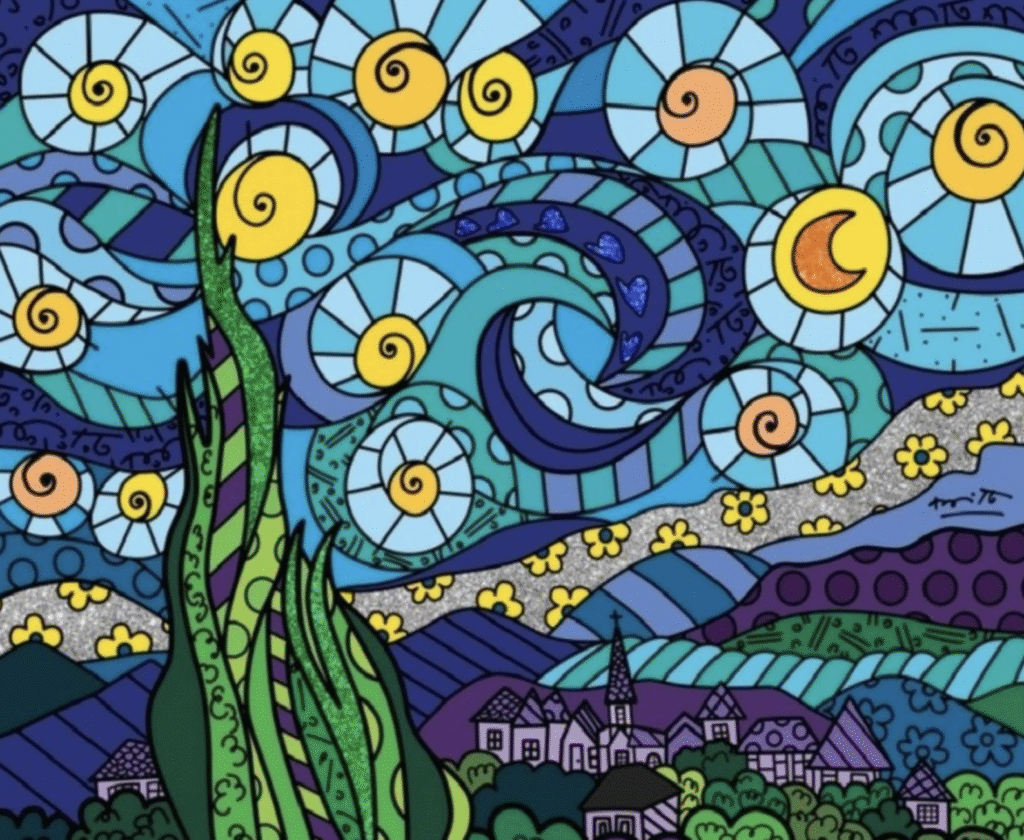
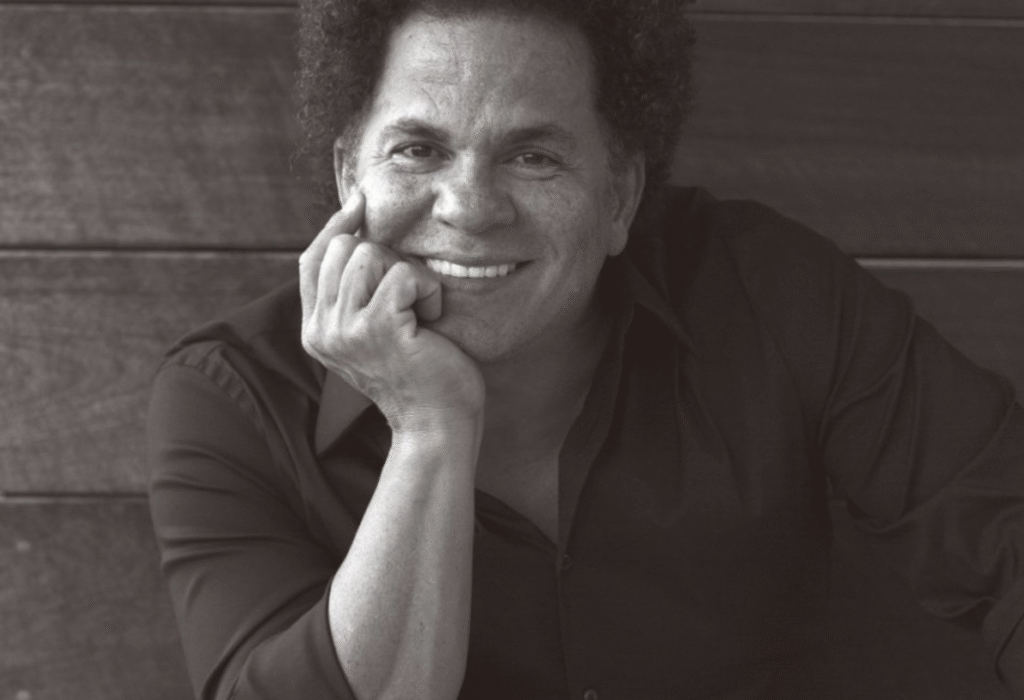
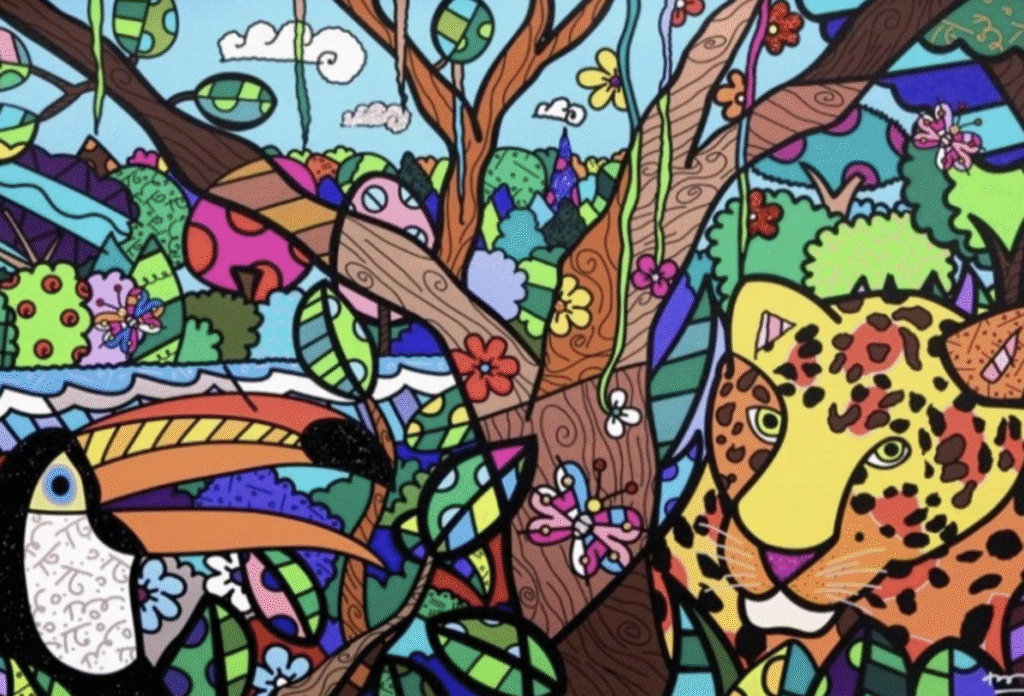
Romero Britto is a world-renowned pop artist from Brazil who is based in Miami. He paints the positive energy of love, dreams, hope, and happiness using bright colors and dynamic compositions. The New York Times once famously described his style as “as if Matisse, via Hello Kitty, painted Picasso.” His works captivate celebrities around the world, including King Charles III of the British royal family, Leonardo DiCaprio, and Elton John. His original paintings sell for tens of millions of yen and have been shown at the Louvre Museum and in more than 120 countries. He served as the official artist for the 2010 FIFA World Cup and as an ambassador for the 2016 Rio de Janeiro Olympic Games, and continues to bring positive change to society together with more than 250 charitable organizations.
The collaboration began with a fateful encounter. At a party held during Britto’s visit to Japan last year, one of the guests brought a bottle of “Byakko” as a gift.
CEO Ikoma explains why he felt such a deep connection with Britto’s work.
“Romero Britto’s works shine on people like the sun and give them the strength to look forward. I resonated deeply with that brightness. Hokusai constantly pursued new styles, and Britto keeps lighting up people’s hearts with his positive energy. By bringing together the art of these two artists and the medium of Japanese sake, we wanted to send this ‘cultural resonance’ out into the world.”
Romero Britto himself has also shared his deep feelings for this project.
< https://www.youtube.com/embed/XdfK-tfmhlE?si=f54Cp5n2F7dSCpnC >
A five-year-aged version of Byakko
The sake that carries Romero Britto’s artwork this time is another special creation: the first aged version of “Byakko.”
The sake he is talking about, “Byakko ROMERO BRITTO – Hokusai Edition –,” is a specially selected 2020 vintage taken from “Byakko,” a SAKE HUNDRED label.
“In this vintage, the acidity stood out in a very good way. Sake with firm acidity keeps a clear outline even after aging and is better suited to long-term maturation,” he explains.
Feeling the potential for aging from the very beginning, CEO Ikoma set aside a small portion of the sake. Over five years, he carefully planned the maturation in two temperature zones: below freezing and at 5°C. After repeated tastings, he finally decided, “Now is the moment.”
“The moment I taste the sample is always the most stressful. If I think, ‘This isn’t good enough,’ then we must not sell it. There are actually products we have shelved in the past. But when I tasted this vintage of ‘Byakko,’ it was unbelievably good. The clarity of Byakko and the complexity from aging matched beautifully. I felt sure that this was something we could offer with full confidence.”
That striking clarity is made possible by rice polished down to an extreme level, with a rice-polishing ratio of 18%.
“We spend about 200 hours polishing the rice. With a normal rice-polishing machine, the grains would break from the rotation, so we use a method that sprays a large amount of industrial diamonds to gently shave the rice. Using diamond to polish rice is an extremely luxurious approach,” he says.
The rice used is “Dewasansan,” grown with organic farming methods. This variety naturally brings out the original umami and sweetness of rice. Farmers grow it with great care, pulling out weeds by hand one by one. However, due to generational changes and other issues among producers, it has now become very difficult to obtain this rice.
*From 2024, the sake rice used for “Byakko” has been changed to the variety “Yukimegami.”
This special vintage shows different expressions depending on the serving temperature.
“In fact, the balance of Byakko’s clarity, sweetness, umami, and acidity becomes very even at around 5°C.”
At the same time, the complexity gained through aging shows its true value as the temperature rises.
“What is fascinating is the way the flavor spreads when the sake reaches a temperature close to room temperature, in the low teens. Many so-called fruity sakes can feel heavy or cloying as they warm up, but that did not happen here. Because the aging gives the sake a certain three-dimensional structure, the taste stays very clear even as the temperature rises.”
If stored in the right environment, sake can develop further through aging.
Resonance across time, and into the future
A “SAKE HUNDRED Special Pairing Dinner” was planned in Tokyo between late July and early August 2026. The event was planned to coincide with Romero Britto’s visit to Japan. The planned lineup included SAKE HUNDRED labels such as “Gengai” and “Reihi.”
“Through the sake and the artwork, we hope to create chances to meet again with those who will help spread the value of what we do,” Ikoma says.
It will be a special moment where art and sake, two cultures, intersect. In this experience, three elements—objects, experiences, and people—come together as one.
SAKE HUNDRED consistently values sharing the depth and beauty of Japanese culture with the world through sake. The brand has supported major events such as the Cannes International Film Festival, the Italy Pavilion at the Osaka Expo, and large art fairs like Art Fair Asia Fukuoka and Tokyo Gendai, and has collaborated with contemporary Japanese painter Hiroko Otake. Through these efforts, they have linked the cultural value of art and Japanese sake.
CEO Ikoma shares his feelings about this project.
“Shining a positive light on people’s lives—that is the very heart of the SAKE HUNDRED brand message.”
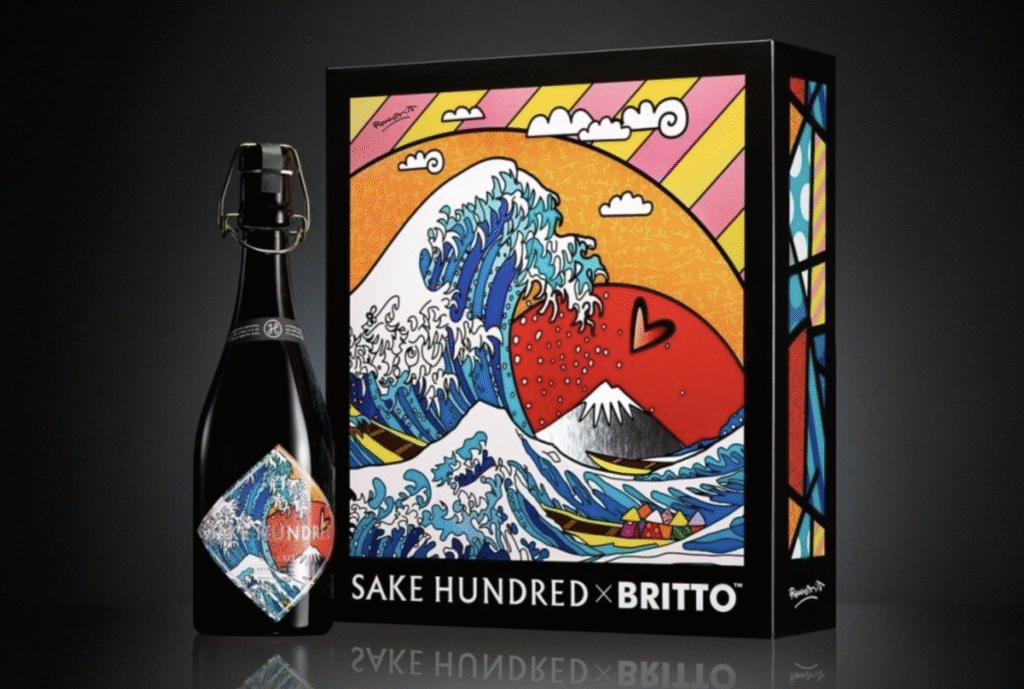
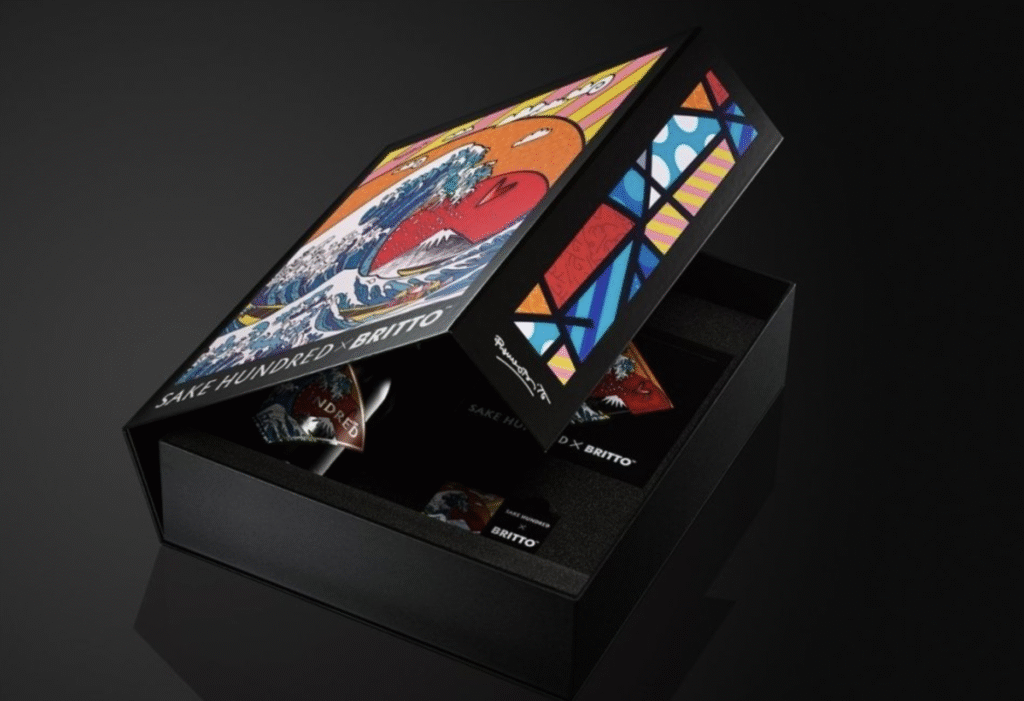
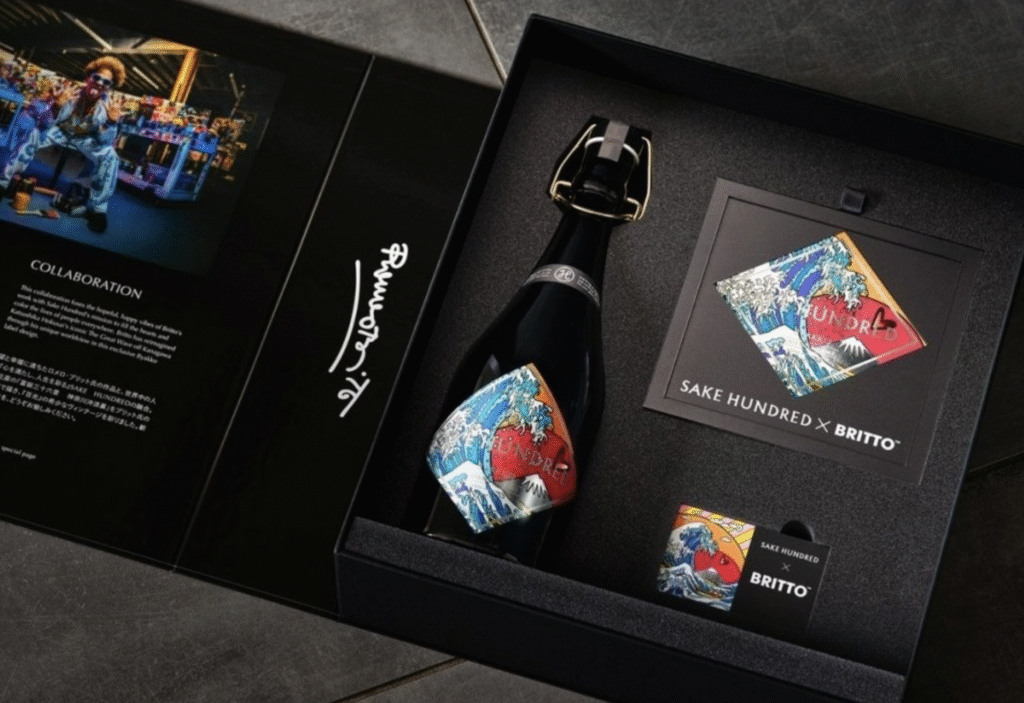
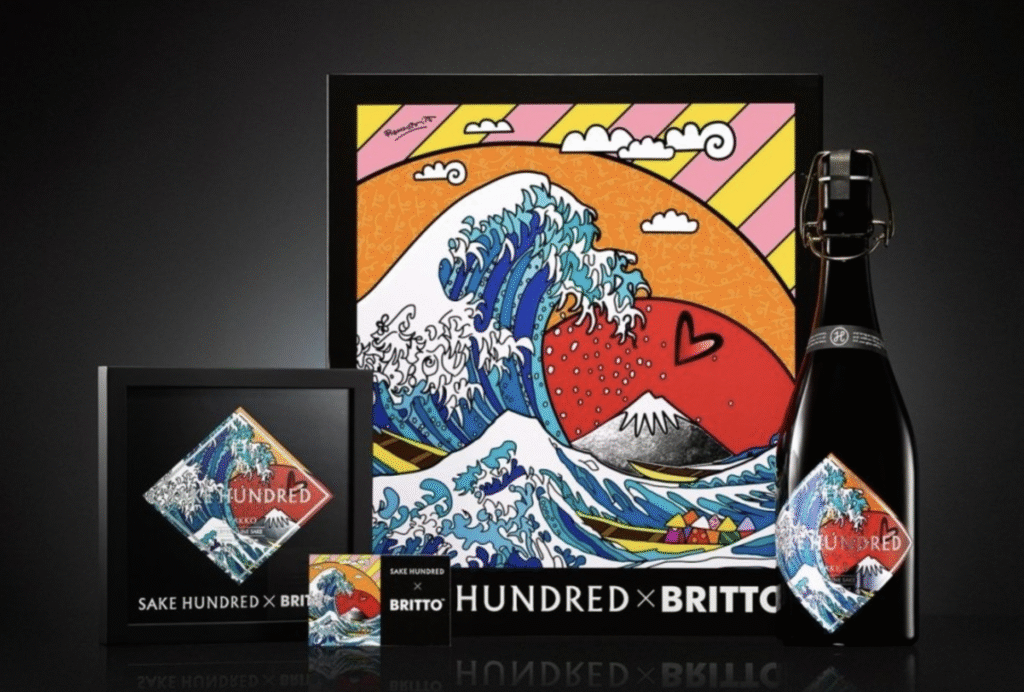
Byakko ROMERO BRITTO – Hokusai Edition –
Rice | 100% Dewasansan rice from Yamagata Prefecture (organically grown)
Rice-polishing ratio | 18% (polished for 200 hours using industrial diamonds)
Alcohol | 15.7%
Brewed in | 2020
Aging | 5 years (two-step maturation: below freezing and at 5°C)
Producer | Tatenokawa Shuzo (Yamagata Prefecture)
Volume | 720 ml
Quantity | 100 bottles worldwide
Editor’s note: The Thailand price and sales-channel information from the original publication has been removed.
Discover the culture behind every bottle
We share brewery stories, tasting notes and the craft of koji & fermentation — for educational and cultural purposes only.
เราถ่ายทอดเรื่องราวจากผู้ผลิต บันทึกรสชาติ และศาสตร์แห่งโคจิและการหมัก — เพื่อการศึกษาและวัฒนธรรมเท่านั้น
Follow on Instagram Facebook