Stories Behind the Bottle
Domaine Lionnet: What It Means to Inherit a Hillside
At Cornas, succession is measured in names, old vines, new plantings and the decisions made between them.
In 2022, Lucas joined Domaine Lionnet full-time. The estate’s official record places that arrival beside another quiet change on the same hillside: an extension of Chaillot was planted in 2022 and 2023. A new generation entered the work while a new generation of vines entered the ground.
That pairing matters at an estate whose family history in Cornas reaches back to 1575. The phrase heroic viticulture captures the physical effort of steep terraces, but the more revealing story is less theatrical. It lies in the choices that allow approximately 4.5 hectares to pass forward without being frozen in the past.
The Names the Estate Can Document
The family’s account begins with a long date, 1575, but the modern succession is told through specific names. Michel, Corinne’s grandfather, was followed by her father, Pierre. In 2003, Corinne Lionnet and her husband, Ludovic Izerable, took over the family estate. From the 2022 vintage, their son Lucas joined full-time after completing a viticulture and oenology diploma and two years of work-study experience at Domaine Jean-Louis Chave.
The record does not need an invented hero for every century. Its strength is that the present handovers are concrete. Each person received vines already shaped by someone else’s time, then had to decide what should remain and what should change.
A Village That Refuses Anonymous Scale
Cornas is unusually precise as an origin. Its controlled appellation covers still red wine made only from Syrah, and the harvest, winemaking and ageing take place within the small village of Cornas. The official specifications require grapes to be picked by hand and protect the walls, terraces and other structures that hold the slopes together.
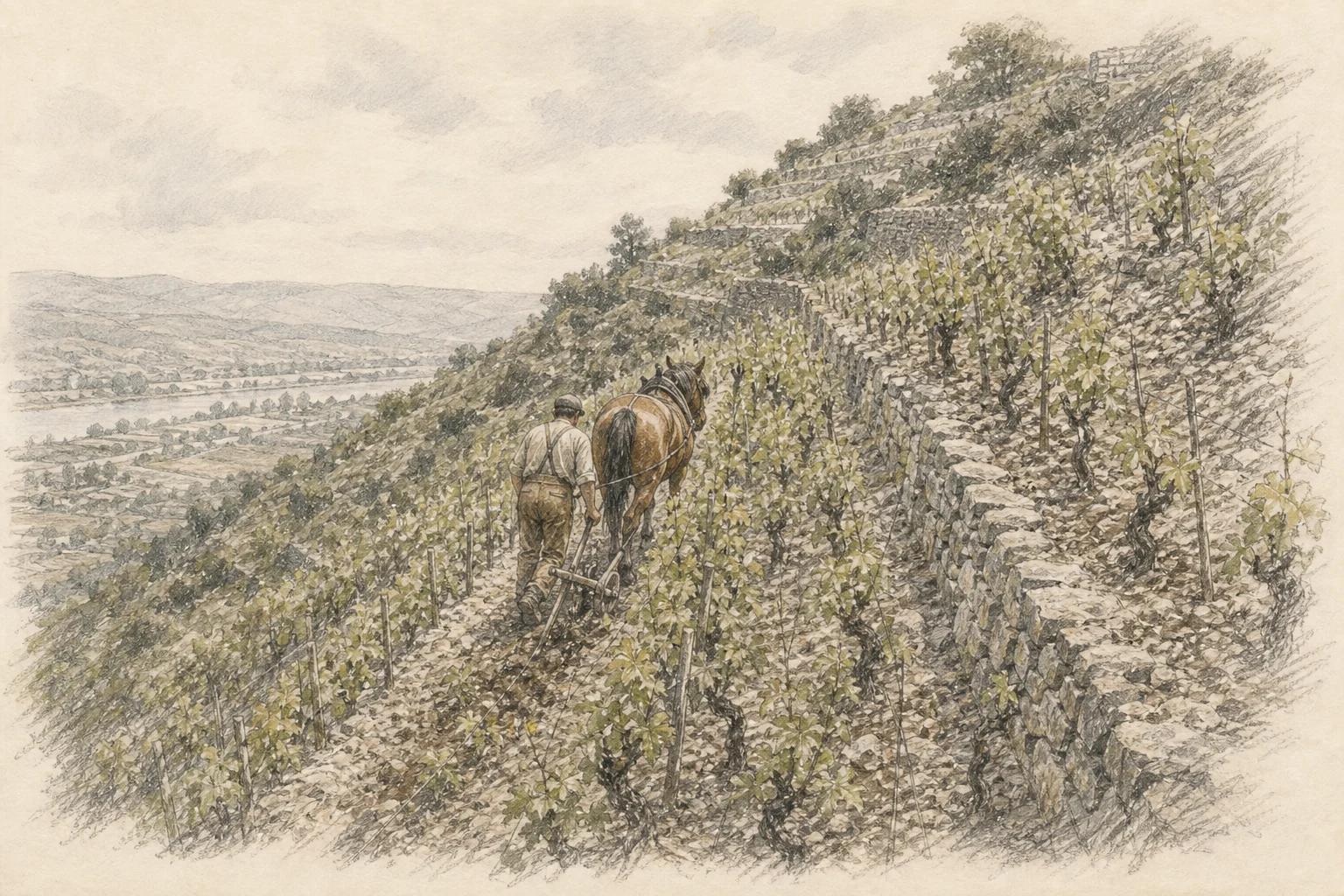
Domaine Lionnet’s holdings extend across Cornas and nearby Châteaubourg. The Cornas parcels occupy narrow sites with distinct exposures and soils. On such ground, manual work is not a decorative claim. The estate and regional tourism records describe the use of a horse or a small crawler where the slope allows it. The scale is set by what a person, an animal and a terrace can physically carry.
Inheritance Includes Change
When Corinne and Ludovic took over in 2003, the estate says they immediately adopted an approach centred on the environment. Organic certification by Ecocert followed in 2009. That certification concerns the vineyard. The cellar decisions form a separate, equally specific record.
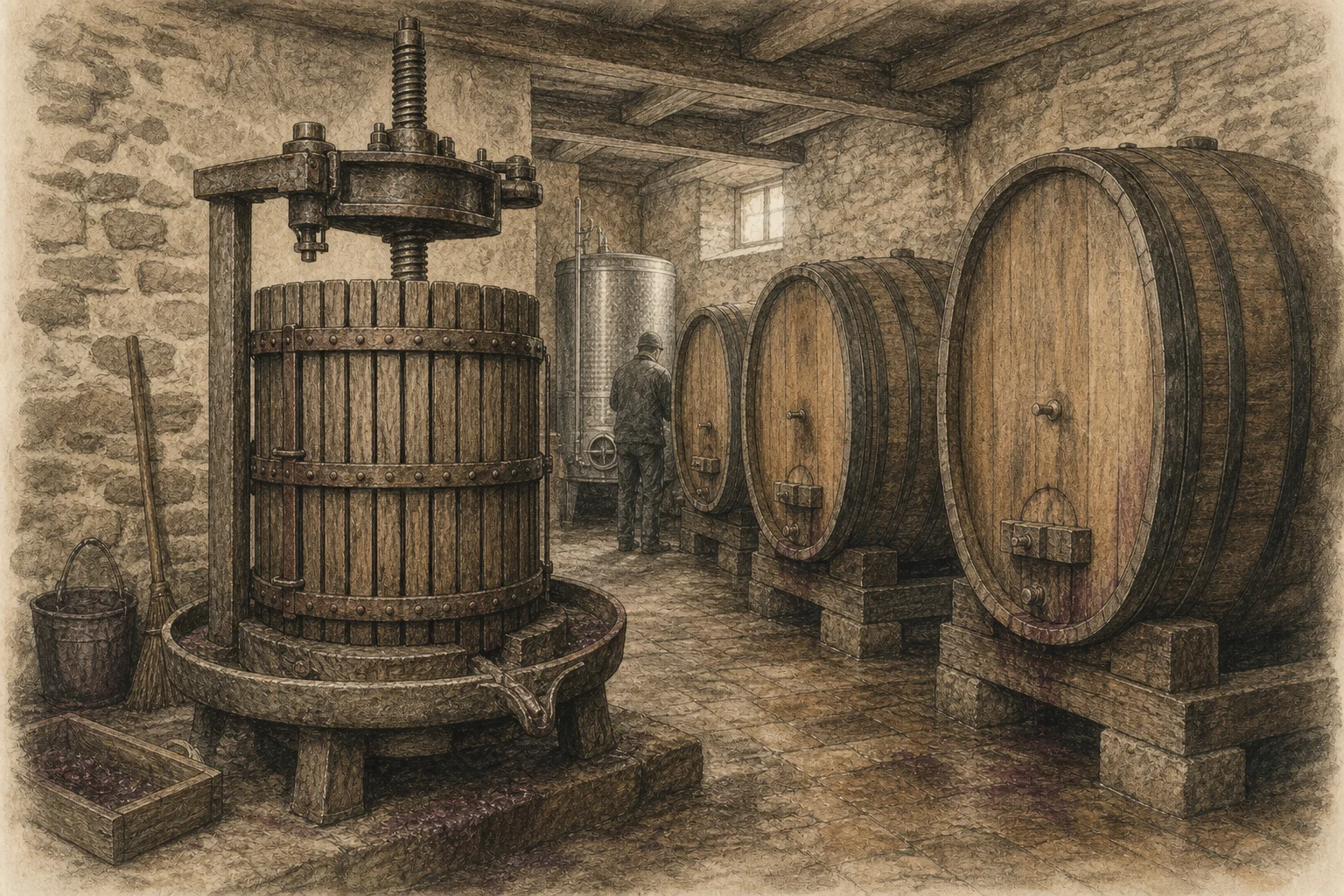
The family renovated Michel’s cellar and added a second, climate- and humidity-controlled space of 120 square metres. New oak is not used. Red wines begin with whole bunches and indigenous yeasts, without oenological additives, before ageing in seasoned 600-litre demi-muids. The estate states that it makes one bottling per vintage and uses neither fining nor filtration.
None of these choices simply repeats the sixteenth century. Some preserve an older tool or method; others use modern control to protect a slow process. Continuity here is assembled from both.
Planting for Someone Else’s Future
The estate’s vineyard map makes succession visible through vine age. At Combes, one parcel is listed at 95 years old. Chaillot includes a 55-year-old parcel. Pied la Vigne combines vines of 60 and 70 years with a younger planting from 2017.
The map also records decisions whose mature consequences will belong partly to the future. The Chaillot extension was planted in 2022 and 2023. Bouchardeau, a 0.3-hectare extension of Châtaignier, was planted in 2024. An inherited vineyard is therefore not a museum of old vines. It also contains young plants that cannot yet resemble what they may become.
The timing is the chapter’s clearest image: Lucas entered the estate as new vines entered the hillside. The two events are not proof of one another, but together they show the same practical horizon. Both ask the current generation to work for a result that will be judged later.
Terre Brûlée Is an Assembly, Not a Monument
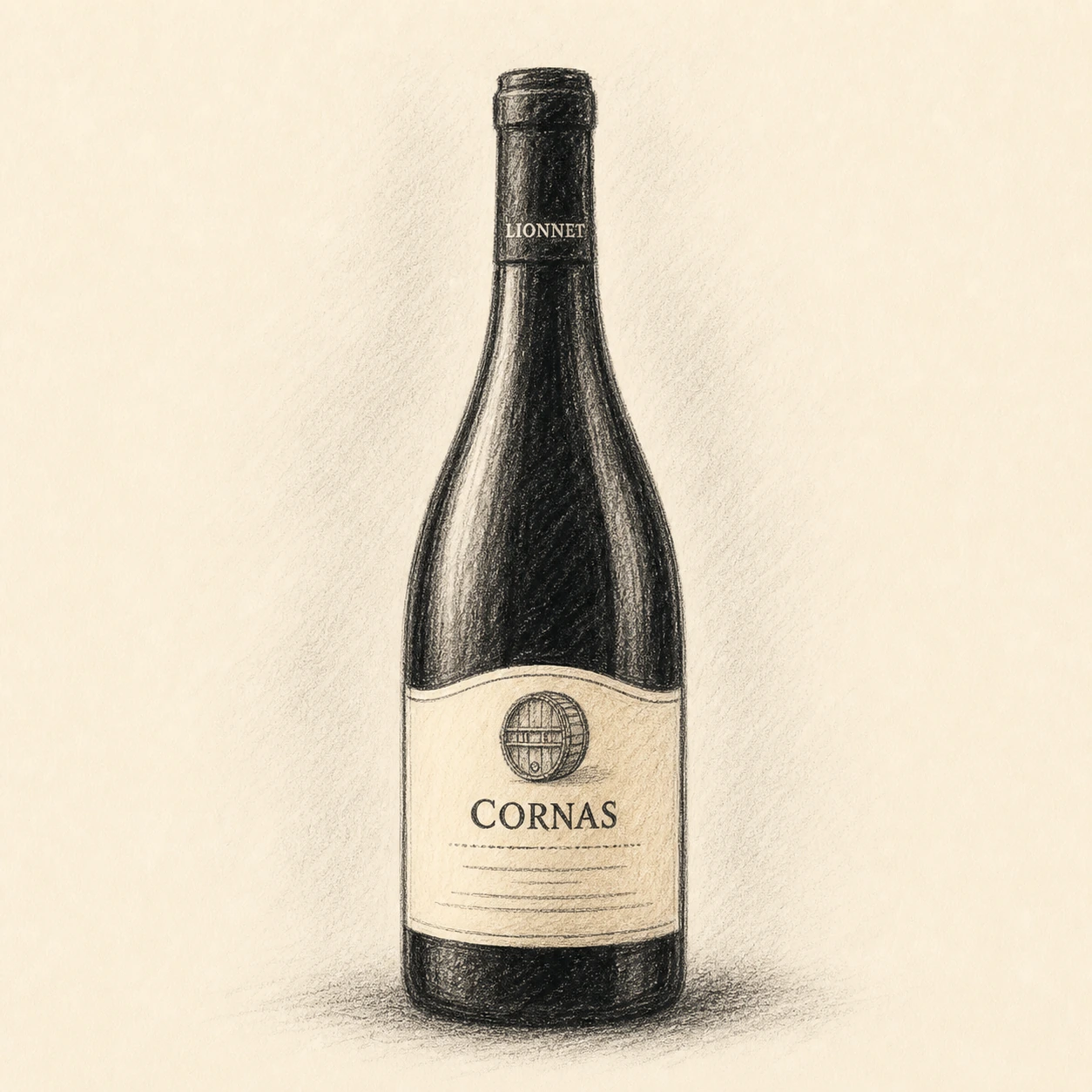
The estate’s historic Cornas cuvée, Terre Brûlée, makes this logic tangible. It is not presented as the voice of one isolated parcel. Domaine Lionnet assembles fruit from Pied la Vigne, Mazard, Combe and Chaillot. The official description identifies 100% Syrah, whole bunches and vines aged from 55 to 95 years.
The related DOMAINE LIONNET CORNAS Terre Brulee 2022 product information records the cuvée carried by Bacchus Global. Read as part of the estate story, its significance lies in combination: four sites and several vine ages are brought into one bottling without erasing where they began.
The Patrick Baudouin story approaches another version of the same question: how returning to inherited land can become an active decision rather than a nostalgic pose.
To inherit a hillside is to avoid two easy extremes. One is to freeze it; the other is to erase it. Domaine Lionnet does neither. The family keeps old vines, plants new ones, maintains demanding handwork, updates its cellar and makes room for the next person. The meaning of 1575 is not that nothing changed. It is that the work continued because people kept deciding what should follow.
Source note: This article adapts the Bacchus Global feature A gem from the northern Rhône: Domaine LIONNET, Cornas. Estate history, vineyard and cellar facts were rechecked against Domaine Lionnet’s history, vineyard, cellar and wine pages. Appellation facts were checked against the official AOC Cornas specifications summary.
This article presents producer history, vineyard work and winemaking decisions for educational and cultural purposes. It is not intended to advertise alcoholic beverages or encourage their purchase or consumption. It is intended for readers aged 20 and over.
บทความนี้นำเสนอประวัติผู้ผลิต การทำงานในไร่องุ่น และการตัดสินใจด้านการผลิตไวน์ เพื่อการศึกษาและวัฒนธรรมเท่านั้น มิได้มีวัตถุประสงค์เพื่อโฆษณา หรือส่งเสริมการซื้อหรือการบริโภคเครื่องดื่มแอลกอฮอล์ บทความนี้จัดทำขึ้นสำหรับผู้อ่านอายุ 20 ปีขึ้นไป
Discover the culture behind every bottle
We share brewery stories, tasting notes and the craft of koji & fermentation — for educational and cultural purposes only.
เราถ่ายทอดเรื่องราวจากผู้ผลิต บันทึกรสชาติ และศาสตร์แห่งโคจิและการหมัก — เพื่อการศึกษาและวัฒนธรรมเท่านั้น
Follow on Instagram Facebook