

Yamanashi Meijo’s “Shichiken” and the Rebirth of Daigahara-juku
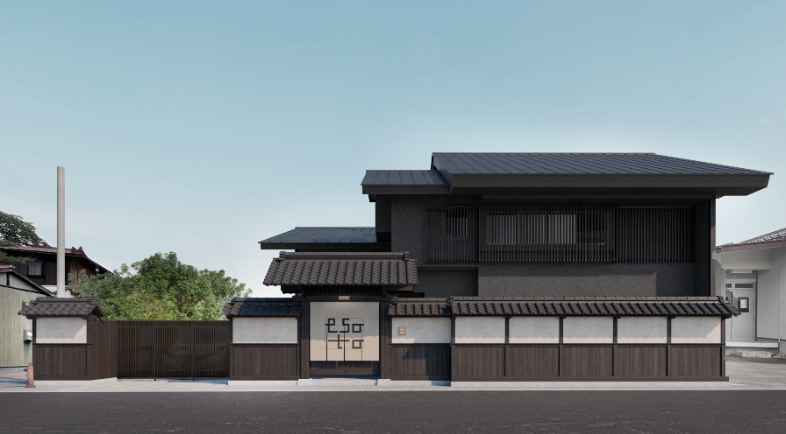
The Measure of True Hospitality: Yamanashi Meijo’s “Shichiken” and the Rebirth of Daigahara-juku
There was a time when travelers journeyed on foot. Along the Koshu Kaido, which connected Edo and Kofu, post towns offered weary travelers a place to rest. One of them was Daigahara, in present-day Hokuto City, Yamanashi Prefecture. In this historic post town, where old streetscapes still remain, stands a brewery that has been making sake since 1750: Yamanashi Meijo, known for its sake brand Shichiken. On June 1, 2026, the brewery entered the hospitality business for the first time with the opening of an inn called Shukuba esoto.
A Place That Remembers How to Welcome Travelers
A post town was never simply a place to spend the night. It welcomed those in the midst of long journeys, offering hot baths, meals, and a place to sleep. The custom of treating complete strangers as honored guests for a single night became deeply rooted in these communities.
Daigahara is a place where that memory still endures. For more than 270 years, Yamanashi Meijo has brewed sake here using the underground spring water of Hakushu. The brewery’s motto, “Water is our essence,” reflects its belief that the pristine waters flowing from the Southern Alps are at the heart of everything it does.
The decision to include the word shukuba, or post town, in the inn’s name is both a tribute to the area’s history and a declaration of intent: to carry forward the spirit of hospitality that once defined this place, reimagined for the modern age.
The Choice to Welcome Only One Group Per Day
What sets this inn apart is its scale. It accepts only one group per day, with a maximum of four guests.
Rather than competing on the number of rooms, the inn has been designed around something else entirely: creating time and space for visitors to engage deeply with the place itself.
The stay unfolds through a thoughtful rhythm: gastronomy that highlights local ingredients and the subtle artistry of fermentation; an exploration of sake brewing and the water culture that sustains it; and relaxation through a brewery bath and traditional tea experiences.
Details such as the use of COJIE, a skincare line born from fermentation technology, and a collaboration with the lifestyle brand evam eva for in-house attire quietly express the beauty of local craftsmanship and everyday living.
Inbound Tourism’s Quiet Shift from Quantity to Quality
For years, inbound tourism to Japan was measured largely by numbers: how many people visited and how much they spent.
Today, however, the focus is steadily changing.
Travel is shifting away from hurried itineraries that check off as many destinations as possible and toward longer stays that allow visitors to experience a place through all their senses. It is moving from taking photographs of famous landmarks to drinking the same water as local craftspeople and spending time within the landscapes that shape their work.
As global preferences increasingly favor “less, but better,” small-scale, experience-driven accommodations like Shukuba esoto reflect this broader transformation.
Limiting guests to a single group per day may seem like the opposite of efficiency. Yet the experiences that remain with us the longest are often born precisely because they are intimate and intentionally limited in scale.
From Yamanashi to the Tables of Bangkok
Yamanashi Meijo’s craft has already found a natural home on the tables of Bangkok’s most discerning culinary venues. Through collaborations with renowned French chef Alain Ducasse, it has earned recognition on the international culinary stage.
For someone who first encounters Shichiken sake in Thailand, perhaps one day that experience will inspire a journey to the land where its water originates, leading them to a place where they can connect deeply with the unhurried hospitality of a historic post town.
There is a quiet hope in helping to create that gateway.
Small in scale, yet profound in impact. What Shukuba esoto represents may be a new model of hospitality for the future, creating value not through scale, but through the depth and density of the experience itself. (Mr. Bacchus)
This article is intended solely to explore the brewing philosophy and cultural heritage of Yamanashi Meijo Co., Ltd. and the Shichiken brand, and does not aim to promote or encourage the consumption of alcohol. / บทความนี้จัดทำขึ้นเพื่อนำเสนอข้อมูลเกี่ยวกับปรัชญาการผลิตและมรดกทางวัฒนธรรมของ Yamanashi Meijo Co., Ltd. และแบรนด์ Shichiken เท่านั้น มิได้มีเจตนาเพื่อส่งเสริมหรือโฆษณาเครื่องดื่มแอลกอฮอล์ สำหรับผู้มีอายุ 20 ปีขึ้นไป โปรดดื่มอย่างรับผิดชอบ
Related Articles
“Hakushu’s Famed Water and the 1880 Imperial Lodging” / “Shichiken is embraced by Mt. Fuji and the spine of the Southern Alps” / “The Global Tour of Shichiken and Alain Ducasse” / “Crafted for French Cuisine”
Related Product(s)
SHICHIKEN Mori no kanade matured in the Hakushu cask Sparkling-sake / SHICHIKEN Selection Alain Ducasse Sparkling-sake / SHICHIKEN EXPRESSION Sparkling-sake 2020 / SHICHIKEN Kinu no aji Junmai-Daiginjo / SHICHIKEN EXPRESSION Sparkling-sake 2019