

ow Nakijin Distillery’s “Sennen no Hibiki” Completes the Awamori Circle
A Journey Restored: How Nakijin Distillery’s “Sennen no Hibiki” Completes the Awamori Circle
The narrative of this exceptional spirit begins with the grain itself.
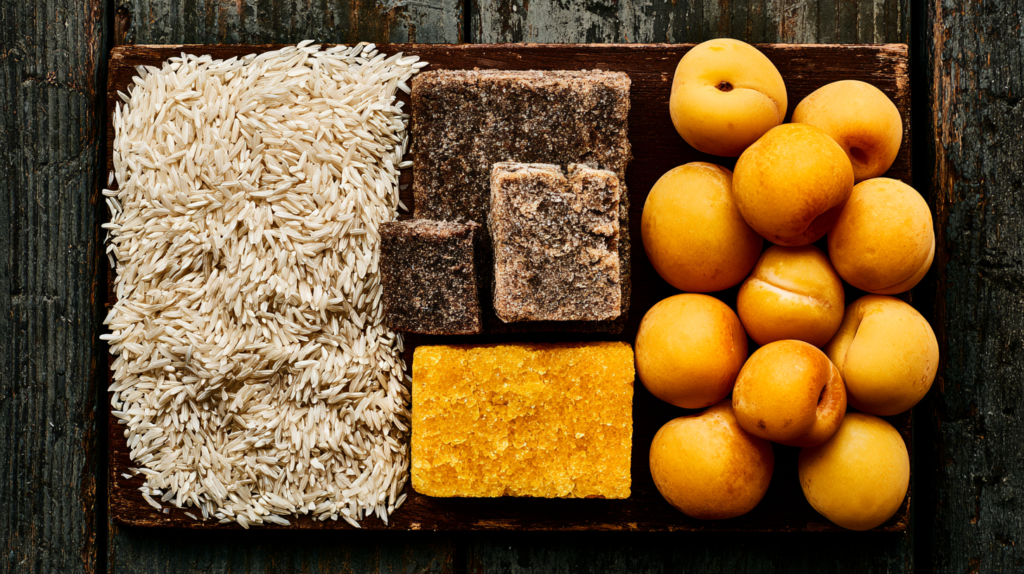
The rice used in “Sennen no Hibiki,” an awamori produced by Nakijin Distillery, which was founded in 1948 in Nakijin Village, Okinawa Prefecture, originates from Thailand. Unlike sake, which relies on domestic Japanese rice, or authentic shochu, which primarily utilizes barley or sweet potatoes, much of awamori’s identity is intertwined with long-grain Indica rice from Southeast Asia. This is far more than a matter of raw material procurement. The very culture of awamori distillation was forged through vibrant maritime trade between the Ryukyu Kingdom and Southeast Asia in the 15th century. Thai rice encounters the native black koji mold of Okinawa, matures with deliberate slowness in barrels or earthenware jars, and eventually finds its way back to Bangkok. This fluid exchange is where the profound narrative of “Sennen no Hibiki” unfolds.
A Sanctuary Beneath World Heritage Foundations
The distillery stands quietly at the foot of the Nakijin Castle Ruins, a historic component of the “Gusuku Sites and Related Properties of the Kingdom of Ryukyu,” inscribed as a UNESCO World Heritage Site in 2000. As the sole distillery in Nakijin Village, it bears the quiet responsibility of preserving the region’s distillation heritage.
Central to this heritage is Okinawa’s distinctive black koji mold, Aspergillus awamori. This particular mold generates a high concentration of citric acid, a natural safeguard that stabilizes fermentation within Okinawa’s subtropical climate. While shochu craftsmen often alternate between white, black, and yellow koji depending on the desired profile, awamori remains fundamentally anchored to black koji. This microbiological legacy forms the definitive character of true awamori.
The Architecture of Time at 43% ABV
“Sennen no Hibiki” is brought to proof at an uncompromising 43% alcohol by volume. Crafted through a single distillation of the black koji mash, the spirit is then left to mature over an extended period. By definition, awamori aged for three years or more earns the revered title of kusu, or aged awamori. As the seasons pass, the initial sharpness of the alcohol mellows, allowing the aromatic profile to acquire a captivating depth. At 43% ABV, the intricate layers of flavor and aroma born from years of rest remain remarkably defined, preserving the true depth of its character without blurring its contours.
An Enduring Legacy of Distinction
The character of “Sennen no Hibiki” has earned quiet acclaim across respected international spirits platforms. At the Tokyo Whisky & Spirits Competition, it secured either the highest gold award or a gold award for three consecutive years, earning a permanent place in the competition’s “Hall of Fame.” Its global presence was further mirrored at the 2022 San Francisco World Spirits Competition with a gold award, alongside securing the highest gold award at Monde Selection for six consecutive years from 2009 to 2014. These consecutive accolades across diverse global platforms mirror an unwavering dedication to quality, far surpassing the novelty of a singular award. Notably, its selection for the dignitaries’ reception during the 2019 G20 Osaka Summit—as documented by the distillery—reaffirms its standing as a spirit worthy of international diplomatic stages.
The Modern Evolution of a Historic Base
The versatility of awamori reaches into new creative realms, moving past its traditional appreciation as a standalone spirit. In recent years, a new generation of craft liqueurs has begun to utilize awamori as a sophisticated canvas.
Consider “MISAO,” an aragoshi plum liqueur envisioned by Kishu Honjo Umeyoshi in Minabe, Wakayama Prefecture. While it celebrates the rich, velvety texture of fully ripened Nanko plums, it chooses aged Okinawan awamori as its foundational spirit rather than the standard neutral korui shochu. This deliberate choice allows the vanillin—a sweet, vanilla-like aromatic compound developed during awamori’s maturation—to intertwine seamlessly with the natural lactone-rich aromas of the ripe plums. Here, another poetic cycle occurs: Thai rice, having traveled through Okinawa, meets the harvest of Wakayama.
Similarly, “KOKUTO DE LEQUIO” reinterprets Okinawan brown sugar (kokuto) through the lens of awamori. A collaborative creation between Mizuho Shuzo in Naha (established in 1848), the globally acclaimed SG Group led by Shingo Gokan, and OneSpirit, its name pays homage to “Lequio”—the term used by European navigators during the Age of Discovery to describe the Ryukyu people. The liqueur pairs awamori brewed with indigenous Okinawan cherry blossom yeast with a touch of brown sugar rum, into which unrefined brown sugar from Iriomote and Yonaguni islands is carefully dissolved.
While these specific expressions utilize aged awamori from other distinguished houses—such as Mizuho Shuzo—rather than Nakijin Distillery itself, their emergence underscores the profound, untapped potential of aged awamori as a premium category.
The Bangkok Resonance
As the global landscape shifts into 2026, the movement toward international appreciation for awamori continues to accelerate, evidenced by the strategic expansion of historic brands into key cultural hubs like Singapore. With the global awamori market projected to grow steadily from 1.8 billion dollars in 2025 toward 3.2 billion dollars by 2034, the spirit is stepping into a new era of global relevance.
When viewed within the context of Bangkok’s discerning dining scene, the use of Thai rice in “Sennen no Hibiki” transforms from a mere technical fact into a compelling cultural homecoming. A grain nurtured by Thai soil travels to Okinawa, transforms through time and craft, and returns to its origins. Among world spirits, very few can claim a narrative that is not merely imported, but truly returned. As cultural tastemakers look toward the next frontier of Japanese craftsmanship, “Sennen no Hibiki” offers more than a fine pour—it offers the completion of a beautiful, historic circle. (Mr. Bacchus)
This article is intended solely to explore the distillation techniques and cultural heritage of Nakijin Shuzo and the SENNEN NO HIBIKI brand, and does not aim to promote or encourage the consumption of alcohol. / บทความนี้จัดทำขึ้นเพื่อนำเสนอข้อมูลเกี่ยวกับเทคนิคการกลั่นและมรดกทางวัฒนธรรมของ Nakijin Shuzo และแบรนด์ SENNEN NO HIBIKI เท่านั้น มิได้มีเจตนาเพื่อส่งเสริมหรือโฆษณาเครื่องดื่มแอลกอฮอล์ สำหรับผู้มีอายุ 20 ปีขึ้นไป โปรดดื่มอย่างรับผิดชอบ