Bar
Thirty Bartenders, Divergent Paths, a Shared Destination

A recent survey offers an intriguing glimpse into the future of mixology. In January 2026, the American drinks media outlet VinePair published an article posing the same question to 30 working bartenders: “What flavor will define the cocktail scene in 2026?”
The answers were strikingly diverse|seaweed, cheese, pandan, bitter melon, condensed milk, fig leaf. But when you line up the responses of these 30 professionals, scattered across different cities and specialties, a distinct pattern emerges. Fermentation and umami.
A Shared Vocabulary Across Borders
Brian Callahan, a bar owner in Boston who has worked with koji for five years, put it this way: “The applications of koji (kouji) are virtually boundless. We’ve only scratched the surface.” He shared a technique of clarifying amazake to add texture to a highball.
In Toronto, James Grant pointed to miso|usable in distillation, infusion, and even caramelization. In New York, Tana Kokanot championed fermented citrus: yuzu kosho and salted mandarin peel. “Consumers are moving toward cocktails with structure|umami, salinity, layered acidity|not just sweetness.”
Chad Austin in Los Angeles, reflecting on a 17-year career, noted: “Fermentation should be a primary focus behind the bar. Fermented fruit for sours, vegetable brines for savory cocktails. Fermentation gives bartenders an entirely new range of expression.” It is notable that these independent practitioners, working in entirely different contexts, arrived at the exact same conclusion without conferring with one another.
Reimagining the Cocktail Framework
Sweetness, acidity, and alcohol strength|the traditional framework that has long supported cocktails|is quietly evolving.
In New York, a bar tops an espresso martini with cheese foam. In Chicago, another adds the salinity of nori to a martini, evoking the depth of the sea. In New Orleans, a bartender reconstructs an Old Fashioned using pandan, shochu, and Calpis.
The bar counter is absorbing the techniques and philosophy of the kitchen. Within that shift, one category of ingredients continues to surface: those rooted in Asia. Koji, miso, amazake, yuzu, hojicha, shochu, pandan. This is not the isolated preference of a single city; it is a movement taking shape simultaneously in Chicago, New York, Los Angeles, Toronto, New Orleans, and Portland.
A Quiet Convergence in Bangkok
Let us observe Bangkok for a moment. KOUJI ALCHEMIST by Salon du Japonisant, established in February 2026, is a space centered deeply on Japan’s fermentation culture. Koji, miso, amazake, shochu, yuzu, hojicha|many of the precise ingredients cited by bartenders in the VinePair article as the future of mixology have been the structural foundation of this bar’s menu since its inception. Rather than following a nascent trend, the concept aligns organically with this evolving global philosophy.
Instead of confining sake, shochu, and Japanese spirits within the traditional parameters of sweetness and acidity, the establishment utilizes the transformative power of koji|its innate ability to draw out umami, natural sweetness, and textural depth|as the core design principle of its beverages. The destination that 30 distinguished bartenders independently arrived at is the very ground upon which this bar was built.
A Fundamental Shift in Mixology
Naturally, the word “trend” carries certain implications. The gastronomic world frequently witnesses the rapid rise and fall of fleeting fads.
Yet, this moment feels distinctly different. The professionals featured in the VinePair article are not chasing a media-driven buzzword. They have examined these ingredients with their own hands and palates, observed genuine guest reactions, and independently charted the same course. When 30 individuals take different roads and arrive at the exact same destination, it transcends a mere trend. It is a fundamental evolution in how flavor is understood. And at the very center of that evolution is koji. (Mr. Bacchus)
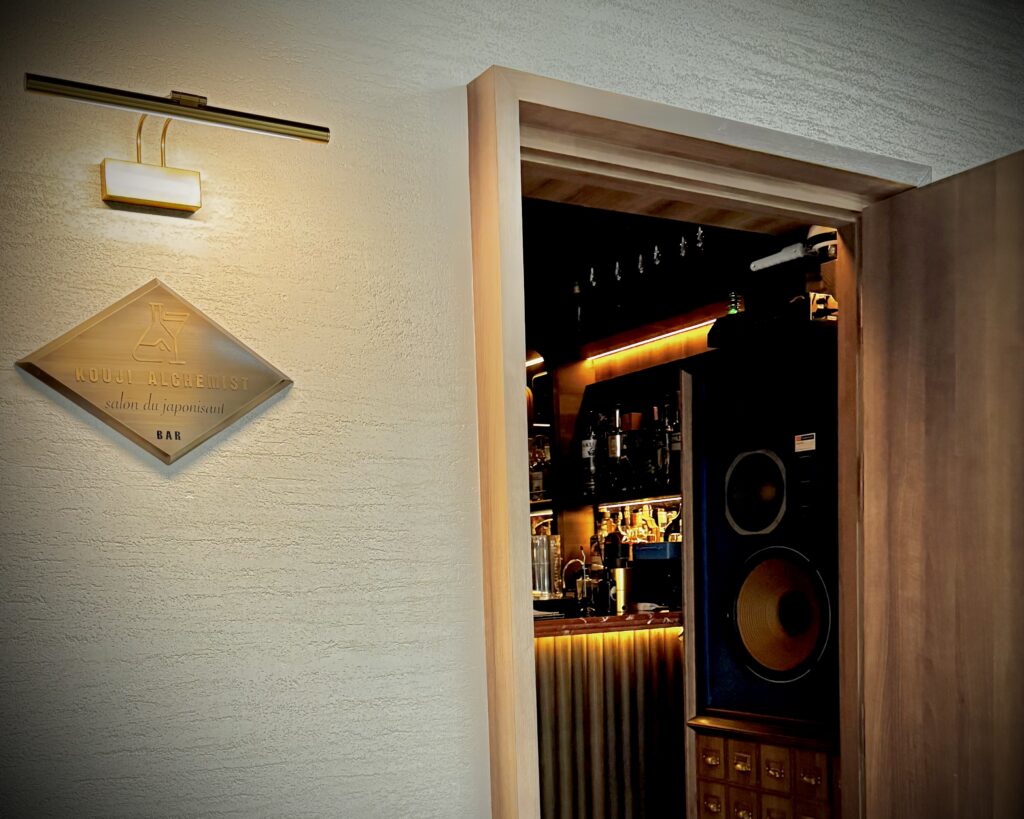
KOUJI ALCHEMIST by Salon du Japonisant is a premium spirits bar and experiential space in Bangkok’s Sukhumvit district, opened in February 2026. Centered on Japan’s koji fermentation culture, it offers Japanese sake, shochu, and craft spirits alongside koji-inspired cocktails and non-alcoholic beverages. Operated by Bacchus Global Co., Ltd., a Bangkok-based importer of Japanese sake, shochu, and spirits, the venue is supported by storage and transport conditions managed according to product and logistics stage. No single temperature is represented as applying continuously to every product from the brewery to Bangkok.
This article is intended solely to explore the evolving landscape of global cocktail culture and the philosophy of fermentation-based mixology at KOUJI ALCHEMIST by Salon du Japonisant, and does not aim to promote or encourage the consumption of alcohol. / บทความนี้จัดทำขึ้นเพื่อนำเสนอข้อมูลเกี่ยวกับแนวโน้มวัฒนธรรมค็อกเทลระดับโลกและปรัชญาการผสมเครื่องดื่มจากการหมักของ KOUJI ALCHEMIST by Salon du Japonisant เท่านั้น มิได้มีเจตนาเพื่อส่งเสริมหรือโฆษณาเครื่องดื่มแอลกอฮอล์ สำหรับผู้มีอายุ 20 ปีขึ้นไป โปรดดื่มอย่างรับผิดชอบ
Related Articles
Discover the culture behind every bottle
We share brewery stories, tasting notes and the craft of koji & fermentation | for educational and cultural purposes only.
เราถ่ายทอดเรื่องราวจากผู้ผลิต บันทึกรสชาติ และศาสตร์แห่งโคจิและการหมัก | เพื่อการศึกษาและวัฒนธรรมเท่านั้น
Follow on Instagram Facebook