

Fundamental Knowledge about Champagne: Origins and Production
Where does Champagne come from?
« There is Champagne only from Champagne region[1] »

Where is the Champagne region located? The Champagne region is located about 100 km northeast of Paris. It is the second most northerly vineyard of France, after the one of Moselle AOC.(Map description) The Champagne region is the one shown in orange, No. 6, top right. Paris is located just below No. 6, at the confluence of the Marne and the Seine rivers.
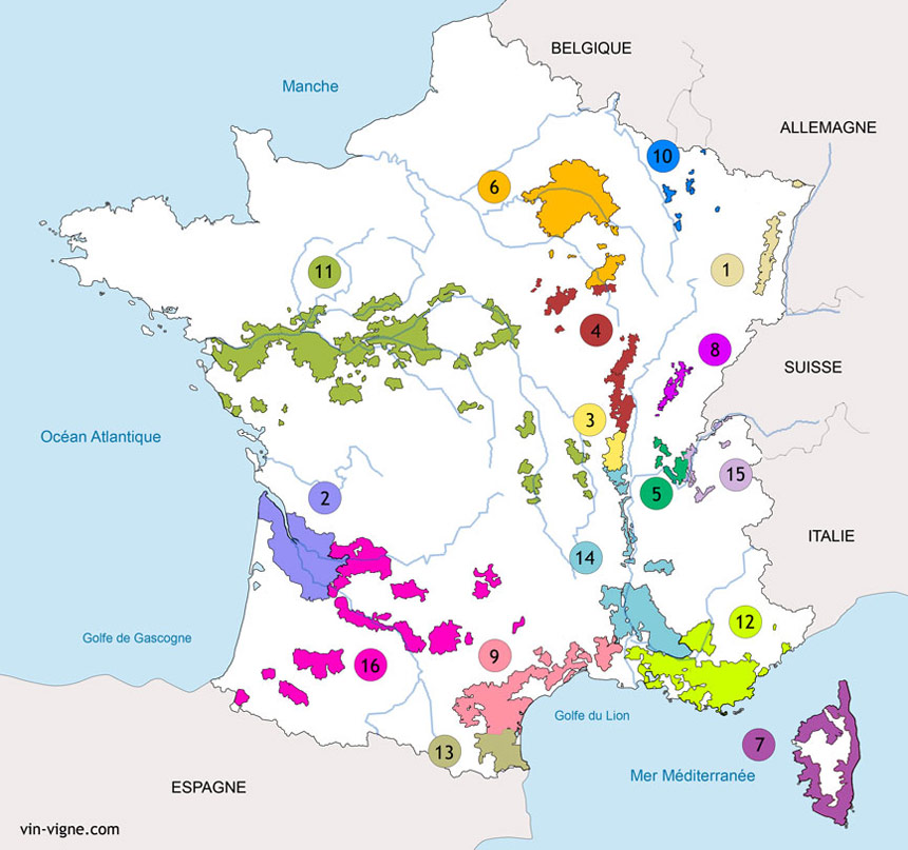
| 1 Alsace 2 Bordeaux 3 Beaujolais 4 Bourgogne | 5 Bugey 6 Champagne 7 Corse 8 Jura | 9 Languedoc 10 Lorraine 11 Loire 12 Provence | 13 Roussillon 14 Rhône 15 Savoie 16 Sud-Ouest |
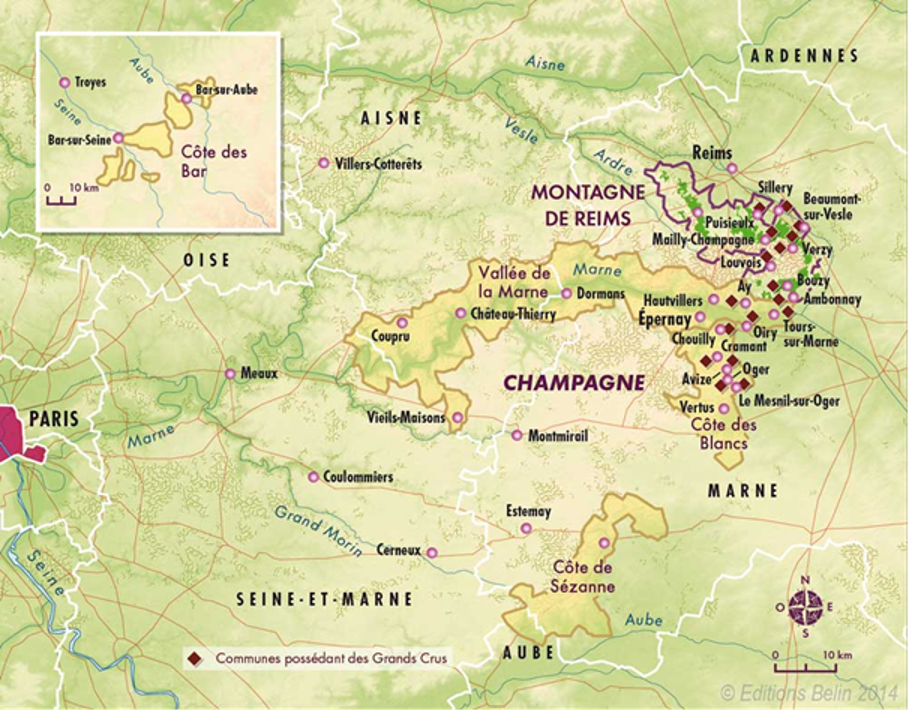
Map of the 5 Champagne vineyards
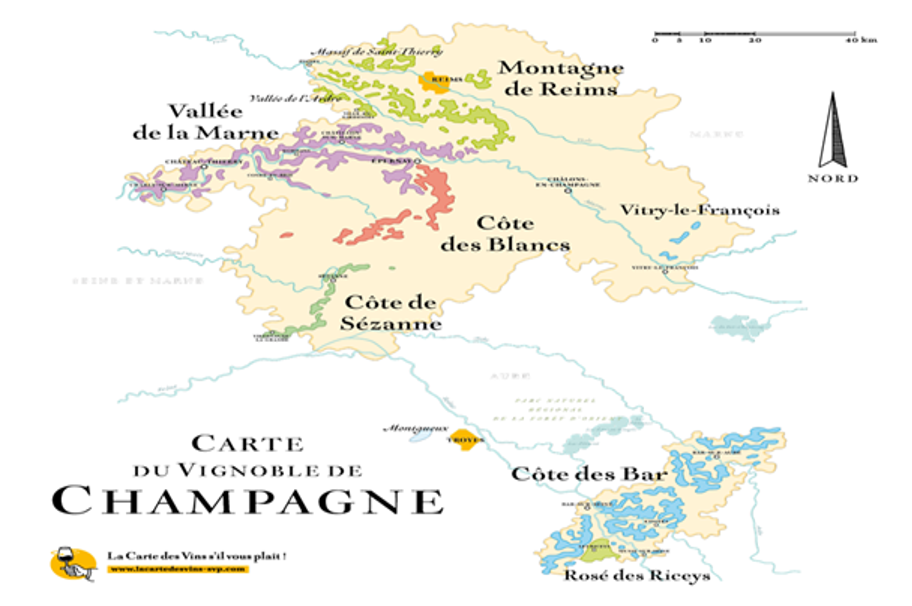
Keywords
- Discovery: The birth of Champagne dates back to the late 17th century.
- Feature: The main feature is that the fermentation process of the bottled grape allows the wine to sparkle.
- Classification: The classification of champagne is determined by the vintage, the grape variety, and the terroir.
- Surface: Covers 34,300 hectares, around and south of the city of Reims, 3.5% of the area of the French vineyard.
- 7 grape varieties: Chardonnay, Pinot Noir & Pinot Meunier represent more than 99.5% of the grape used. Arbane, Petit Meslier, Pinot Blanc & Pinot Gris are allowed too.
| Brut Nature | Or Zéro dosage. No su The driest Champagne. Characterized by dryness.gar added and less than 3 grams of residual sugar per liter. |
| Extra Brut | Very Dry – Between 0 and 6 grams of sugar/liter. |
| Brut | 7 to 11 gr. of sugar/liter |
| Extra-Dry | Or Extra-Sec – Medium Dry – Between 12 & 17 gr. of sugar/liter. |
| Dry | Or Sec – Between 17 & 32 gr. of sugar/liter. |
| Demi-Sec | Between 32 & 50 gr. of sugar/liter. Sweeter, this type of champagne accompanies perfectly your desserts. |
| Doux | More than 50 gr. of sugar/liter |
To these traditional Champagnes, we also have the Rosé Champagne.
Five main regions: The place of production of Champagne is strictly defined by law (1927), limited to the region of Champagne only:
- The Montagne de Reims
- The Marne valley
- The Côte des Blancs
- The Côte des Bars
- The Côte de Sézanne
Glossary: Terroir The vine grows on a thick layer of chalk deposited in the secondary area, around 200 million years ago. It’s this particular chalk that brings the mineral elements and restores the heat of the sun, two elements necessary for the evolution of the vine in a region with continental climate.
Glossary: Cru In Champagne, the concept of “Cru” applies to a group of villages (Commune). The classification of a “Cru” depends on the type of soil on which the vine is planted, the sun exposure, and the characteristics of the grapes.
- Grand Cru: 17 communes are classified as “Champagne Grand-Cru” (100%).
- Premier Cru: 44 communes are classified as “Champagne Premier-Cru” (90 to 99%).
- Non-classified: The 258 remaining communes.
This scale reflects the classification of the grapes and is used to establish the selling price per kilo of grapes to merchants.
The five main regions – Brief description
1. Montagne de Reims – Pinot Noir The slopes of the Montagne de Reims are implanted on soils whose chalk is deeply buried. The dominant grape variety is Pinot Noir. Champagnes from here are known for their structure.
2. Côte des Blancs – Chardonnay The outcropping chalk is everywhere, offering a reservoir of water and heat. The Côte des Blancs produces Champagne with light aromas and specific acidity. Here, a unique grape variety dominates: Chardonnay.
(Note: The poetic quote about “drinking the ocean” has been neutralized for compliance) Vincent Charlot notes that the Chardonnay vines growing on this chalky terroir produce wines with specific mineral characteristics, related to the geological history of the soil (200 million years ago).
3. Marne valley – Pinot Meunier The hillsides are located on clay-limestone soils. The dominant grape variety is Pinot Meunier. Champagnes from the Marne valley typically feature a fruity aroma.
4. Côte des Bar – Pinot Noir The marly basements (clay and limestone) are mainly planted with Pinot Noir. The champagnes of the Côte des Bar are characterized by their roundness.
5. Côte de Sézanne – Chardonnay & Pinot Noir The Côte de Sézanne is part of the “humid Champagne” area. This region produces Le Rosé des Riceys. As Chardonnay dominates, Champagne from this area is often “Blanc de Blancs”, described as having aromatic notes different from those of the Côte des Blancs.
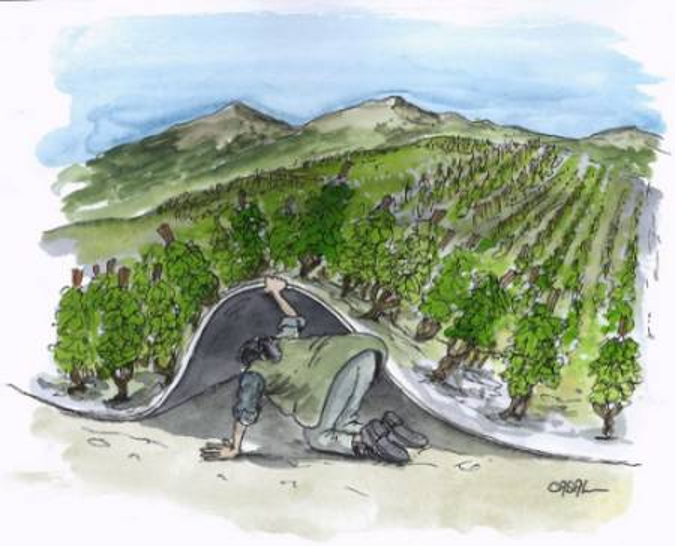
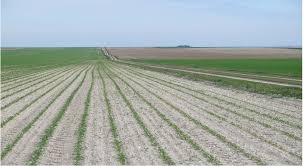
Here was the sea 200 million years ago. It deposited this limestone which plays a role of thermal regulator and drainage for the Champagne vineyard.
Method of elaboration
1. Harvesting, pressing, fermentation and blending After harvesting and fermentation, juices are blended to maintain a consistent style. Reserve wines (kept for 2-3 years) are blended with wines from the last harvest. Vintage champagnes are single-year blends, made only in specific years.
2. The drawing of the wine (“le tirage”) Bottling occurs six months later. A “liqueur de tirage” (yeasts and sugar) is added to trigger a new fermentation in the bottle.
3. The second fermentation (“la prise de mousse”) The “Traditional method” consists of a second fermentation in the bottle, creating the sparkle.
4. The maturation Yeasts form a deposit. The legislation requires a minimum period of 15 months for non-vintage champagnes, and 3 years for vintage champagnes. In practice, maturation is often longer (2-10 years).
5. The riddling (“le remuage”) Developed by Madame Clicquot, this technique involves moving the deposit to the neck of the bottle. Bottles are turned regularly to clarify the wine.
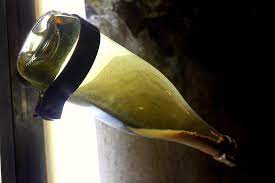
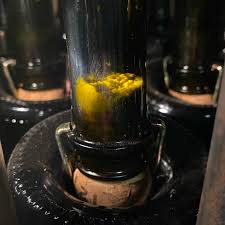
6. The Disgorgement (“Le dégorgement”) The bottle neck is frozen (-25°C), trapping the deposit in ice. The pressure expels the ice plug when opened.

7. The dosage A mixture of cane sugar and reserve wines is added to adjust the sweetness.
- Champagnes with low sugar content (less than 6 g/l) reflect the natural characteristics of the grapes.
- An “Extra Brut” Champagne is often served as an aperitif or with seafood.
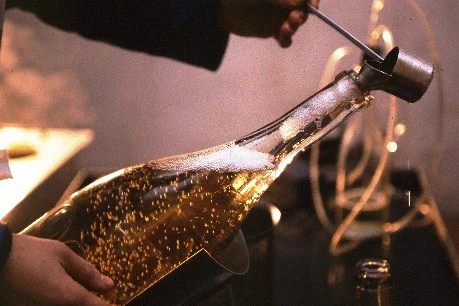
The Champagne of Vincent CHARLOT proposed by Bacchus Global:
- Extra Brut: No added sugar that would modify the grape profile.
- Vintage: Matured for at least three years.
- Biodynamic farming: Only 2% of the Champagne vineyard uses this method.
Rosé de Saignée vs Rosé d’assemblage
- Rosé de Saignée: Produced by macerating red grapes (Pinot Noir & Pinot Meunier) for 1-2 days. This method results in a darker color and distinct volume on the palate.
- Rosé d’assemblage: Produced by blending white wine with 5-20% red wine.
Crémant & Champagne Crémant is produced in many regions of France using the “Traditional Method” (second fermentation in bottle).
The Crémants of Bruno Dangin: These are made with the same 3 grape varieties as Champagne (Pinot Noir, Pinot Meunier & Chardonnay) on a terroir which was historically part of the Champagne harvesting area until 1919. The production follows similar methods to those used in Champagne. The Cuvées are “Brut Nature”, “Extra Brut” or “Brut”, with minimal added sugar.
How to store Champagne? Champagne is delivered at maturity. Store the bottle horizontally in a cool place (maximum 15°C) at a constant temperature, away from light, noise, and vibrations.