

The Renaissance of the Muscadet Vineyard
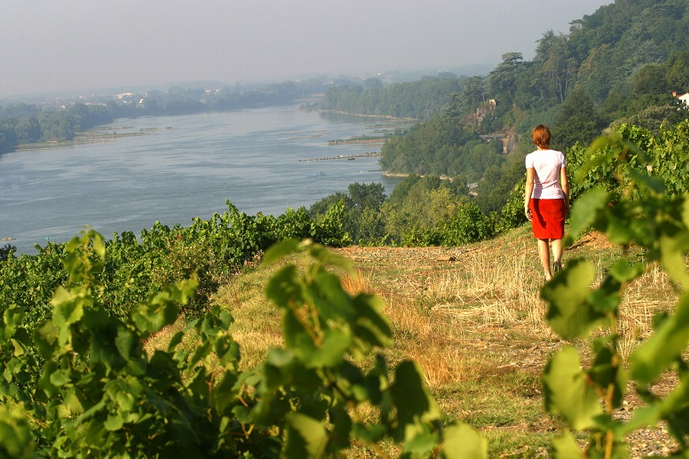
Between Nantes and the Atlantic Ocean, for 2,000 years—dating back to the Gallo-Roman era—in the final meanders of the Loire River, a final vineyard borders its banks: the Muscadet Vineyard, the Kingdom of Melon de Bourgogne, a grape variety unique in the world.
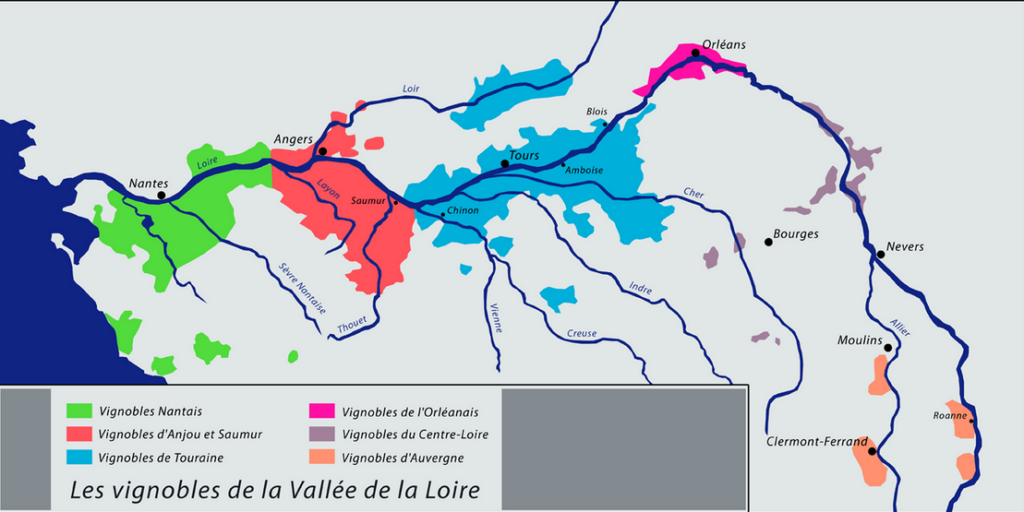
The vineyards of the Loire Valley
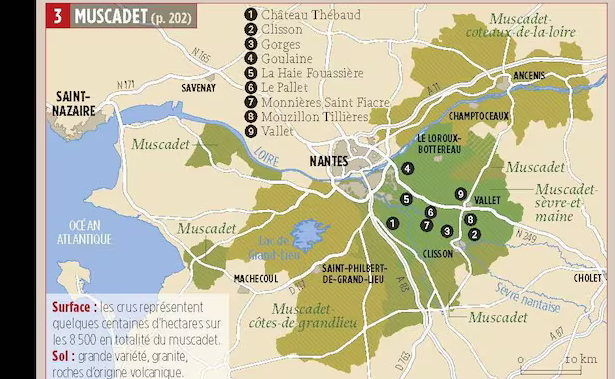
The vineyards of The Muscadet AOC
Key figures for Muscadet
・6,300 hectares of vineyards under AOC – Appellation d’Origine Contrôlée
・A Terroir of granites & volcanic rocks
・Melon de Bourgogne is the sole grape variety. Since 2020, Chardonnay has been permitted (up to 10%)
・440 producers
・40 million bottles sold per year
・6 AOC
・10 high-end “Crus Communaux”
One of the oldest appellations, first recognized in 1937, the vineyard of Muscadet is subdivided into three sub-regional designations of “Muscadet-sur-Lies”:
- Muscadet Sèvre-et-Maine: the most important of the three;
- Muscadet Côtes de Grandlieu: confidential, it owes its name to a local lake;
- Muscadet Coteaux de la Loire: the smallest of the three.
To this, since 2011, is added a system of Communal Crus that recognizes exceptional Terroirs: Clisson, Gorges, Le Pallet, Goulaine, La Haye-Fouassière, Champtoceaux, Vallet, Monnières Saint-Fiacre, Château-Thébaud and Mouzillon-Tillières.
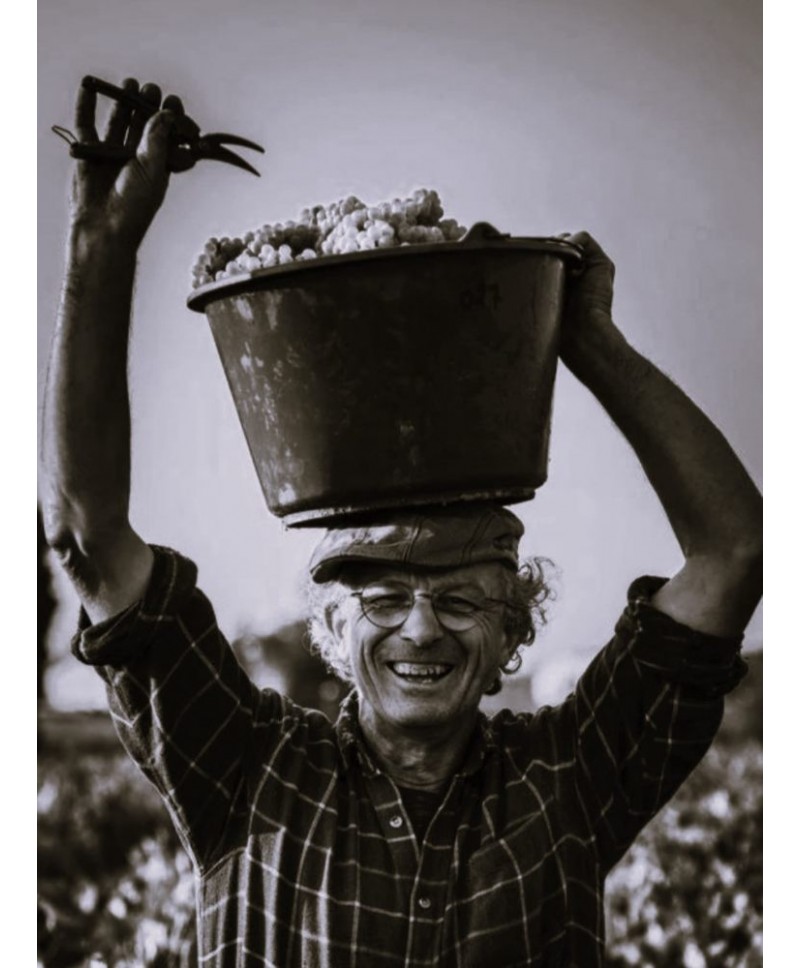
Vincent Caillé, one of the passionate winemakers who played an active role in the appellation’s revival.
A member of a family of winegrowers for five generations, Vincent Caillé, thirty years ago, took over the family vineyard in Loire Atlantique – the westernmost part of the Loire Valley, stretching down to the ocean after a thousand-kilometre course –. He is part of a new generation of winegrowers who have decided to pursue a policy of uncompromising quality. With passionate determination, he produces Muscadet Sèvre et Maine wines of quality and expression.
Cultivated organically, his vines thrive on living soils that have regained their natural vegetation, including wild tulips, a protected species that had long disappeared due to the chemical treatments used in so-called ‘conventional’ viticulture.
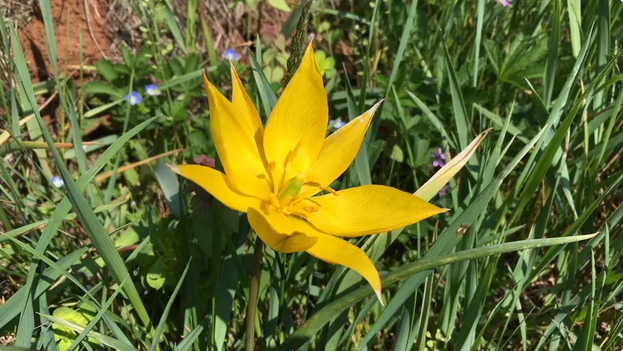
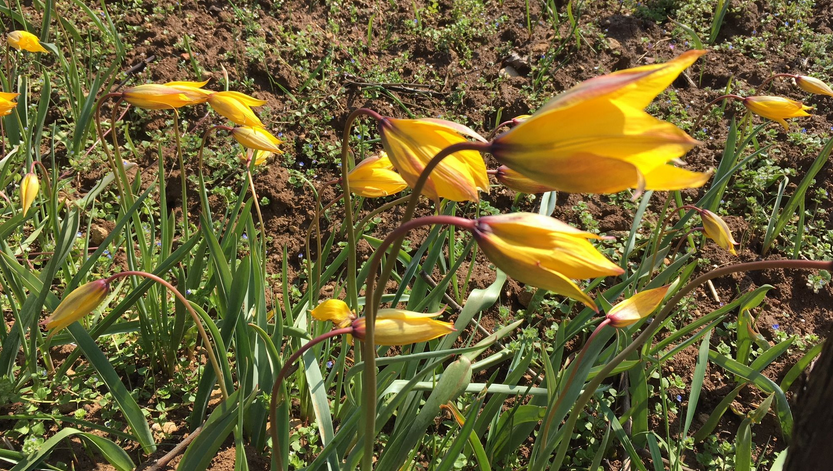
In the past, in April, the wild tulip illuminated certain vineyards with golden yellow. But victim of weed killers, it is becoming very rare. It reappears here and there, on organic plots treated without herbicides.
1/ The Birth of the Crus Communaux
Official recognition of the first Crus came with the 2011 decree, which established the first three Crus Communaux: Gorges, Le Pallet, and Clisson, quickly followed by seven others. By 2026, there were 10 certified Crus Communaux.
The production area of the recognized Communal Crus is just over 100 hectares, less than 1.5% of the total area.
Thus emerged a new concept in the Loire landscape: that of the Communal Cru.
Like the Burgundian Climats, each communal cru is based on a defined terroir—plots selected according to studies of soil, microclimates, and historical practices.
2/ Strict new specifications in cultural methods
Another important point is the drastic change in vineyard management practices: yields limited to 45 hl/ha, aging on lees for a minimum of 24 months, or even 36 months as with the Cuvée du Domaine du Faye d’Homme, one of our partner estates, and mandatory validation tastings.
A Grape Variety Unique in the World
First cultivated in the 16th century, Melon de Bourgogne is the sole grape variety used in Muscadet. Thanks to winemaking techniques that involve aging on the lees and the diversity of the Terroirs, it boasts a range of subtle, delicate, lively, and briny aromas.
Here is the new map of the Nantes vineyards that we are pleased to present to you. The wines have been transformed as a result… and deserve to be told to you.
The Emergence of a New Consciousness: Committed Winemakers
Moreover, as a logical consequence, more and more producers—who have a keen awareness of their environment—are choosing to switch to more sustainable and environmentally friendly farming methods. The era of chemical inputs and excessive production is over. A growing awareness and a strong desire to produce less but better are taking hold. The Terroir is regaining its voice.
Recognition was not long in coming. It is now a regular guest at the tables of Michelin-starred chefs.
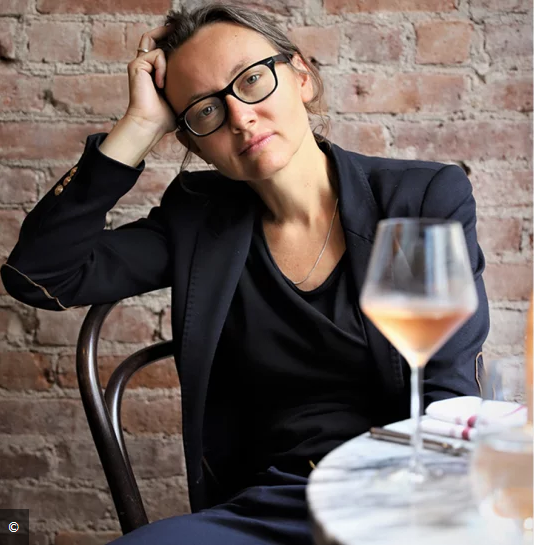
Pascaline Lepeltier, awarded France’s Best Sommelière in 2018, ranked 4th Best Sommelière in the world, quickly established herself as one of the most influential Sommelières.
“I remain amazed by the qualitative evolution of Muscadet. I really applaud the work these winemakers are doing and the expressions of Melon de Bourgogne they have achieved.
For me, it is now one of the greatest wines in the world. I place them in the same category as Burgundy white wines.
I encourage people to (re)discover the incredible diversity of old grape varieties from each French wine region”.
We invite you to come and discover the four Cuvées – including a sparkling wine – resulting from the magnificent work of Vincent Caillé, our partner winemaker.
The delicate, lively and salty aroma of Melon de Bourgogne is particularly suitable to complete the palette of Thai flavors. With its mineral character and high acidity, it allows the complex flavors of dishes to be fully expressed. It is one of the white wines recommended by sommeliers to accompany Thai dishes.
You can associate it, in particular the Cuvées such as Monnières Saint Fiacre or Fief Seigneur with seafood – crustaceans, sea or freshwater fish -, or even white meat or creamed chicken, its mineral and lively character will make the layers of flavors sing. The Thai Spring Rolls are also a good match.
A bientôt! (Dr.FX)
This article is intended solely to explore the brewing philosophy and cultural heritage of Yamanashi Meijo (Shichiken) and the SHICHIKEN Selection Alain Ducasse Sparkling Sake, including the 275-year history of the brewery, the collaboration with chef Alain Ducasse and chef sommelier Gérard Margeon, and the triple innovation method combining kijoshu base, sakura barrel aging, and bottle-fermentation, and is not intended to promote or encourage the consumption of alcohol. / บทความนี้จัดทำขึ้นเพื่อนำเสนอข้อมูลเกี่ยวกับปรัชญาการผลิตและมรดกทางวัฒนธรรมของ Yamanashi Meijo (Shichiken) และ SHICHIKEN Selection Alain Ducasse Sparkling Sake รวมถึงประวัติ 275 ปีของโรงสาเก ความร่วมมือกับเชฟ Alain Ducasse และเชฟซอมเมอลิเย Gérard Margeon และวิธีการ Triple Innovation ที่ผสมผสาน Kijoshu, การบ่มในถังซากุระ และการหมักในขวด เท่านั้น มิได้มีเจตนาเพื่อส่งเสริมหรือโฆษณาเครื่องดื่มแอลกอฮอล์ สำหรับผู้มีอายุ 20 ปีขึ้นไป โปรดดื่มอย่างรับผิดชอบ