

Hakkaisan’s “Fubaika” and a New Philosophy for Rice Shochu
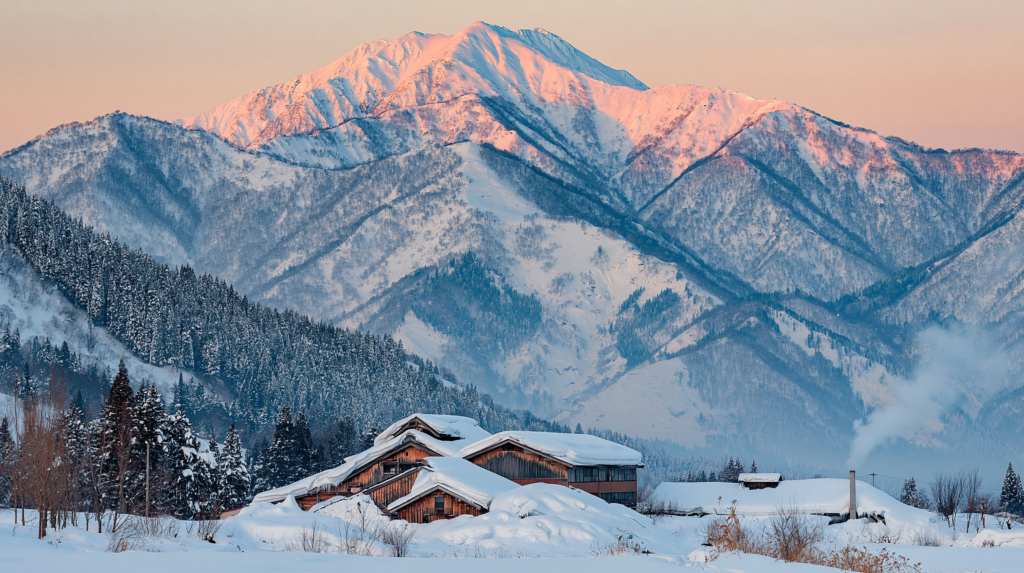
At the foot of sacred Mount Hakkai in Minamiuonuma, Niigata Prefecture, there is a semi-underground storage cellar packed with roughly 1,000 tons of natural snow. This is Hakkaisan Brewery’s yukimuro, or snow cellar. Without any artificial electric cooling, American white oak barrels rest silently in darkness, free from vibration, at a year-round temperature below 4°C. What lies inside them is neither whiskey nor bourbon. It is authentic rice shochu, created by a sake brewery using the techniques and byproducts of sake making. Its name is Hakkaisan Authentic Rice Shochu Oak Barrel-Aged “Fubaika.” Bottled at 40% ABV, this limited production has been quietly crafted since its debut in 2016.
Why a Sake Brewery Founded in 1922 Turned Toward Distilled Spirits
Hakkaisan Brewery began in 1922, when its founder, Koichi Nagumo, opened a small sake brewery in what is now Nagamori, Minamiuonuma City, Niigata Prefecture. Using “Raiden-sama no Shimizu,” spring water born from the snowmelt of sacred Mount Hakkai after a long journey underground, the brewery built its reputation with Hakkaisan, a clean, dry sake. In 1953, the second-generation head, Kazuo Nagumo, took over the family business at the age of 25 and rebuilt the brewery from the hardships of the postwar years. Under the third generation, Jiro Nagumo, the brewery underwent modernization, and in April 2025, leadership passed to the fourth generation, Masahito Nagumo. This sake brewery, with more than a century of history, established the Fukasawahara Distillery in 2005, entered the shochu business in 2008, and launched Fubaika in 2016. Distilled spirits may seem far removed from the world of sake, yet they are also unmistakably an extension of a brewery that has spent generations facing rice and water with discipline and care.
A Philosophy of Rice Shochu Unique to a Sake Brewery
Traditional rice shochu, especially from Kyushu, is typically built around white or black koji and a two-stage fermentation process. Fubaika begins from an entirely different place. Its ingredients are rice, rice koji, and sake lees. The koji is yellow koji, the same type used in sake brewing, and the yeast is also sake yeast. The mash is prepared using the same three-stage fermentation method as sake: hatsuzoe, nakazoe, and tomezoe. During fermentation, fresh sake lees produced in the making of Hakkaisan sake are added, bringing forth delicate ginjo aromas reminiscent of melon, green apple, and white flowers. The mash is then carefully distilled under reduced pressure at a low temperature of 40–50°C, yielding a clean, transparent base with minimal off-flavors. This is not “rice shochu made by a shochu producer borrowing techniques from Western spirits.” Rather, it is “a barrel-aged spirit designed by a sake brewery from the techniques and byproducts of sake making”—a context rarely found elsewhere in the industry.
Zero-Energy Aging, Turning Amber in the Snow
The distilled spirit is filled into American white oak barrels and carried into the semi-underground cellar of Hakkaisan’s yukimuro. The 1,000 tons of snow act as natural insulation, keeping the storage space below 4°C throughout the year. Darkness, high humidity, and stillness are maintained without vibration. It is a space sustained not by electricity, but solely by nature’s own cold. Over time, the barrel-derived aromas of vanilla, caramel, and dried fruit quietly merge with the ginjo fragrance and umami of rice carried by the original spirit. The final hue is intentionally kept to a pale amber—a delicate act of calibration that embraces the barrel’s character without overpowering the essence of the rice, while respecting the traditional definitions of Japanese shochu. The choice of composure over flamboyance is quietly expressed in the very color of the bottle.
The Name Fubaika, and a Quiet Will to Pass Something On
“Fubaika” refers to flowers that do not rely on birds or butterflies, but entrust themselves to the wind to carry life forward. The brewery has overlaid this image with its own quiet desire “to pass down Japan’s ancient sake-brewing techniques for a hundred years, even a thousand.” The label features Hanabana, a work by seal-engraving artist Satoru Furukawa. Its washi-paper design depicts a pair of characters for “flower” swaying in the wind. Rather than proclaiming itself with showy aromatics, the bottle conveys a presence that follows the order of nature and is quietly handed on to the next generation.
Quiet Recognition on the Global Stage
The quiet dedication poured into Fubaika has gradually resonated on the global stage. At the 2025 Tokyo Whisky & Spirits Competition, it was honored with the Superior Gold and the Design Award in the Shochu and Awamori division, reflecting a steady trajectory of international recognition over recent years. In their evaluations, international judges noted subtle nuances of dried fruit, pine, forest-like aromas reminiscent of mushrooms, and a lingering, spicy finish akin to white pepper.
When a glass is served on the rocks or as a delicate highball at a bar counter in Bangkok, what breathes beyond the glass carries equal weight: the underground water of Mount Hakkai, the silence of the snow cellar, and the stance of four generations of brewery heads who carried the craft of sake making into the world of distilled spirits. (Mr. Bacchus)
This article is intended solely to explore the distillation techniques and cultural heritage of Hakkaisan Brewery and the Fubaika brand, and does not aim to promote or encourage the consumption of alcohol. / บทความนี้จัดทำขึ้นเพื่อนำเสนอข้อมูลเกี่ยวกับเทคนิคการกลั่นและมรดกทางวัฒนธรรมของ Hakkaisan Brewery และแบรนด์ Fubaika เท่านั้น มิได้มีเจตนาเพื่อส่งเสริมหรือโฆษณาเครื่องดื่มแอลกอฮอล์ สำหรับผู้มีอายุ 20 ปีขึ้นไป โปรดดื่มอย่างรับผิดชอบ
Discover the culture behind every bottle
We share brewery stories, tasting notes and the craft of koji & fermentation — for educational and cultural purposes only.
เราถ่ายทอดเรื่องราวจากผู้ผลิต บันทึกรสชาติ และศาสตร์แห่งโคจิและการหมัก — เพื่อการศึกษาและวัฒนธรรมเท่านั้น
Follow on Instagram FacebookRelated Articles
“The Invisible Spirit” / “The True Vernacular of the Land” / “A Parallel Spirit” / “Sushi and the Choice of Shochu”