

Three Movements Reshaping the Sake Landscape in 2026
“Dry, please.” Many appreciators of sake have likely placed an order with just those two words. Since the 1980s, karakuchi—dry sake—has remained the defining shorthand for modern sake. Crisp finish, clean profile, no muddiness. For roughly 40 years, that ideal has shaped brewing itself, serving as the benchmark for what is widely considered “good sake.”
But that paradigm is now beginning to shift gently. Looking at three changes highlighted by the U.S. drinks trade publication SevenFifty Daily as key movements for 2026, it is becoming clear that sake is evolving into its next, more nuanced phase.
The Rise of Fruitiness and Acidity
Ariana Cho, who runs Sake Bar Asoko in Manhattan, notes that customer preferences are expanding.
“A lot of people still think of sake as dry and clean. But lately, there’s been a clear rise in demand for sake that’s fruity or floral.”
Behind that shift is a technical exploration from brewers themselves. One of the primary areas of focus is the application of koji.
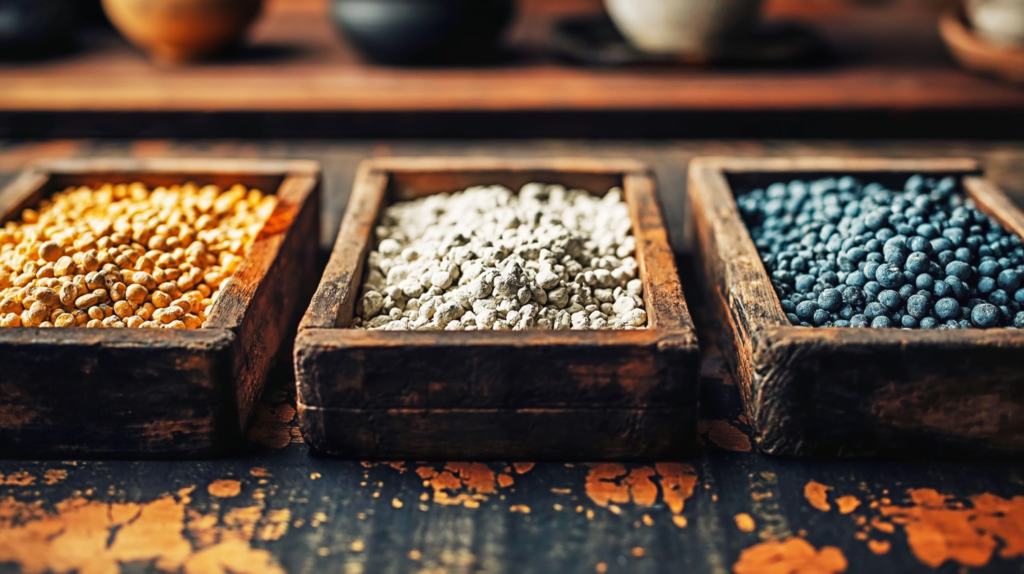
Traditionally, sake has been made with yellow koji mold. Yellow koji is excellent at converting starch into sugar, but it produces very little acid. White koji, traditionally used in shochu, and black koji, used in awamori, are distinctly different—they generate abundant citric acid. In recent years, pioneering breweries have started incorporating white or black koji into sake brewing, drawing out a bright, citrus-like acidity that traditional sake rarely exhibited.
Courtney Kaplan, co-founder of the Los Angeles sake bar Ototo, points to Senkin, a distinguished brewery in Tochigi Prefecture. Senkin began crafting sharply acidic sake several years ago, initially standing out as a unique approach within the industry. “At first, everyone laughed. But now acidity is right at the center of the trend.” For patrons approaching sake from the wine world, sake with pronounced acidity feels immediately approachable and legible.
The year-round availability of namazake, or unpasteurized sake, also complements this shift. Because it is not heat-pasteurized, namazake tends to preserve fresh fruitiness and acidity more vividly. Once primarily a seasonal spring release, advances in shipping and storage have made year-round distribution possible. Even in exports to Southeast Asia, sophisticated cold-chain logistics are gradually making namazake a reliable and delightful option.
Nigori and Sparkling Sake Are Evolving
Texture is undergoing a thoughtful transformation as well.
George Padilla, who operates Rule of Thirds and Bin Bin Sake in Brooklyn, is observing the evolution of nigori sake. Nigori is a cloudy sake made by coarsely filtering the fermenting mash, and for a long time, it was perceived as a sweet, mellow gateway style. But according to Padilla, contemporary nigori is increasingly lighter, drier, and more structured.
“Anyone who only knows sweet, heavy nigori would be surprised by what nigori tastes like now. It also works with a much wider range of food.”
The landscape of sparkling sake is expanding accordingly. Until a few years ago, sparkling sake was often categorized as either prohibitively expensive or mass-market offerings with artificially added carbonation. Now, bottle-fermented sparkling sake—crafted in the traditional Champagne method—as well as pét-nat-style naturally sparkling sake, are gracefully entering the mid-price range.
The Transition Beyond the Polishing Race
The third shift touches the very core of sake craftsmanship.
For decades, the sake world treated seimai buai—the rice polishing ratio, or how much of the grain is milled away—as a primary metric of quality. Daiginjo involved more extensive polishing, ginjo somewhat less, while junmai and honjozo typically retained more of the grain. Among breweries, the dedication to how far rice could be polished became increasingly intense. This pursuit of refinement occasionally bordered on the extreme, with some pushing to mill away 99 percent of the grain.
“I think that competition is over,” says Sachiko Miyagi of the sake subscription service Tippsy. Instead of pursuing delicacy solely through ever-increasing polishing, forward-thinking breweries are beginning to embrace lower polishing rates that allow the rice’s natural umami to express itself beautifully.
There are practical realities underlying this shift as well. Monica Samuels of the sake importer Komé Collective points to Japan’s severe rice shortage. Since 2023, the price of sake rice has doubled. Policy shifts, climate change, and economic factors have all converged, significantly impacting the top-producing regions for premium sake rice.
“If you polish too much, you end up throwing away most of an already expensive raw material. At this point, it’s a matter of survival.”
What began as a necessity is also cultivating new value. Brewers are increasingly spotlighting rice varieties specific to their regions. Omachi, Okayama’s signature sake rice, serves as one of the most compelling examples. According to Kaplan of Ototo, there are devoted connoisseurs in Japan who call themselves “Omachists” and specifically seek out sake crafted from Omachi.
Banjo Jozo, the esteemed brewery behind Kuheiji in Aichi Prefecture, grows its own Yamada Nishiki in Hyogo and Omachi in Okayama, reflecting the unique character of each field in the final label. The concept of terroir—long established in the wine world—is now thoughtfully taking root among sake producers.
Changing to Preserve the Essence
From a predominantly dry paradigm to an appreciation of fruitiness and acidity. From sweet nigori to dry, elegantly structured nigori. From the intense race to polish ever further to a deep respect for the character of individual rice varieties.
What these three movements share is a broader evolution in sake: gently shifting away from an aesthetic of subtraction—polishing, stripping away, removing—and toward a rich diversity of addition. It is about drawing out acidity, retaining natural cloudiness, and fully embracing the inherent character of the rice itself. This shift is not a departure from tradition, but rather a profound sign of the industry’s maturity. (Mr.Bacchus)
This article is intended solely to explore the evolving brewing philosophy and cultural heritage of the Japanese sake industry, and does not aim to promote or encourage the consumption of alcohol. / บทความนี้จัดทำขึ้นเพื่อนำเสนอข้อมูลเกี่ยวกับปรัชญาการผลิตและมรดกทางวัฒนธรรมของอุตสาหกรรมสาเกญี่ปุ่นเท่านั้น มิได้มีเจตนาเพื่อส่งเสริมหรือโฆษณาเครื่องดื่มแอลกอฮอล์ สำหรับผู้มีอายุ 20 ปีขึ้นไป โปรดดื่มอย่างรับผิดชอบ
Discover the culture behind every bottle
We share brewery stories, tasting notes and the craft of koji & fermentation — for educational and cultural purposes only.
เราถ่ายทอดเรื่องราวจากผู้ผลิต บันทึกรสชาติ และศาสตร์แห่งโคจิและการหมัก — เพื่อการศึกษาและวัฒนธรรมเท่านั้น
Follow on Instagram Facebook