

Emerging from a Wooden Mill Without a Still
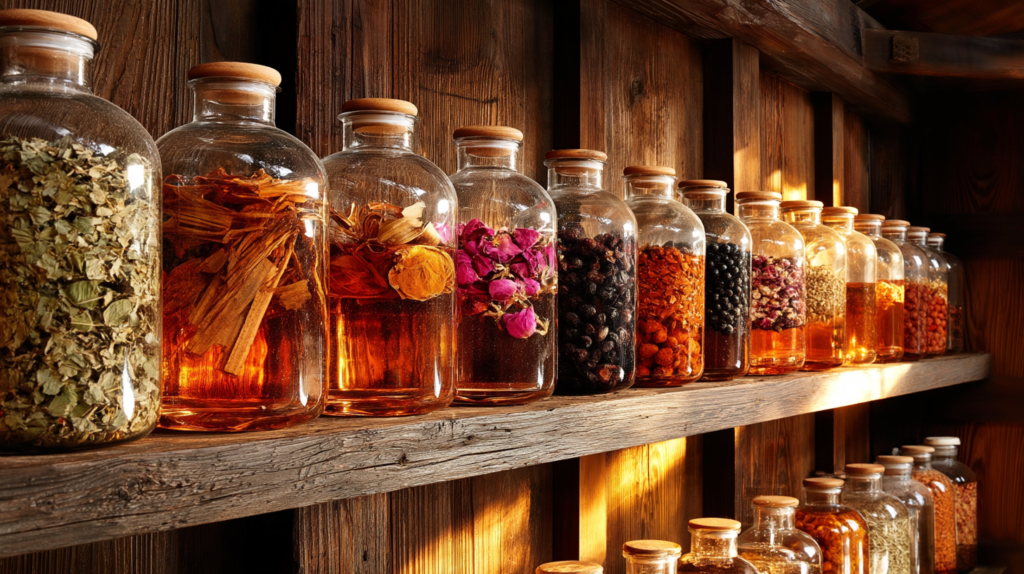
What is Vermouth? At its core, vermouth is a fortified wine infused with herbs and spices. Formalized in 18th-century Turin, it has long served as the foundation for classic cocktails such as the Negroni and the Manhattan. Its base has always been wine—an assumption that has remained largely unquestioned globally for over two centuries. In Kanegasaki, Iwate Prefecture, a local distillery has gracefully challenged this convention.
A Bartender’s Encounter with a Classic Kazuma Oikawa was born in 1993 to a farming family in Kanegasaki, Iwate. He began his journey as a bartender in Tokyo, where he encountered a defining cocktail. It featured Carpano Antica Formula, a legendary Italian sweet vermouth created in 1786. The deep aromas of vanilla and saffron, coupled with the intricately layered herbal bitterness—this single bottle set Oikawa on his lifelong path. In 2015, he relocated to Canada to focus on developing cocktails utilizing natural ingredients. Upon returning to Japan, he opened a botanical-focused bar in Meguro, Tokyo, eventually earning recognition as a finalist in the DIAGEO WORLD CLASS 2019 Japan competition. Yet, as he continued to perfect his craft behind the bar, a profound thought took root: could he create the exact vermouth he envisioned with his own hands? During the global pause of the COVID-19 pandemic, Oikawa returned to his hometown in Iwate. In 2021, he established the Kanegasaki Botanical Distillery on the site of his grandfather’s former rice-polishing mill.
Turning Constraint into Craftsmanship Upon establishing the distillery, a significant structural constraint emerged. The inherited wooden building could not house a traditional still due to strict fire safety regulations. As distillation is traditionally a vital step in producing herbal liqueurs, this could have been perceived as a fatal setback. Instead, Oikawa turned this limitation into a signature technique. Foregoing distillation, he committed entirely to the art of maceration. Botanicals are infused separately in three to four meticulous stages, then masterfully layered to build aromatic complexity. This process mirrors the philosophy of a bartender layering different spirits to construct a perfectly balanced cocktail. The refined sensibility he developed behind the bar translated seamlessly onto the production floor.
Redefining the Base: From Wine to Mirin He then gently rewrote another long-standing convention: selecting mirin, rather than wine, as the foundation. Mirin is a traditional Japanese fermented seasoning, crafted by saccharifying and aging glutinous rice, rice koji, and shochu. The amino acids—rich sources of umami—produced by the koji, combined with glucose and oligosaccharides, create a complex sweetness that offers an entirely different texture from the simple sugars found in wine. Developing this specific mirin took approximately two years. Crafted from Iwate’s premium “Konjiki no Kaze” rice, it was brewed utilizing patented techniques from Kokonoe Mirin, a highly esteemed historical producer in Aichi. For fortification, he selected kasu-tori shochu—a spirit distilled from sake lees—introducing elegant ginjo aromas and profound umami components. While wine-based vermouth relies on grape-derived acidity and tannins for its structure, AKA-ONI ROSSO is structurally built upon the umami of rice koji and the nuanced complexity of layered, natural sugars. Into this rich foundation, he weaves carefully selected botanicals: kuromoji and tamushiba gathered from the mountains of the Tohoku region, kihada (Amur cork tree)—a traditional Japanese botanical—and wormwood, the defining essence of any true vermouth. Within this single bottle, the traditions of Western herbal liqueurs and Japan’s historical “otoso” culture gracefully intersect.
A New Chapter in Botanical Craft AKA-ONI ROSSO is a recent addition to the world of botanical spirits, having been released in the latter half of 2024. While it may not yet possess the historical legacy of century-old brands, its creation represents a quiet revolution in craftsmanship. Even when looking across the global vermouth landscape, there is no other expression quite like this. While a select few Japanese-style vermouths utilize sake as their foundation, this is the only one that has ventured into the complex world of mirin. From a wooden rice mill that could not accommodate a still, a bottle has emerged that challenges a 200-year-old assumption. That dedication to reimagining tradition forms the very essence of this vermouth’s remarkable story. (Mr.Bacchus)
This article is intended solely to explore the blending craftsmanship and cultural heritage of Kanegasaki Yakusou Shuzo (K.S.P Co., Ltd.) and the AKA-ONI ROSSO brand, and does not aim to promote or encourage the consumption of alcohol. / บทความนี้จัดทำขึ้นเพื่อนำเสนอข้อมูลเกี่ยวกับศิลปะการผสมผสานและมรดกทางวัฒนธรรมของ Kanegasaki Yakusou Shuzo (K.S.P Co., Ltd.) และแบรนด์ AKA-ONI ROSSO เท่านั้น มิได้มีเจตนาเพื่อส่งเสริมหรือโฆษณาเครื่องดื่มแอลกอฮอล์ สำหรับผู้มีอายุ 20 ปีขึ้นไป โปรดดื่มอย่างรับผิดชอบ