

The event will be held on 31.7.2025.
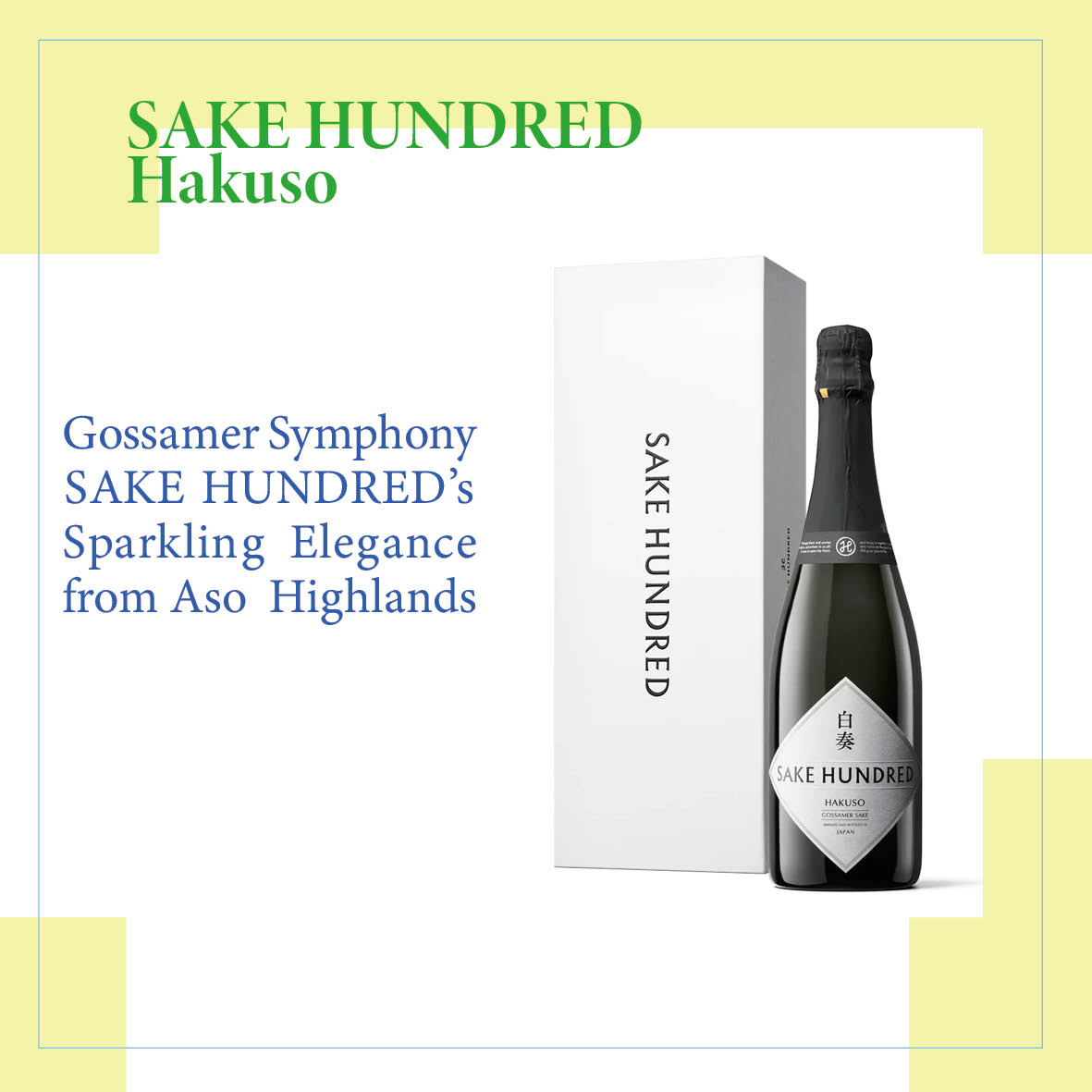
■ SAKE HUNDRED HAKUSO
-Gossamer Symphony SAKE HUNDRED’s Sparkling Elegance from Aso Highlands-
Billed by its creator as a “Gossamer Sake,” Hakuso pours the palest gold and shimmers with bottle-borne bubbles. Fukuoka-grown Yamada-Nishiki is polished down to a mere 18% of its original weight, then coaxed through secondary fermentation to just 14.2% ABV, releasing whisper-fine mousse and notes of white peach, muscat, and fresh cream over a cool, slate-toned finish.
Hakuso is brewed exclusively at Kawazu Shuzo (established in 1932) in Oguni Town, Aso, Kumamoto. The third-generation kura draws pristine spring water filtered through volcanic slopes and revives Kumamoto yeast to craft sake of crystalline purity.
“Gossamer” reflects both the lace-fine carbonation and Hakuso’s feather-light sweetness.
Polishing removes 82% of every grain—leaving only the translucent core that gives the sake its remarkable clarity.
Hakuso captured a Gold Medal in the Sparkling Division at the 2021 International Wine Challenge, bringing global acclaim to rural Kumamoto.
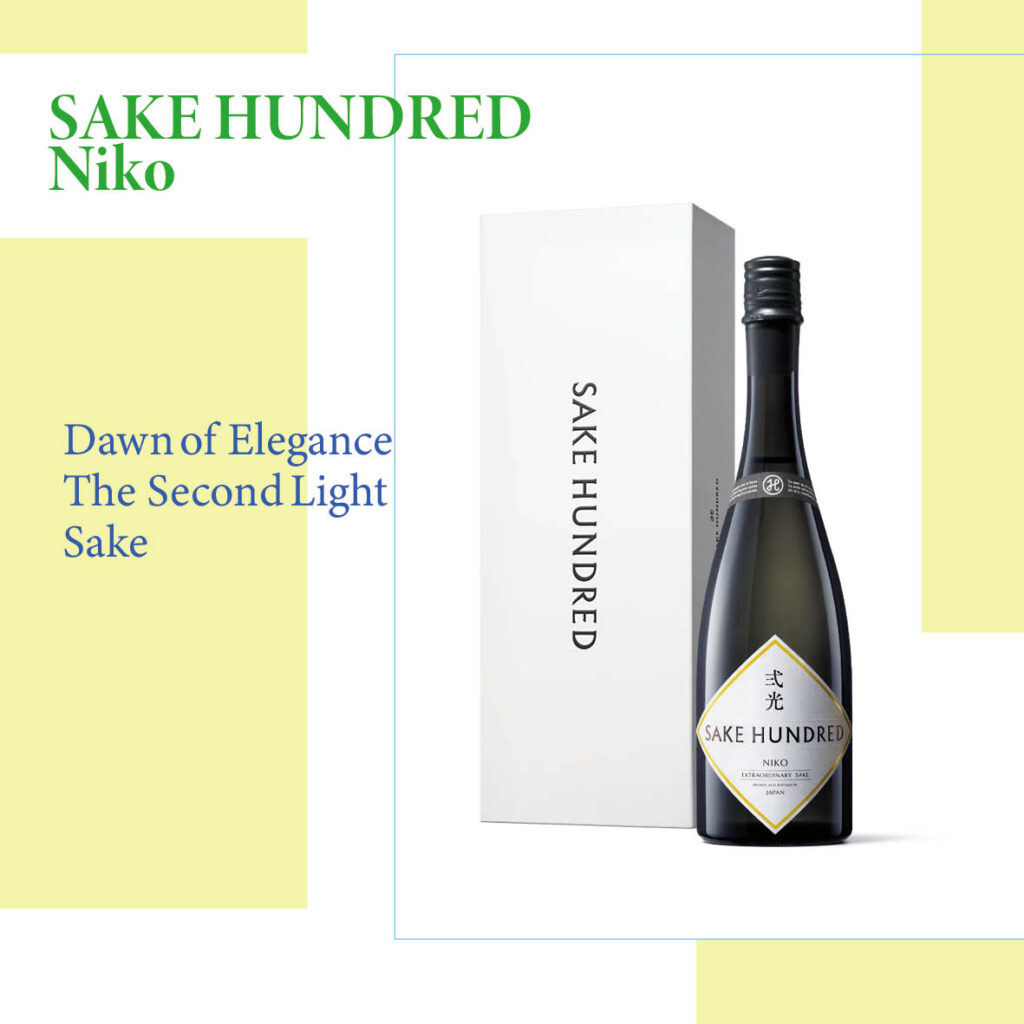
■ SAKE HUNDRED NIKO
-Dawn of Elegance The Second Light Sake-
“NIKO” is conceived as the gateway to SAKE HUNDRED’s progressive line-up, proving that radical ideas can feel effortlessly approachable. Crafted in Niigata from Gohyakumangoku rice, with its polishing ratio deliberately undisclosed, it swaps sake’s customary yellow kōji for white kōji—a citrus-driven strain normally reserved for shōchū. This rare four-stage mash (shiro-kōji yondan-shikomi) lifts the alcohol to a gentle 13.4% ABV while layering notes of Japanese pear, white blossoms, and a flash of yuzu over velvety sweetness. Vivid acidity snaps the finish into crystalline focus, making each sip both plush and precise.
Released in 2024, “NIKO” secured a Silver Medal at the 2025 International Wine Challenge, underscoring its status as a modern icon of accessible luxury.
Its name means “second light,” evoking dawn’s first glow and inviting drinkers to discover new horizons in sake craftsmanship.
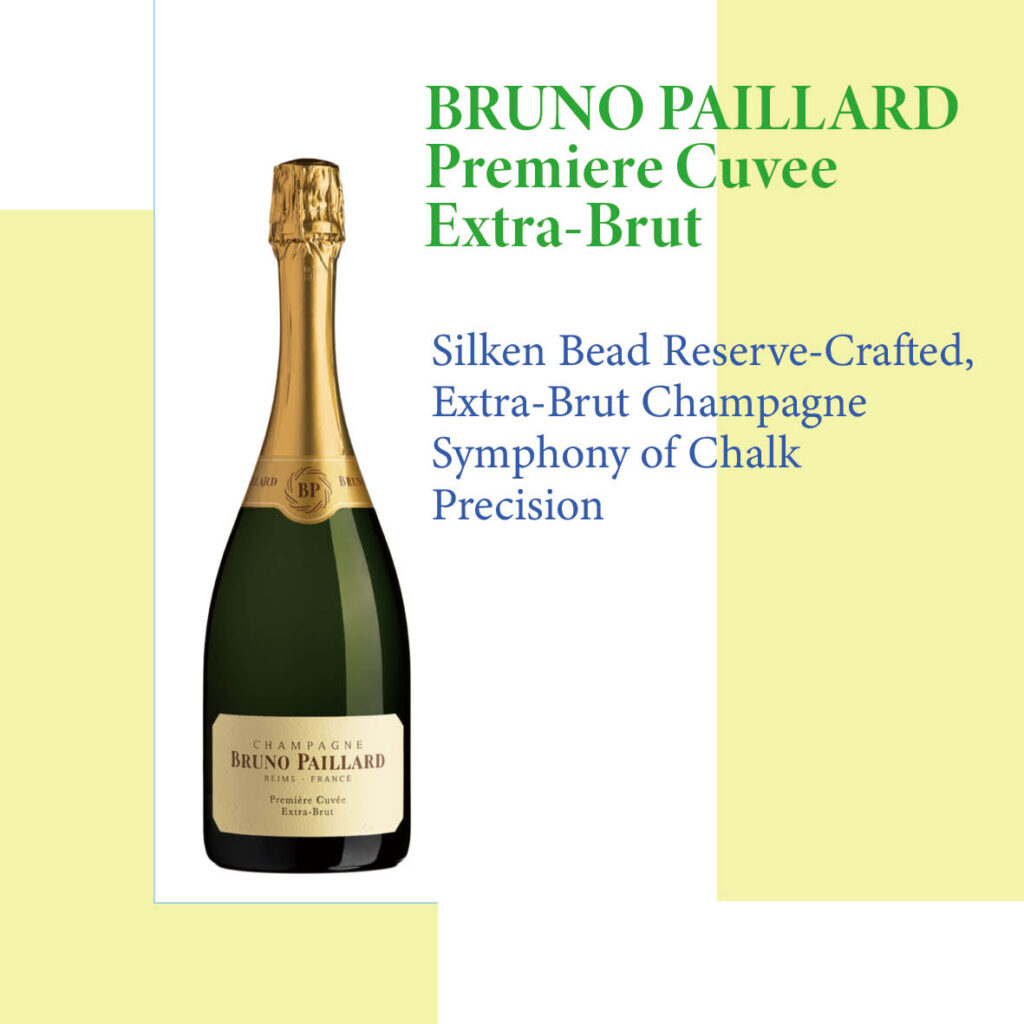
■ BRUNO PAILLARD Premiere Cuvee Extra-Brut
-Silken Bead Reserve‑Crafted, Extra‑Brut Champagne Symphony of Chalk Precision–
A silk‑threaded bead rises through pale‑straw hues, born from a meticulous first‑press blend—45% Pinot Noir, 33% Chardonnay, and 22% Meunier. Up to half the cuvée is reserve wine drawn from twenty‑five vintages held in a solera system dating back to 1985, layering brioche, bright citrus, and red‑berry tones.
After three years on the lees and five months of repose following disgorgement, the dosage is held below 6 g/L, delivering crystalline dryness that elongates the chalk‑mineral finish.
Founded in 1981 with a vision of “extreme purity,” Champagne Bruno Paillard now stewards 32 ha across Grand Cru and Premier Cru villages, vinifying each plot separately to protect terroir nuance.
In 1983, Paillard became the first Champagne house to print the disgorgement date on every bottle—now an industry benchmark for transparency. Only the delicate cuvée (first pressing) is used; 20% ferments in French oak for added depth. Each release spends over twice the legal aging minimum, ensuring graceful complexity while retaining remarkable freshness.
At once poised and vibrant, Première Cuvée Extra‑Brut encapsulates the maison’s philosophy: a Champagne of weightless intensity, crafted for connoisseurs who prize absolute precision in the glass.
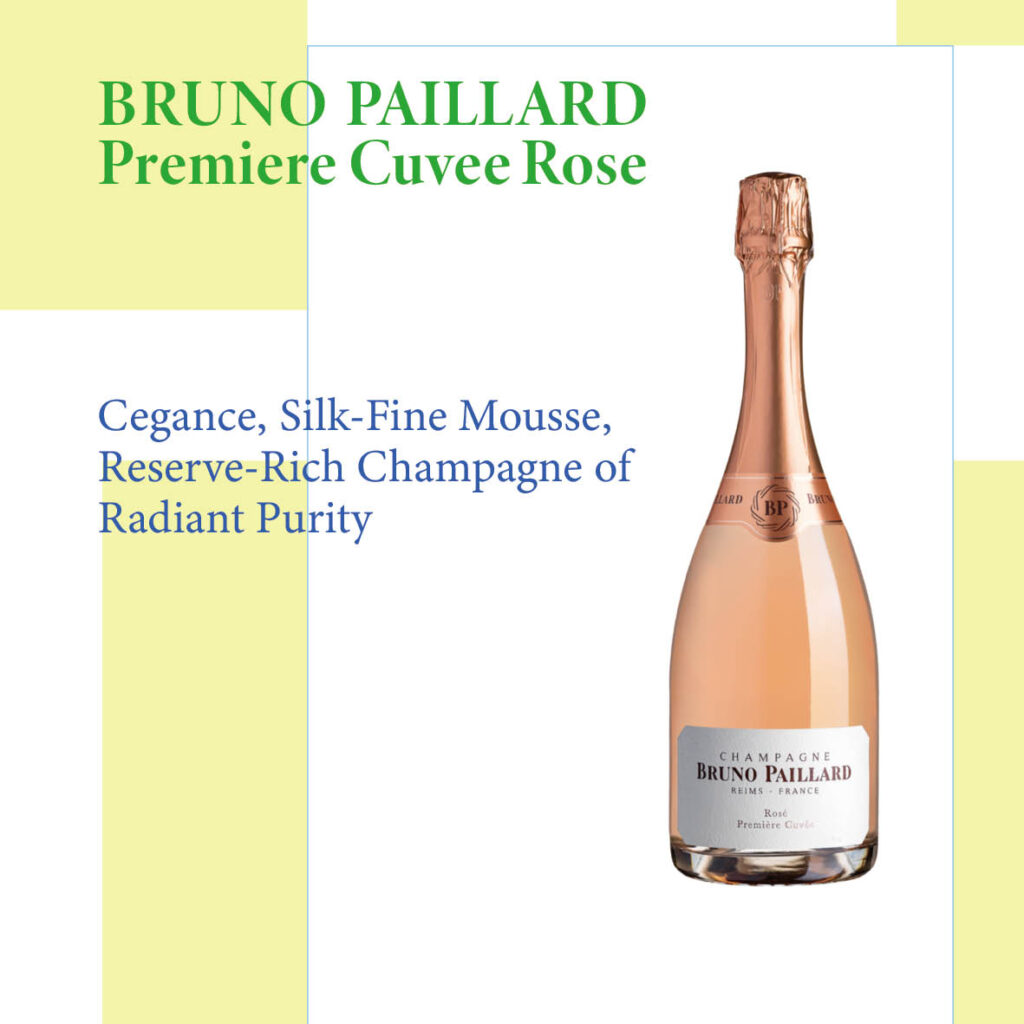
■ BRUNO PAILLARD Rose Premiere Cuvee
-Copper‑Pink Elegance, Silk‑Fine Mousse, Reserve‑Rich Champagne of Radiant Purity–
Rosé Première Cuvée Extra‑Brut rises like vintage silk. Crafted from the first press of Pinot Noir with a whisper of Chardonnay, it includes reserve wines from up to 25 vintages dating back to 1985. Three years on lees and a sub‑6 g/L dosage yield copper‑pink brilliance, pinpoint mousse, and wild strawberry, tangerine, and rose notes that dissolve into chalk‑saline length.
Maison Bruno Paillard—independent and Reims-based, founded in 1981 and now stewarding 32 ha of vineyards across 15 crus—vinifies each parcel separately, then stamps every bottle with its disgorgement date—a transparency first introduced in 1983.
Only the “première cuvée” (first-press) juice—about half the volume of each grape—is used, protecting absolute purity.
The rosé hue is achieved by blending Pinot Noir vinified as white wine with a brief skin-macerated red Pinot Noir—a technique Paillard helped popularize.
Recent disgorgements earn 93–94‑point reviews from leading critics, reinforcing its collectible appeal.
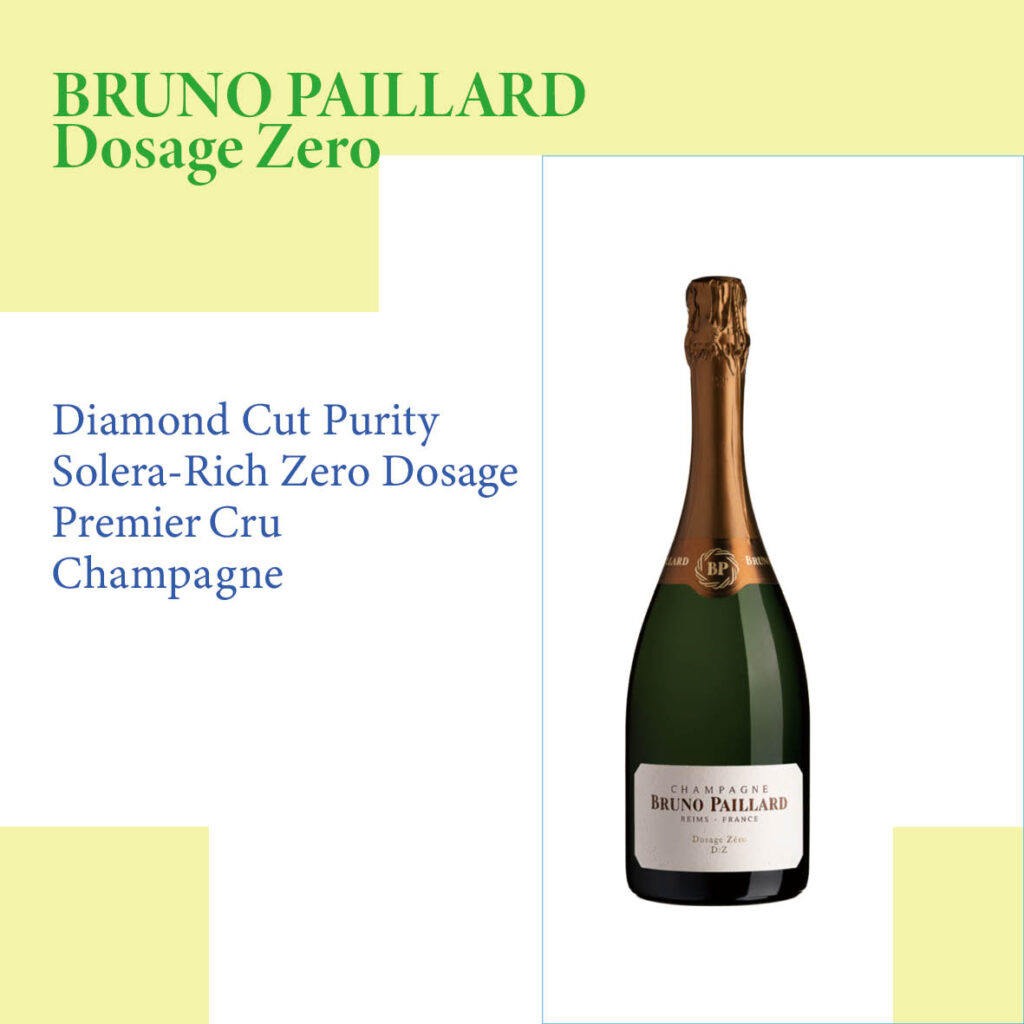
■ BRUNO PAILLARD Dosage Zero
-Diamond‑Cut Purity: Solera‑Rich Zero‑Dosage Champagne from Premier Crus-
Harvested solely from the tête‑de‑cuvée of more than thirty Premier Cru and Grand Cru parcels, this non‑vintage Dosage Zero Champagne lets expressive Meunier lead, with equal parts Chardonnay and Pinot Noir. Fully 50% of the blend draws on a perpetual reserve begun in 1985, layering brioche depth, pristine white-fruit brightness, and more. After three to four years sur lie and a further six-month cellar rest, it emerges with absolutely no added sugar: a diamond‑cut stream of bubbles carries almond, raspberry, chalk, and star anise nuances toward an electrifying, saline finish.
Founded in 1981, the independent Reims maison now stewards 32 ha of vineyards across fifteen crus, vinifying each parcel separately, and—since 1983—printing the disgorgement date on every bottle, so collectors can chart its evolution.
Only the tête‑de‑cuvée—about 50% of each berry—is selected for the blend. Reserve wines older than ten years intensify autolytic richness without the need for added sugar. Recent disgorgements score 93–94 points from leading critics, proving zero dosage can still enthrall.
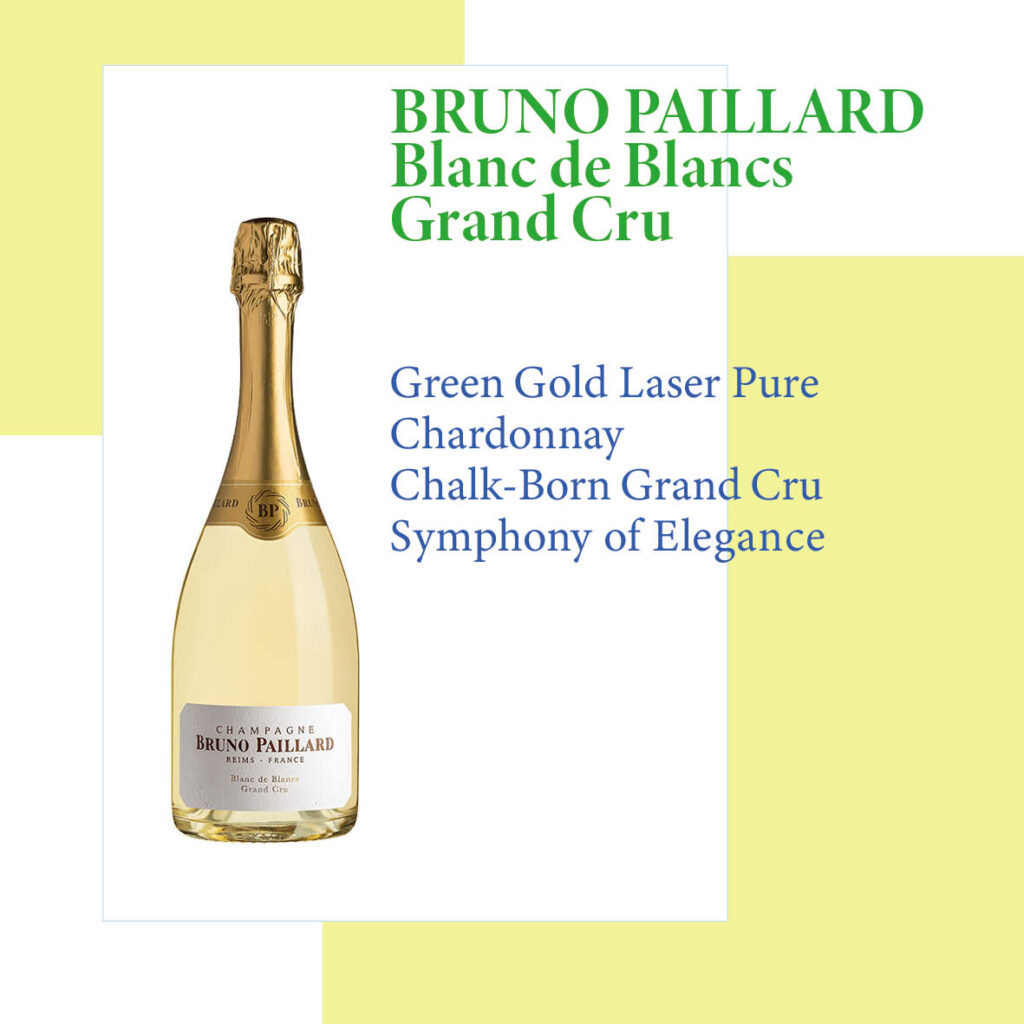
■ BRUNO PAILLARD Blanc de Blancs Grand
-Green‑Gold Laser‑Pure Chardonnay, Chalk‑Born Grand Cru Symphony of Elegance-
Drawn exclusively from the first press of 100% Chardonnay grown in the chalky Grand Cru vineyards of Le Mesnil-sur-Oger and Oger, this cuvée glows with green-gold hues and releases a lace-fine bead. Aromas of lime, white blossom, and fresh almond open into creamy citrus and oyster-shell minerality, then taper to a laser-clean, saline finish. Four years sur lie and at least ten months’ rest after disgorgement add velvety texture, while a dosage held to just 5 g/L keeps the palate thrillingly dry.
Founded in Reims in 1981, Champagne Bruno Paillard stewards 32 ha of vineyards across fifteen crus and vinifies each parcel separately to preserve terroir nuance. Since 1983, every bottle has carried its disgorgement date—a transparency the house pioneered—inviting collectors to follow each wine’s evolution in their own cellars.
Half the blend is drawn from a perpetual reserve dating back to 1985, layering youthful tension over decades of complexity in every glass.


![The Juyondai Story] How Takahiro Nagayama, Owner of Yamaguchi’s “Taka” Brewery, Was Shocked by Juyondai at Age 21 and His Life Was Changed (Part 10)](https://bacchusglobal.co.th/wp-content/uploads/2025/08/m9885-300x160.jpg)

