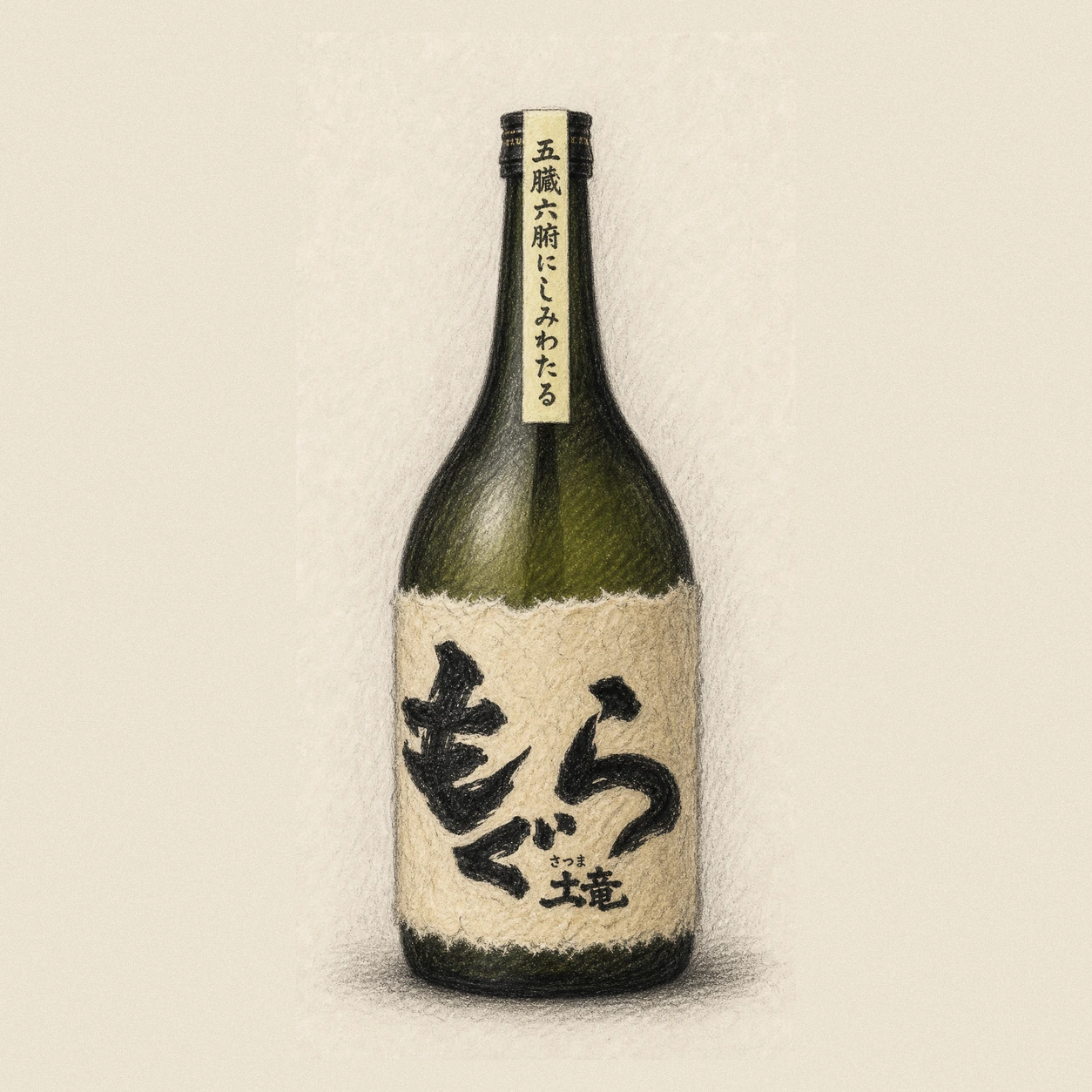
MOGURA
Koganesengan, white koji and a deliberately light filtration make MOGURA a sweet-potato shochu with the material still close at hand. It was developed with the Sake Craftsmen Guild for a distinct, soil-led expression rather than a polished generic style.
Filtration kept deliberately light
MOGURA uses Kagoshima-grown Koganesengan and white koji, then keeps filtration deliberately light. The result is not arranged around a standardised cleanness; it leaves room for the earthy, fuller side of sweet-potato shochu.
The producer and the network kept distinct
Satsuma Musou is the maker. The Sake Craftsmen Guild is the development and distribution network through which the bottle is presented. MOGURA’s own product record is kept separate from the awards and specifications of other expressions from the same producer.
Four directions that meet an earthy presence
Drawing on the characteristics recorded for Mogura — the earthiness and thickness left by its deliberately coarse filtration, and a body that doesn’t aim for standardized lightness — this reads four directions of affinity with food. This is not a pairing the brewery has officially presented, but a reading drawn from the recorded characteristics.
This pairing rationale draws on the following reference books: the Grand Compendium of Food Pairing’s idea of “strategically converting a flaw” — that earthiness (geosmin) needn’t be hidden but can be turned into the intellectual value of terroir when paired with aromas in the same family — and on the “combination” flavor logic from Logical Pairing, represented by caraway-seasoned sauerkraut paired with Riesling.
Kagoshima — Satsuma Musou
Satsuma Musou makes both MOGURA and SOBA-OSHO in Kagoshima. “Sake Craftsmen Guild” identifies the distribution and development network, not the producer; these pages keep the maker and the individual product distinct.
For current-lot specifications, availability, storage requirements and trade terms, please contact Bacchus Global.