An Exquisite Luxury, Forged by Time
Traditionally, the allure of sake has been synonymous with the vibrant freshness of a newly pressed brew, the vitality of shinshu, and the bright, elegant aromas ascending from the glass. While this vibrant youthfulness remains an undeniable virtue, the year 2026 heralds a quiet yet unmistakable paradigm shift toward a profoundly different luxury. That luxury is aged sake. As years—and occasionally decades—pass within the brewery cellars, sake transcends its identity as a mere “fresh beverage.” Its evolution—sculpted by time, the graceful embrace of change, and a profound deepening of character—mirrors the sophisticated maturation aesthetics long celebrated in fine wines and premium spirits. The global palate is finally awakening to this ultimate luxury: the invaluable essence of time. Following UNESCO’s December 2024 inscription of Japan’s “traditional knowledge and skills of sake-making with kouji mold” as an Intangible Cultural Heritage, sake’s global prestige has soared. This milestone elevated the international discourse from a fundamental “What is sake?” to a more profound inquiry: “How complex can sake truly become?” Few creations answer this more eloquently than aged sake.
The Maturation of a Global Standard|The Significance of the IWC in Hiroshima In May 2026, the prestigious International Wine Challenge (IWC) SAKE judging convenes in Hiroshima Prefecture. Marking its fourth edition in Japan—following Tokyo, Hyogo, and Yamagata—the event simultaneously celebrates the 20th anniversary of the SAKE category itself. The symbolism is undeniable: sake has transcended its domestic borders, evolving into a highly coveted artifact refined through a rigorous global framework. One especially notable advancement is the growing precision with which aged sake is evaluated. What was once grouped under the broad label of koshu has, since the 2023 judging, been meticulously divided into two distinct categories: koshu and jukuseishu. Koshu, aged extensively at ambient temperatures, is distinguished by its mesmerizing amber hues and opulent, concentrated flavor profiles. Conversely, jukuseishu is meticulously curated within chilled environments, preserving its crystalline clarity while acquiring a breathtaking depth and complexity that only time can bestow. This refined distinction marks a defining moment on the international stage, demonstrating that time-aged sake is not a monolithic style, but rather a captivating spectrum of expressions. Much like the revered vintage and bottle-aging traditions of fine wine, sake acquires an entirely new dimension through its dialogue with time. The evolution of the IWC judging system now tells that story in a language the world’s epicureans understand perfectly.
The Art of Patience|The Master Brewer’s Secret Aged sake is not a serendipitous product of mere storage. It demands a visionary intention from the master brewer, unparalleled technical mastery over long-term maturation, and the uncompromising resolve to wait. According to the Long-Term Aged Sake Research Group, authentic aged koshu is sake (excluding those with added sugars) matured within the brewery for a minimum of three full years. For three, five, or even ten years, the brewer refrains from the immediate gratification of the market. Instead, they grant the sake sanctuary, meticulously orchestrating temperature and humidity, quietly entrusting their masterpiece to the passage of time. That profound act of patience runs counter to the modern market’s relentless demand for immediacy. Yet, select artisanal brewers continue to pursue aged sake for one transcendent reason: they intimately know the depth of flavor that only time can curate. As parallel multiple fermentation unfolds, an intricate alchemy occurs during aging. Amino acids and sugars interact, deepening the hue and unfurling the aroma into sophisticated nuances of roasted nuts, rich caramel, and dried fruits. The result is a serenely layered masterpiece, a striking departure from the vivid brightness of youthful sake. A paragon of this craft is Daruma Masamune, produced by Shiraki Tsunesuke Shoten in Gifu Prefecture. Their exclusive lineup, spanning ten to twenty years of maturation, serves as a powerful testament that aging is not merely an abstract concept, but a profound, tangible evolution of flavor. At its heart lies a philosophy that embraces time not as an adversary, but as the ultimate partner in creation.
The Aged Sake Renaissance|Exclusive Encounters In April 2026, Jukusei Koshu Renaissance 2026 will grace the Red Brick Sake Brewery—an Important Cultural Property in Takinogawa, Tokyo. Twelve elite breweries from across Japan will converge, presenting exceptional sake matured for a minimum of three years. Enhanced by the historical gravity of the Meiji-era brick architecture, this event transcends a mere tasting. It promises an immersive experience where the historical echoes of the venue and the intrinsic time captured within each drop of aged sake seamlessly intertwine. Simultaneously, the proliferation of such high-caliber events indicates that the allure of aged sake is steadily emerging as an exclusive narrative awaiting discovery by discerning connoisseurs. In late March, the acclaimed SAKE PARK will host its sixth edition at Tokyo Midtown, featuring around 30 premium breweries. As opportunities for experiential luxury expand, aged sake is poised at the forefront of epicurean discovery. International markets are actively fueling this momentum. In 2025, sake exports achieved 110% year-over-year volume growth and an impressive 114% in value. This transcends mere volume; the rising price points indicate a profound market shift from casual consumption to the pursuit of premium, ultra-luxury experiences. Aged sake stands boldly at the vanguard of this movement.
Kouji and Time|The Profound Value of Fermentation Heritage
To truly appreciate aged sake is to understand the magic of kouji. UNESCO’s recognition specifically honored the traditional knowledge and techniques of brewing with kouji mold—a quintessential element not just for sake, but for the foundational fermented luxuries of Japanese gastronomy, including premium miso, soy sauce, mirin, and artisan vinegars. Fascinatingly, kouji’s influence persists long after the brewing concludes. Even post-pressing, the subtle, continuous chemical symphonies within the bottle or tank nurture the unparalleled complexity unique to aged sake. In essence, aged sake does not mark the conclusion of fermentation, but rather its magnificent sequel. The infinite possibilities initially awakened by kouji are gradually unfurled, deepened, and masterfully transformed by time into an entirely new medium of expression. It is this extraordinary temporal depth that renders aged sake truly peerless. This perspective resonates far beyond Japan. Across Southeast Asia—from Thailand’s savory nam pla to Cambodia’s prahok and Indonesia’s tempeh—fermentation is deeply woven into the sophisticated culinary fabric. Viewed through this expansive lens, the maturation of sake reflects both a uniquely Japanese aesthetic and a rich, resonant narrative echoing the vibrant fermentation heritage celebrated across Asia’s finest dining tables.
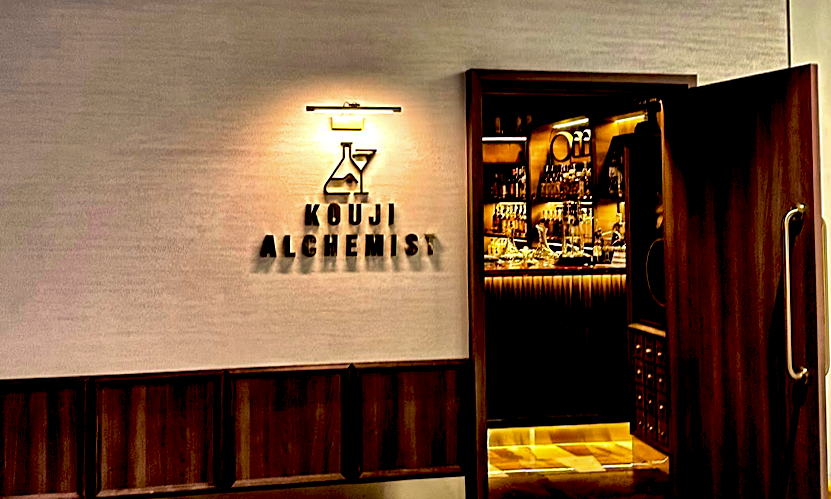
Beyond Youth|The New Epoch of Sake in 2026 The year 2026 stands as a monumental turning point for aged sake. The refinement of IWC judging standards, the global prestige ignited by UNESCO, and the curation of exclusive tasting experiences collectively redefine how sake is perceived on the world stage. Vibrant, aromatic profiles merely scratch the surface of sake’s true potential. Beyond lies the extraordinary composure, intricate complexity, and lingering finish born solely from the meticulous accumulation of time. As the global elite embrace these refined values, sake will be celebrated as a profoundly broad, deep, and mature cultural artifact. Aged sake is the quiet yet powerful forerunner of this magnificent future. In perfect harmony with this cultural renaissance, KOUJI ALCHEMIST quietly aligns with this profound movement, conveying the sensory and cultural depths of kouji through an exquisite, contemporary lens.
This article is intended solely to explore the brewing philosophy and cultural heritage of Japanese aged sake (Jukusei-shu) and does not aim to promote or encourage the consumption of alcohol. / บทความนี้จัดทำขึ้นเพื่อนำเสนอข้อมูลเกี่ยวกับปรัชญาการผลิตและมรดกทางวัฒนธรรมของสาเกบ่มของญี่ปุ่น (Jukusei-shu) เท่านั้น มิได้มีเจตนาเพื่อส่งเสริมหรือโฆษณาเครื่องดื่มแอลกอฮอล์ สำหรับผู้มีอายุ 20 ปีขึ้นไป โปรดดื่มอย่างรับผิดชอบ
KOUJI ALCHEMIST by Salon du Japonisant — An exclusive, experiential boutique in Bangkok, curating the finest in Japanese fermentation culture and premium craft spirits. (Velaa Sindhorn Village, 87 Lang Suan Rd.,)