Drink
The Two Percent That Shapes the Story of Wine
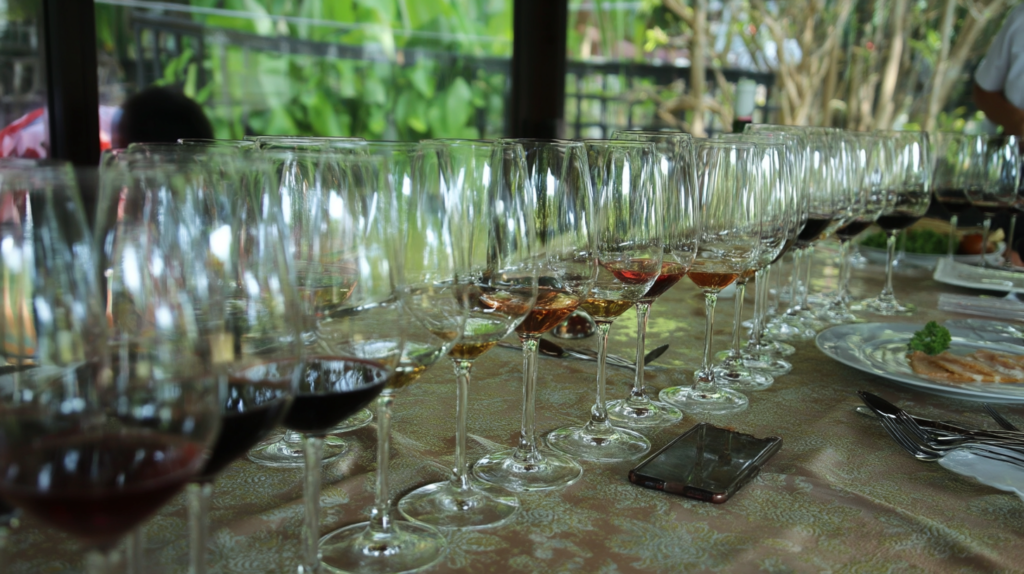
A glass of wine is composed almost entirely of water and alcohol—together accounting for 98% of the liquid. The remaining 2% holds everything else.
And yet, it is this precise 2% that allows wine to taste, look, and feel like wine. According to the Institute of Enology and Viticulture at the University of Yamanashi, the fluid’s aroma, color, and acidity all originate from these microscopic components.
A Single Tablespoon in a Bottle
As noted in The Latest Science of Wine (Kodansha Blue Backs), wine is generally composed of about 86% water and 12% alcohol. The remaining 2% consists of glycerol, organic acids, phenolic compounds, and other trace elements.
To visualize this, 2% in a standard 750 ml bottle equates to roughly one tablespoon—about 15 ml. Yet, packed into this minute volume is the entire matrix of a wine’s character.
The One Percent of Glycerol That Lends Body
The largest component within this fraction is glycerol. It accounts for a mere 1%, but it is entirely responsible for how wine glides across the palate. The sensations often described as “body” or “weight” stem from this compound, rendering a subtle, silken texture.
The 0.4% of Acid That Shapes Structure
Organic acids follow, making up just 0.4% of the whole. Despite this minimal presence, these acids grant the wine its crispness, structure, and tension.
Wine primarily contains six organic acids: tartaric, malic, succinic, lactic, acetic, and citric. Malic acid mirrors the crispness found in green apples; citric acid brings the brightness of citrus; lactic acid offers the roundness of yogurt. These acids belong to families of flavors already familiar to our daily lives.
Their true intrigue, however, lies in their origin. Tartaric acid, malic acid, and certain citric acids are inherent to the grape itself. Conversely, succinic, lactic, and acetic acids are newly synthesized during fermentation by yeast and other microorganisms.
The acidity of wine is thus a beautiful dialogue between two realms: the natural gifts carried from the vineyard, and the transformation born in the cellar.
The 0.1% of Phenolics: Color and Tannin
The deep hue and structured astringency of red wine stem from phenolics—compounds akin to the tannins found in fine tea. Making up a mere 0.1% of the liquid, this minuscule fraction is responsible for both the visual depth in the glass and the complex grip on the palate.
The remaining 0.5% comprises volatile aroma compounds—esters, ketones, and other trace molecules that shape the wine’s intricate bouquet.
Where the Two Percent Translates to Terroir and Craft
The composition of this 2% shifts fluidly with the vintage, the land, and the hands of the artisan. In cooler years, acidity remains vibrant; in warmer seasons, it softens. Elements from the soil manifest as trace mineral ions. The choice of fermentation temperature and yeast strain further refines the balance of acids.
Terms like vintage, terroir, and craft are foundational to the conversation of wine. Each traces back to this singular 2%. Even when the baseline 98% remains identical, this micro-universe ensures that no two bottles are ever truly alike.
The Changing Resolution of Wine in Bangkok
In Bangkok, the appreciation of wine continues to mature, moving effortlessly from Japanese viticulture to natural and orange wines. The dialogue grows more nuanced, more precise each year.
When we understand that the 2% shapes the narrative, origin, producer, and vintage cease to be mere labels; they become a blueprint for character. By shifting our gaze from the predictable 98% to the elusive 2keys, our relationship with wine acquires a deeper, more rewarding nuance. (Mr. Bacchus)
This article is intended solely to explore the scientific composition and cultural context of wine, and does not aim to promote or encourage the consumption of alcohol. / บทความนี้จัดทำขึ้นเพื่อนำเสนอข้อมูลเกี่ยวกับองค์ประกอบทางวิทยาศาสตร์และบริบททางวัฒนธรรมของไวน์เท่านั้น มิได้มีเจตนาเพื่อส่งเสริมหรือโฆษณาเครื่องดื่มแอลกอฮอล์ สำหรับผู้มีอายุ 20 ปีขึ้นไป โปรดดื่มอย่างรับผิดชอบ
Discover the culture behind every bottle
We share brewery stories, tasting notes and the craft of koji & fermentation — for educational and cultural purposes only.
เราถ่ายทอดเรื่องราวจากผู้ผลิต บันทึกรสชาติ และศาสตร์แห่งโคจิและการหมัก — เพื่อการศึกษาและวัฒนธรรมเท่านั้น
Follow on Instagram Facebook