

Yet Reclaimed an 800-Year-Old Legacy
A Name Preserved in 13th-Century Manuscripts In the Languedoc region of southern France, about 20 kilometers north of Montpellier, the 658-meter Pic Saint-Loup rises into view. At its foot, the Ravaille family has been growing grapes since at least the 13th century. They grazed sheep, made cheese, and worked the land. For nearly a thousand years, they have carried on the same way of life on the same soil.
In 1992, three brothers, Xavier, Pierre, and Jean-Marc, founded their domaine and began bottling their own wine. Until then, they had been growers selling their harvested grapes to the local cooperative. Dividing responsibilities among themselves, covering vineyard management, winemaking, and sales, they set out as a small family-run estate.
A Name Surrendered to History The domaine’s former name was Hermitage du Pic Saint-Loup. Rooted in the history of the land, it was a traditional name derived from a medieval hermitage. However, a naming-rights dispute arose with the Rhône appellation AOC Hermitage. Following intervention by France’s appellation authority, the INAO, a legal settlement was reached in 2023, and the domaine had no choice but to gracefully change its name.
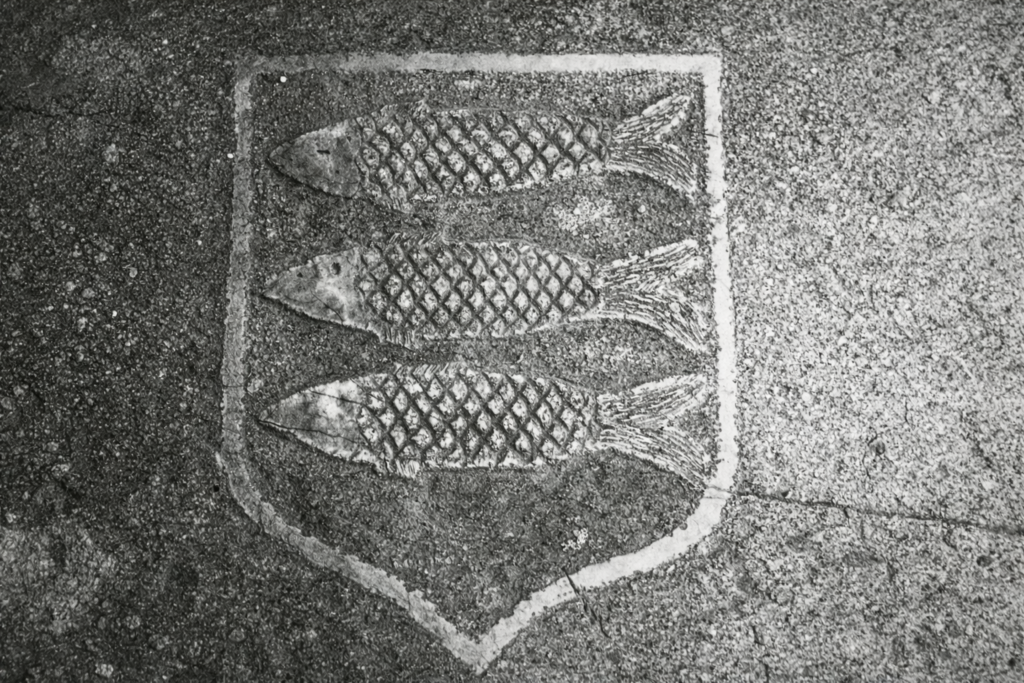
Its new name is Héritage, the French word for “heritage” or “legacy.” Though the name changed, the family crest of three fish, recorded in 17th-century documents and still depicted on the label, remained the same. Symbolizing the unbreakable bond among the three brothers, the emblem quietly tells the story that, despite the new title, the hands behind the wine have not changed.
The estate’s flagship cuvée was also renamed at the same time. The new name, Guilhem Gaucelm, comes from a real person mentioned in 13th-century manuscripts, believed to have been the first steward of the land. A winery compelled by legal circumstances to surrender its former name ended up reclaiming a profound identity from 800 years ago.
Century-Old Vines and a Lineage Drawn from Historic Domaines The vineyard that gives birth to this cuvée spans just two hectares. It is planted with more than 100-year-old Syrah and Grenache vines, trained in the traditional goblet style. Yields are only 10 to 20 hectoliters per hectare, a mere fraction of what a typical vineyard would produce.
What makes the site especially intriguing is that these vines are not nursery clones, but massal selections propagated directly from old vines belonging to some of France’s most celebrated domaines. Beaucastel in Châteauneuf-du-Pape, Gauby in Roussillon, Tempier in Bandol, and Thierry Allemand in the Northern Rhône: lineages descended from old vines at these historic estates live on in this tiny two-hectare parcel. That genetic diversity, inherited from generations across multiple regions, brings a layered complexity to the wine that single-clone plantings rarely achieve.
Pic Saint-Loup has recently garnered quiet recognition as a promising terroir in Languedoc, owing to its altitude and wide diurnal temperature range, which nurture a profound depth in the grapes.
The Resolve to Let Nature Speak The estate has practiced biodynamics since 1999 and officially obtained French organic certification (AB/Ecocert) in 2012. In the cellar as well, human intervention is kept to an absolute minimum. Fermentation relies solely on native yeasts. No acidification is used. The wines are neither filtered nor fined, and sulfites are added only sparingly at bottling. After 24 to 30 months of patient aging in foudre, the wine is finally bottled.
In its 2024 edition, the prestigious French wine magazine RVF (La Revue du Vin de France) awarded the 2020 vintage 95 points and a Coup de Coeur, its special jury prize. Records also show that it was served at a luncheon during King Charles III’s official visit to Bordeaux, a quiet testament to its refined character.
In Bangkok’s tropical climate, this wine’s structure offers a unique gastronomic perspective. The recommended serving temperature of 16°C to 19°C allows the ripe fruit typical of southern France to unfold gracefully. The vibrant acidity born of the region’s altitude maintains a delicate balance throughout, presenting an intriguing harmony with the complex spices of Thai cuisine.
Changing a name could not have been an easy decision for the family. But in the new name the Ravaille family chose, the memory of a thousand years of land continues to live on. (Mr. Bacchus)
This article is intended solely to explore the winemaking artistry and cultural heritage of Héritage du Pic Saint Loup and the Guilhem Gaucelm brand, and does not aim to promote or encourage the consumption of alcohol. / บทความนี้จัดทำขึ้นเพื่อนำเสนอข้อมูลเกี่ยวกับศิลปะการทำไวน์และมรดกทางวัฒนธรรมของ Héritage du Pic Saint Loup และแบรนด์ Guilhem Gaucelm เท่านั้น มิได้มีเจตนาเพื่อส่งเสริมหรือโฆษณาเครื่องดื่มแอลกอฮอล์ สำหรับผู้มีอายุ 20 ปีขึ้นไป โปรดดื่มอย่างรับผิดชอบ