Drink
The Silent Protagonist
Tracing the Essence of Water from Nada to Bangkok
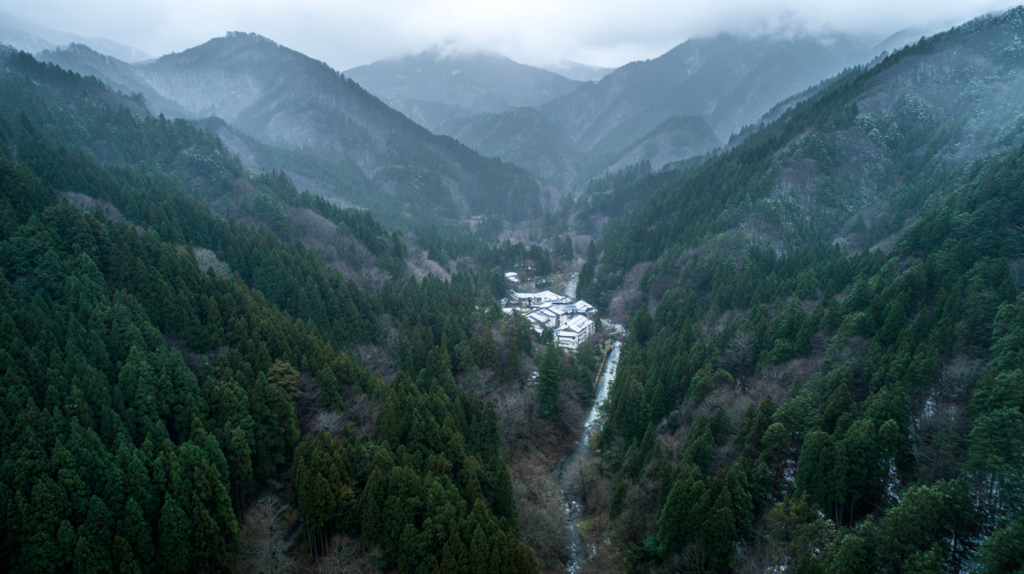
Roughly eighty percent of a single gō of sake is not rice, but water. The total amount of water used in a brewery is said to be about fifty times the volume that ultimately ends up in the bottle. Washing the rice, soaking it, steaming it, cultivating koji, fermenting the mash, and cleaning the equipment; sake brewing is a continuous dialogue with water from beginning to end. And yet, when sake is discussed, we talk about the rice, but almost never about the water. Today, I would like to devote a little space to that silent protagonist.
Hard vs. Soft Water: The Chemistry Behind the Brew
Water hardness is determined by its calcium and magnesium content. Classification thresholds vary by source. Toyama Prefecture’s “Introduction to Mineral Water” presents a classification in which water under 100 mg/L is soft, water at 300 mg/L or above is hard, and water between those thresholds is moderately hard.
Yeast, the microorganism driving fermentation, feeds on minerals like calcium, magnesium, phosphorus, and zinc. In hard water, yeast works vigorously, fermentation is robust, and the resulting sake tends to be crisp and dry. With mineral-poor soft water, fermentation proceeds more slowly, drawing out sweetness and umami over time to create a gentler, rounder sake. The same rice, the same yeast, the same brewmaster: change only the water, and you get a different sake. In many ways, what we call “terroir” in sake is, quite simply, water.
Miyamizu of Nada: A Fortuitous Discovery
You cannot talk about sake from Nada, Hyogo, without mentioning Miyamizu. This is a special well water that springs up in parts of Nishinomiya, used by Nada breweries for nearly 200 years, making it one of the most revered water sources in the sake world.
In the Edo period, brewer Tazaemon Yamamura noticed that sake made at his Nishinomiya brewery exhibited a distinct refinement compared to that made at his Uozaki site in Nada. The rice, the brewers, and the methods were identical; the only difference was the water. So he transported Nishinomiya’s well water to Uozaki and brewed with it. The result matched the higher quality. The answer was water.
Miyamizu is rich in calcium and phosphorus while containing almost no iron, an element that can discolor sake and damage its aroma. Later, science revealed it to be a rare convergence of multiple underground water flows. But brewers had already recognized its value over a century earlier, using only their senses. The sharp, dry profile, often called “masculine sake,” is built on this hard water.
A brief aside: in Bangkok, the retail shop Nadaya Saketen, which our company Bacchus Global has operated since 2012, takes its name from this very Nada. For a house devoted to sake to carry the name of the land that gave sake its backbone is, in its own quiet way, a gesture of respect.
Fushimi and Hiroshima: The Soft Water Revolution
Fushimi’s water in Kyoto is moderately hard, but noticeably softer than Miyamizu. Fermentation proceeds more gently, producing sake with a soft mouthfeel and pronounced sweetness and umami. The old phrase “Nada’s masculine sake, Fushimi’s feminine sake” personifies differences in sake character arising from the relative hardness of Nada’s and Fushimi’s brewing water.
In Meiji-era Hiroshima, brewer Senzaburo Miura struggled with spoilage caused by ultra-soft water. He eventually developed a low-temperature, long-term fermentation method known as the “soft water brewing technique.” This became the foundation for modern ginjo-style brewing. The refined, aromatic daiginjo culture, characterized by being clean, elegant, and fragrant, was born from the constraints imposed by Hiroshima’s soft water. Nada’s power and Hiroshima’s delicacy are two aesthetics shaped entirely by water.
Reflecting on Water in Bangkok: A Culinary Perspective
On a 34°C afternoon in Bangkok, a sake from Nada or Fushimi carries the brewing water of its place of origin within the bottle. It is entirely different in character from the mineral water commonly used in local restaurants or sold commercially in Bangkok.
According to its owner, a ramen shop in Tokyo, highly regarded in recent years, once tested Bangkok’s water while considering expansion. The owner reported that, using the exact same recipe and noodles as in Tokyo, noodles boiled in Bangkok’s water absorbed too much liquid. Even after serving, the noodles kept soaking up the soup, and before long, the broth level in the bowl visibly dropped. The mineral composition of the local water had quietly altered the noodles’ hydration behavior.
The water used in brewing and the “ohiya” (table water) served separately alongside a sake pairing have different roles. When designing a pairing, a sommelier may also consider the composition of the accompanying water. Choosing that water does not change the composition of the sake itself.
Behind Every Bottle: A Connection to the Land
Many Japanese breweries today are confronting changes in their water sources. Forests are losing their ability to retain water, underground water levels are dropping, wells are drying up, and heavy rains are altering water quality. In response, some breweries have begun purchasing the forests behind them, preserving them as water source forests.
Sake is born downstream of mountains and forests.
Behind a bottle of sake lies the story of where that water fell as rain, what soil it passed through, and how long it took to reach the well. It is true to call sake “a drink of rice.” But it is just as true to call it “a drink of water.” The brewery’s address on the label offers a clue to that origin. The rain that fell in that place now lives on within the bottle. (Mr.Bacchus)
This article is intended solely to explore the role of water in Japanese sake brewing and the cultural heritage of regions such as Nada, Fushimi, and Hiroshima, and does not aim to promote or encourage the consumption of alcohol. / บทความนี้จัดทำขึ้นเพื่อนำเสนอข้อมูลเกี่ยวกับบทบาทของน้ำในการผลิตสาเกญี่ปุ่น และมรดกทางวัฒนธรรมของภูมิภาคต่างๆ เช่น Nada, Fushimi และ Hiroshima เท่านั้น มิได้มีเจตนาเพื่อส่งเสริมหรือโฆษณาเครื่องดื่มแอลกอฮอล์ สำหรับผู้มีอายุ 20 ปีขึ้นไป โปรดดื่มอย่างรับผิดชอบ
Discover the culture behind every bottle
We share brewery stories, tasting notes and the craft of koji & fermentation | for educational and cultural purposes only.
เราถ่ายทอดเรื่องราวจากผู้ผลิต บันทึกรสชาติ และศาสตร์แห่งโคจิและการหมัก | เพื่อการศึกษาและวัฒนธรรมเท่านั้น
Follow on Instagram FacebookRelated Articles
“What “water” brings to sake #SAKE HUNDRED” / “In Hiroshima, the Birthplace of Ginjo” / “What Is Kijoshu? Why Does Replacing Water with Sake Make It Sweet?”