Drink
The Rise of the Mindful Drinker
How Bangkok’s Gastronomy is Embracing the Low- and No-Alcohol Movement
On a Friday night at a packed bar counter, the number of guests opting for an elegantly crafted non-alcoholic beverage has noticeably increased. In many dining groups, it is now common to find one or two individuals who choose not to consume alcohol. They are not looking to end the evening early; they are fully immersing themselves in the atmosphere and the culinary journey, just like everyone else. The evolving challenge for modern gastronomy is ensuring that the menu thoughtfully accommodates this mindful choice.
The Evolution of the “Sober Curious” Mindset
Choosing to abstain from alcohol is no longer a passing trend. According to recent IWSR insights, the global low- and no-alcohol beverage market has maintained steady growth, with a significant majority of consumers now choosing these alternatives regularly. In Bangkok, the opening of dedicated non-alcoholic spaces like STØCKHØLME Sober Bar marks a distinct cultural shift. Alongside pioneers like Tokyo’s 0% and Nihonbashi’s LOW-NON-BAR, the “Sober Curious” lifestyle—the conscious decision of when to drink and when to pause—is firmly establishing itself across generations.
Redefining the Zero-Proof Experience
For a long time, the hospitality industry faced a creative hurdle: without the familiar structure of alcohol, defining the flavor profile of a mature beverage seemed difficult. Early approaches often resulted in drinks that felt like afterthoughts. However, the prevailing sentiment at recent industry gatherings, such as the Bangkok Bar Show, has shifted toward a more holistic philosophy: integration rather than separation.
Integrating the Non-Alcoholic Menu
Forward-thinking establishments no longer isolate non-alcoholic drinks in a separate, overlooked section. Instead, they integrate them seamlessly into the main cocktail repertoire alongside ABV (Alcohol by Volume) labels. When 0%, 8%, and 15% options exist side by side, non-drinking guests feel they are participating in the exact same curated experience.
Furthermore, the approach to creation has evolved from subtraction to addition. Rather than simply removing the spirit, mixologists are building complex profiles through three foundational pillars: acidity (incorporating elements like fermented citrus or delicate vinegars), umami (utilizing kombu, amazake, or light miso), and texture (playing with carbonation, viscosity, and natural foams). Designing around these dimensions creates a depth of flavor where the absence of alcohol is hardly noticed.
The Culinary Power of Japanese Fermentation
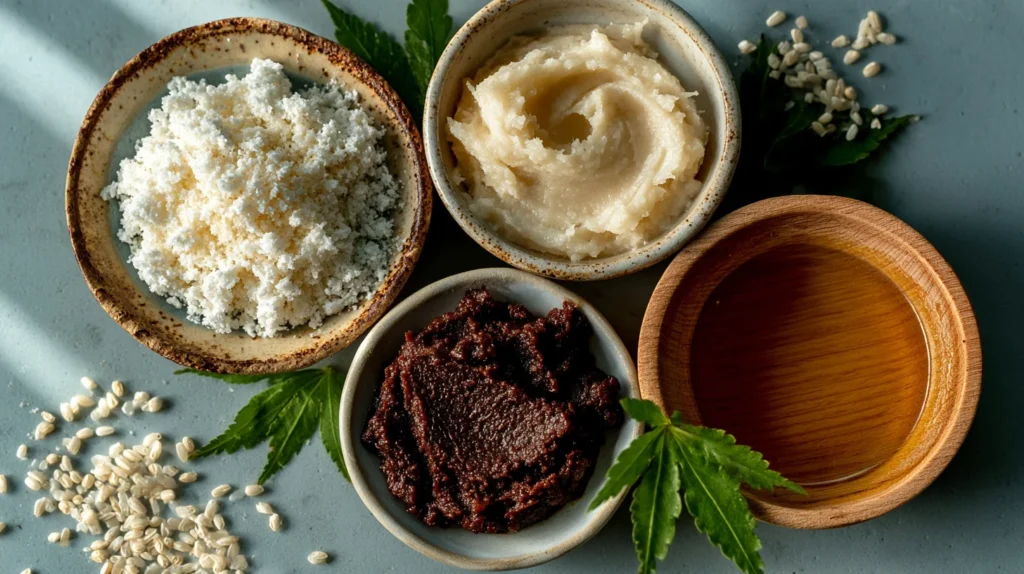
In this pursuit of complexity, Japanese fermentation culture offers a remarkable palette of natural ingredients. Rice-koji amazake, for instance, contains virtually no alcohol yet delivers natural sweetness and profound umami directly from the koji mold itself. A sophisticated zero-proof serve utilizing shio-koji, or an aromatic infusion featuring a hint of miso, are concepts that elevate the drinking experience.
The narrative shifts entirely with this approach. Instead of presenting a drink as having “removed the alcohol,” it becomes an expression of how “a different kind of complexity was introduced through fermentation.” Ingredients deeply connected to the work of Aspergillus oryzae—koji mold—are transforming the landscape. Products like Koji Clear, which capture the essence of koji in a refined, transparent form, serve as compelling starting points for designing these sophisticated menus. Understanding this shared origin changes the perspective on non-alcoholic beverages; it becomes a return to the ancient art of fermentation as the very foundation of flavor.
The Future of Gastronomic Inclusivity
A well-considered non-alcoholic program naturally fosters a deeper connection with guests. In a social setting, the individual who discovers a truly thoughtful zero-proof menu often becomes the catalyst for future visits. Bangkok’s dining scene continues to be one of the most dynamic in Asia, quickly absorbing and elevating global movements. This subtle shift in perspective proves that the absence of alcohol is no longer a compromise, but an elegant invitation to explore a new dimension of flavor. (Mr. Bacchus)
This article is a B2B operational guide intended solely for restaurant operators, F&B managers, and bar professionals in Bangkok, exploring menu design principles for low-alcohol and non-alcoholic offerings in the context of the global Sober Curious movement and IWSR 2025 industry data. It is not intended to promote or encourage the consumption of alcohol. / บทความนี้เป็นคู่มือเชิงปฏิบัติสำหรับธุรกิจ B2B จัดทำขึ้นเพื่อผู้ประกอบการร้านอาหาร ผู้จัดการ F&B และผู้เชี่ยวชาญด้านบาร์ในกรุงเทพฯ โดยเฉพาะ เพื่อนำเสนอหลักการออกแบบเมนูเครื่องดื่มแอลกอฮอล์ต่ำและไม่มีแอลกอฮอล์ในบริบทของกระแส Sober Curious ระดับโลกและข้อมูลอุตสาหกรรม IWSR 2025 มิได้มีเจตนาเพื่อส่งเสริมหรือโฆษณาเครื่องดื่มแอลกอฮอล์ สำหรับผู้มีอายุ 20 ปีขึ้นไป โปรดดื่มอย่างรับผิดชอบ
Discover the culture behind every bottle
We share brewery stories, tasting notes and the craft of koji & fermentation — for educational and cultural purposes only.
เราถ่ายทอดเรื่องราวจากผู้ผลิต บันทึกรสชาติ และศาสตร์แห่งโคจิและการหมัก — เพื่อการศึกษาและวัฒนธรรมเท่านั้น
Follow on Instagram FacebookRelated Articles
“The Shift in Perspective” / “The Missing Depth in Non-Alcoholic Drinks—and How Koji Rebuilds the Glass” / “Removing a Mainstream Assumption” / “Zebra Striping” / “No Explanation Needed”