Drink
The Quiet Revolution of Sparkling Sake
“Awa Sake” Opens a New Frontier for Fine Bubbles
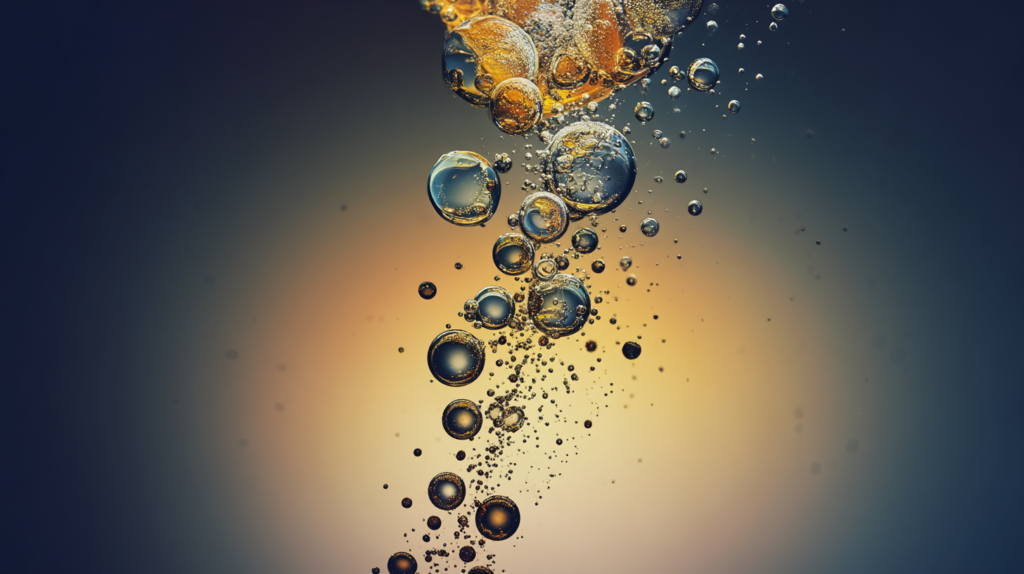
Within the bubbles lives another philosophy of brewing. When people hear “sparkling sake,” many still picture a sweet, lightly fizzy drink. But in 2026, a movement is quietly spreading from Japan’s breweries to the rest of the world, one that fundamentally overturns that image. At the heart of it are the fine bubbles created through secondary fermentation in the bottle. The principle may be the same as Champagne, but the philosophy behind the flavor is profoundly different. While Champagne is structured around acidity and minerality, sparkling sake is built on umami. Amino acids, produced as koji breaks down the proteins in rice, contribute to an umami-centered profile. It offers a sensory landscape distinctly different from that of wine.
The Birth of “Awa” as a Quality Standard
In 2016, several breweries came together to establish the Awa Sake Association. “Awa” comes from the Japanese word for “bubble.” The association’s goal is clear: to define strict quality standards and establish sparkling sake as an independent, highly refined category in its own right. The certification requirements are meticulous. Ingredients are limited strictly to domestically produced rice, rice koji, and water. All carbonation must originate from natural fermentation; artificial gas injection is not permitted. The alcohol content must reach at least 10%, bottle pressure must be at least 3.5 bar under the association’s specified measurement conditions, and the appearance must be perfectly clear. Only sake fulfilling these precise conditions earns the certification hologram seal.
While carbon dioxide can easily be injected to create fizz, bubbles that develop slowly inside the bottle through the quiet work of koji and yeast yield an entirely different depth of character. The dedication to defining that difference in clear standards, and communicating it globally, is now steadily taking root.
Why It Is Gaining Attention Now
Several currents have converged to elevate the presence of sparkling sake at this particular moment. One catalyst is its connection to UNESCO’s Intangible Cultural Heritage listing in December 2024. As traditional sake brewing using koji mold receives international recognition, interest in sake as a whole has deepened. Sparkling sake, with its visual elegance and rich narrative, is an especially compelling expression of this renewed attention. Discussions of quality over quantity do not remove the need to compare alcohol content by product. The 10% to 15% range does not mean that sparkling sake is uniformly lower in alcohol than wine.
Additionally, the evolution within the sake industry itself is a crucial factor. As breweries navigate shifting landscapes of domestic consumption, the sparkling format has emerged as a beautifully effective “translation” of sake for overseas connoisseurs already versed in wine culture.
New Possibilities Across the Tropical Table
This movement resonates deeply within Bangkok’s dining scene. In a climate where temperatures often exceed 30°C, the refreshing elegance of well-chilled sparkling sake feels naturally intuitive. Even for guests exploring sake for the first time, it serves as an inviting introduction. An umami-centered profile offers a perspective distinct from acidity-driven wine. Storage and transport conditions need to be assessed by product and logistics stage. A single temperature does not describe every part of the journey from Japan to Thailand. Conditions for a particular shipment should be established from product-specific handling instructions and the relevant transport and warehouse records. Temperature information alone does not establish that product quality is unchanged.
What resides deep within those bubbles is the crystallization of rice, water, koji, and time. The quiet revolution of sparkling sake is a new light through which Japan’s brewing heritage continues to shine onto the world. (Mr. Bacchus)
This article is intended solely to explore the evolving world of sparkling sake and its cultural significance, and does not aim to promote or encourage the consumption of alcohol. / บทความนี้จัดทำขึ้นเพื่อนำเสนอข้อมูลเกี่ยวกับพัฒนาการของสาเกสปาร์กลิงและความสำคัญทางวัฒนธรรมเท่านั้น มิได้มีเจตนาเพื่อส่งเสริมหรือโฆษณาเครื่องดื่มแอลกอฮอล์ สำหรับผู้มีอายุ 20 ปีขึ้นไป โปรดดื่มอย่างรับผิดชอบ
Discover the culture behind every bottle
We share brewery stories, tasting notes and the craft of koji & fermentation | for educational and cultural purposes only.
เราถ่ายทอดเรื่องราวจากผู้ผลิต บันทึกรสชาติ และศาสตร์แห่งโคจิและการหมัก | เพื่อการศึกษาและวัฒนธรรมเท่านั้น
Follow on Instagram FacebookRelated Articles
“Crystal Bubbles, the Depth of Kijoshu” / “The Art of Champagne: How the Bubbles Are Made” / “Champagne Bubbles: The Essential Differences” / “Discovering Bruno Dangin’s Exceptional Cremant”