

Clos des Litanies 2021 and Five Centuries of Silence
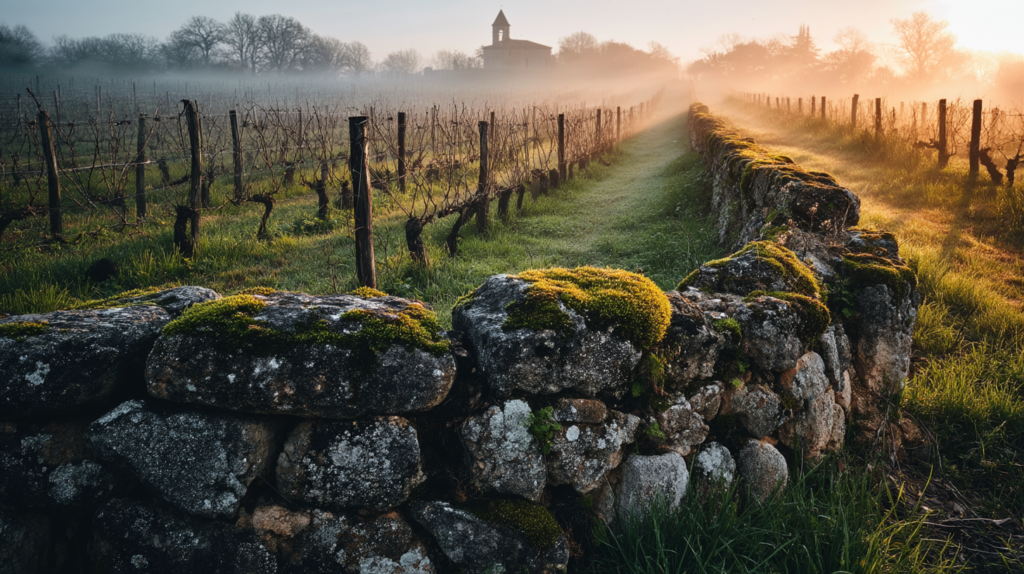
In a Corner of Pomerol, 1514 On April 19, 1514, in Pomerol in southwestern France, Jean de Vallon, prior of the Knights of Malta, appointed a young monk to serve the parish priest of Saint-Jean de Pomeyrol. His name was Mathieu Boschuet. Records describe him as “a man recommended for his religious fervor and for the sincerity of his life and morals.” Brother Boschuet withdrew from the bustle of the parish and settled in a small enclosed plot surrounded by vineyards. There, it is said, he would open his breviary each day and quietly, repeatedly recite a litany to Saint Vincent, the patron saint of winemakers.
When Prayer Became a Place Name It was the neighboring vignerons who remembered the sound of the monk’s prayers. Wanting to preserve that memory, they began, of their own accord, to call the parcel “Le Clos des Litanies,” meaning the enclosure of litanies. Five centuries later, the vineyard is still known by that name. This is not the invention of marketing. The land itself has inherited the quietude of a single monk.
0.84 Hectares: An Intimate Scale Clos des Litanies is a monopole of just 0.84 hectares, producing around 5,000 bottles per year. The owner, Établissements Joseph Janoueix, approaches this micro-parcel with profound reverence, often likening its intimate scale and meticulous philosophy to the Romanée-Conti of Pomerol. The soil is layered: sandy on the surface, with an iron-rich subsoil known as crasse de fer beneath. The finesse of sand and the minerality of iron create a delicate equilibrium. In the vineyard, pruning follows the lunar cycle, green harvesting is carried out in two stages, and all fruit is picked by hand. Harvesters are selected from among the estate’s clients and their children. The relationship between land and people becomes part of the wine itself.
A Response to the Cool 2021 Vintage The 2021 Bordeaux vintage was a difficult one, marked by frost, hail, poor flowering conditions, and summer outbreaks of powdery mildew. Merlot, in particular, suffered greatly. In such a year, a protocol of 100% Merlot and 100% new oak can be a double-edged sword. Yet the Janoueix family responded with quiet precision. Fermentation relied solely on indigenous yeasts, without the use of pumps, allowing the wine to move entirely by gravity. About 10% of the barrels were elongated “cigar-shaped” vessels, increasing contact between the wine and its lees to create a silky texture. Consulting winemaker Michel Rolland described the wine as “des vins soyeux”—silky wines. Notes of licorice and cinnamon emerge gently, alongside nuanced hints of cacao. The cool character of the vintage reveals itself in fresh acidity and a gracefully restrained level of alcohol.
Carrying Forward the Silence Five hundred years ago, a monk softly recited litanies within an enclosed vineyard. His voice has long since faded, yet it endures in the name of the land. Clos des Litanies is not merely the name of a vineyard. It is a record of a silence that has never disappeared. (Mr. Bacchus)
This article is intended solely to explore the winemaking artistry and cultural heritage of Établissements Joseph Janoueix and the Clos des Litanies brand, and does not aim to promote or encourage the consumption of alcohol. / บทความนี้จัดทำขึ้นเพื่อนำเสนอข้อมูลเกี่ยวกับศิลปะการทำไวน์และมรดกทางวัฒนธรรมของ Établissements Joseph Janoueix และแบรนด์ Clos des Litanies เท่านั้น มิได้มีเจตนาเพื่อส่งเสริมหรือโฆษณาเครื่องดื่มแอลกอฮอล์ สำหรับผู้มีอายุ 20 ปีขึ้นไป โปรดดื่มอย่างรับผิดชอบ