Drink
The 50% Juice Decision
IThree Approaches Behind Heiwa Shuzo’s “Tsuru-Ume Yuzu”
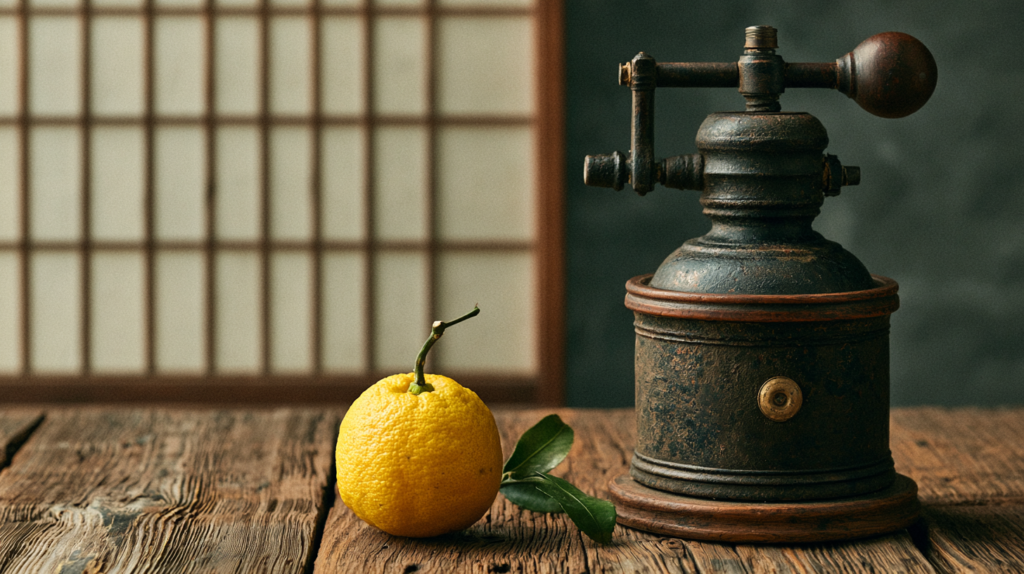
A typical yuzu liqueur is said to contain around 5% fruit juice on average. For years, that figure represented the industry standard: the point where drinkability, cost, and shelf stability meet.
Heiwa Shuzo’s “Tsuru-Ume Yuzu” elevates this proportion to 50%—a remarkable shift from the standard. It represents an approach to crafting that stands apart from conventional methods.
What 50% Really Means
What happens when fruit juice makes up half of the liquid?
First, the acidity comes sharply into focus. The citric and malic acids in yuzu move to the foreground with a clear, vivid edge. Second, the density of aroma compounds increases. Limonene, along with yuzunone—a sesquiterpene said to be unique to yuzu—rushes upward in abundance the moment the bottle is opened. Third, preservation becomes more difficult. Fruit juice is delicate, and if temperature control is mishandled, its aroma can lose clarity within weeks.
Therefore, achieving a 50% fruit-juice ratio requires more than a simple adjustment of ingredients. It demands a meticulous harmony of techniques to realize the final vision.
Three Choices
Heiwa Shuzo’s answer lay in three choices, each departing from industry norms.
The first was the base alcohol. Instead of the white liquor, or korui shochu, commonly used in fruit liqueurs, Heiwa Shuzo uses junmai sake aged in-house for two years. The umami of sake envelops the strong acidity from within. Its grain-derived body gives depth to the sharpness of the acid. And because the sake has been aged, the edges of its aroma have softened, allowing the delicate top notes of yuzu to remain undisturbed.
The second was the method of pressing. Rather than using an industrial process that removes the peel and presses only the flesh, Heiwa Shuzo uses whole-fruit pressing, squeezing the yuzu with the peel intact. The aromatic compounds of citrus fruits are most concentrated in the oil glands of the peel. The moment the peel is removed, much of the fruit’s most distinctive aroma is discarded. Choosing whole-fruit pressing means accepting the risk of excessive bitterness in exchange for preserving the green, pine-like fragrance, floral nuances, and refined bitterness that give the liquid its structure.
The third was pasteurization. The liqueur is pasteurized after bottling by heating the bottle itself, a method known as binkan hi-ire. With the standard method of flash-heating liquid as it passes through pipes in a plate heater, the highly volatile top notes of yuzu can dissipate under heat. Binkan hi-ire is labor-intensive and costly. But it keeps the aroma sealed inside the bottle until the moment it is opened.
The Meaning of “A Brewer’s Liqueur”
These three choices may appear separate, but they all stem from a single philosophy: bringing the discipline of sake brewing into liqueur making.
Heiwa Shuzo is a sake brewery that won IWC’s International Wine Challenge SAKE Brewer of the Year in both 2019 and 2020. Precise temperature control, koji management, and regulation of fermentation speed: that accumulated know-how is applied directly to the design of its liqueurs.
In the industry, products of this kind are known as “wa liqueurs,” or Japanese-style liqueurs. The movement began in the early 2000s, when sake breweries facing declining sake consumption started applying their brewing techniques to fruit liqueurs. Heiwa Shuzo was one of the pioneers.
This dedication to technique has not gone unnoticed. At the 6th Tenma Tenjin Plum Wine Competition, “Tsuru-Ume Yuzu” was recognized with the Tenka Gomen Grand Prix, selected by sommeliers through blind tasting as a testament to its balanced craftsmanship.
Behind the figure of 50% fruit juice lies the decision of a single brewery to make possible, through a different route, a design the industry had long considered difficult. While typical liqueurs have prioritized drinkability, “Tsuru-Ume Yuzu” prioritizes the sheer concentration of the ingredient itself. It gently expands the very definition of what a fruit liqueur can be. (Mr. Bacchus)
This article is intended solely to explore the blending craftsmanship and cultural heritage of Heiwa Shuzo Co., Ltd. and the Tsuru-ume Yuzu brand, and does not aim to promote or encourage the consumption of alcohol. / บทความนี้จัดทำขึ้นเพื่อนำเสนอข้อมูลเกี่ยวกับศิลปะการผสมผสานและมรดกทางวัฒนธรรมของ Heiwa Shuzo Co., Ltd. และแบรนด์ Tsuru-ume Yuzu เท่านั้น มิได้มีเจตนาเพื่อส่งเสริมหรือโฆษณาเครื่องดื่มแอลกอฮอล์ สำหรับผู้มีอายุ 20 ปีขึ้นไป โปรดดื่มอย่างรับผิดชอบ
Discover the culture behind every bottle
We share brewery stories, tasting notes and the craft of koji & fermentation — for educational and cultural purposes only.
เราถ่ายทอดเรื่องราวจากผู้ผลิต บันทึกรสชาติ และศาสตร์แห่งโคจิและการหมัก — เพื่อการศึกษาและวัฒนธรรมเท่านั้น
Follow on Instagram FacebookRelated Articles
“Time as an Ingredient” / “Brewing Sake in an Era of Peace”