

Tatenokawa Brewery and the Legacy of Sobewase
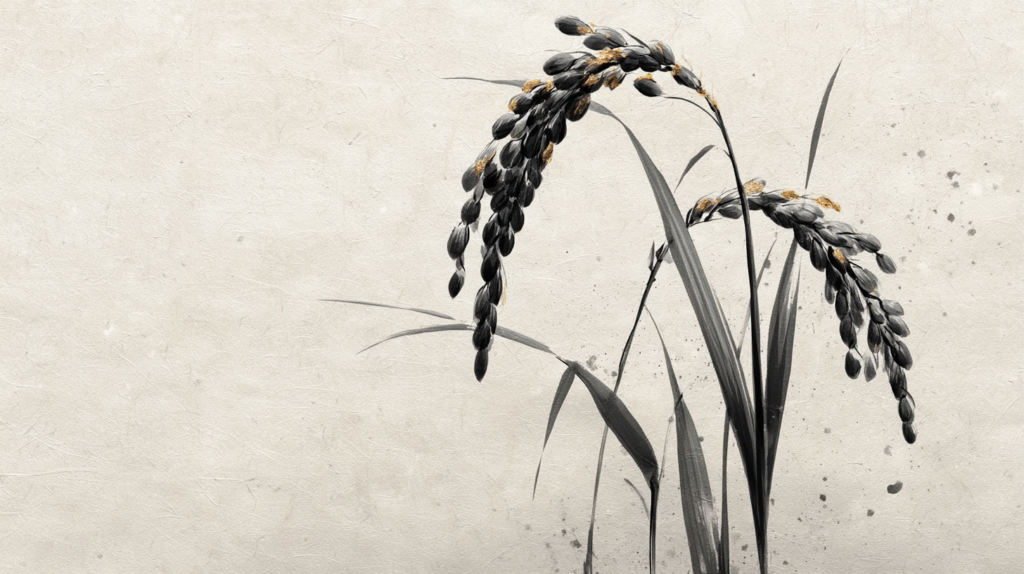
The Rice That Came Before Kame-no-O For those who appreciate the nuances of sake, the name Kame-no-O often resonates. Cultivated in 1893 in Yamagata Prefecture’s Shonai region, it is a celebrated sake rice known for its near-extinction and triumphant revival. Yet, fewer may know of the heirloom variety that served as its predecessor: Sobewase.
A Rice Left Behind in the Age of Agrochemicals Sobewase is an indigenous variety that graced the Shonai Plain long before Kame-no-O. However, its vulnerability to pests and incompatibility with modern chemical-dependent agriculture left it disadvantaged. Its yield simply could not compete with newer, highly optimized strains. As agricultural practices increasingly prioritized efficiency, cultivation of Sobewase gradually ceased, consigning the variety to obscurity. Even as its descendant, Kame-no-O, reclaimed the spotlight, the ancestor remained a forgotten footnote in agronomic history.
Dormant Seeds in an Agricultural Archive A pivotal discovery occurred in 2017. Tatenokawa, an esteemed brewery in Sakata, Yamagata, learned that a handful of Sobewase seeds had been quietly preserved at a prefectural agricultural research facility. Uniquely dedicated to brewing exclusively Junmai Daiginjo, Tatenokawa operates on a philosophy of transparently expressing the innate character of the rice. Taking on the revival of a lost variety was an endeavor deeply aligned with this ethos. Collaborating with local agricultural partners over three years, the brewery meticulously developed a viable cultivation methodology. Nurturing a delicate, disease-prone plant unsuited to modern techniques—while harmonizing it with the microclimate of the Shonai Plain—demanded profound dedication and patience.
A Singular Rice, A Singular Brewery In 2021, Tatenokawa introduced Shield Sobewase, a Junmai Daiginjo. To date, they remain the sole brewery in Japan utilizing this rare grain. Cultivated in the local soil and brewed with regional waters, the sake embodies a profound connection to its origins. While the concept of terroir is still evolving in the world of sake, a bottle crafted from Sobewase offers a compelling perspective on what that philosophy means within the Japanese landscape.
The Landscape Beyond the Label Just as grape varietals serve as a gateway to understanding wine terroir, sake rice offers a similar lens into its origins. The name of the rice on a label is more than a specification; it is an invitation to visualize the land that nurtured it. Behind the heritage name of Sobewase lies the bracing wind of the Shonai Plain, and the enduring legacy of a grain brought back from the brink of extinction. (Mr. Bacchus)
This article is intended solely to explore the brewing philosophy and cultural heritage of Japanese sake rice terroir, and does not aim to promote or encourage the consumption of alcohol. / บทความนี้จัดทำขึ้นเพื่อนำเสนอข้อมูลเกี่ยวกับปรัชญาการผลิตและมรดกทางวัฒนธรรมของข้าวสาเกญี่ปุ่น เท่านั้น มิได้มีเจตนาเพื่อส่งเสริมหรือโฆษณาเครื่องดื่มแอลกอฮอล์ สำหรับผู้มีอายุ 20 ปีขึ้นไป โปรดดื่มอย่างรับผิดชอบ