

The Five Masterful Techniques Hakkaisan Brewery Infuses into its Premium Rice Shochu
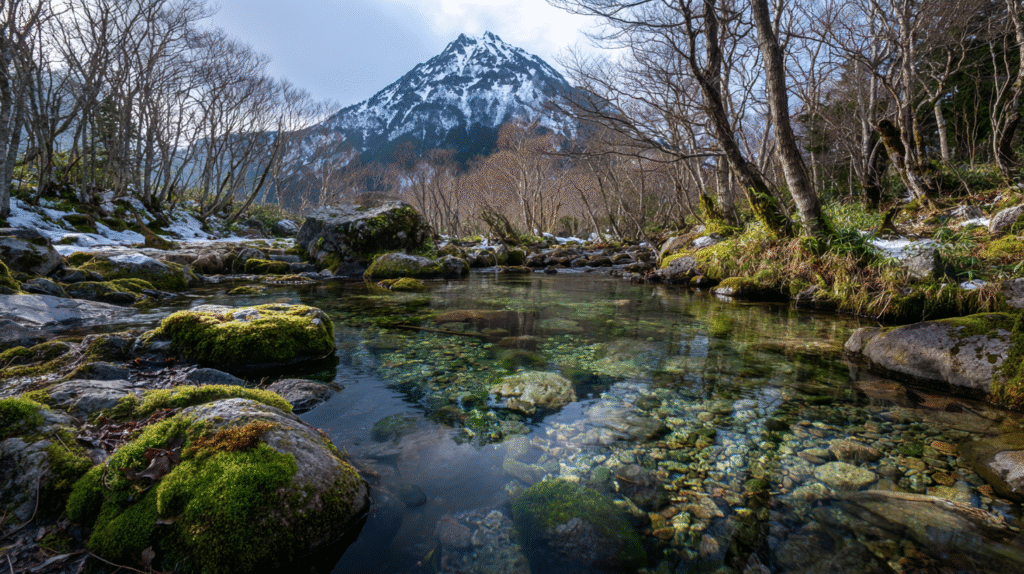
In Minamiuonuma City, Niigata Prefecture—one of Japan’s heaviest snowfall regions—stands the sacred peak of Mount Hakkai (1,778m). Long revered as a spiritual training ground for Shugendo ascetics, the mountain lends its name to the illustrious Hakkaisan Brewery. Founded in 1922 (Taisho 11), the brewery has spent a century building its legacy as one of Niigata’s representative sake makers, guided by a simple yet profound credo: “Better sake, for more people.”
This storied house released a premium rice shochu in 2008. Its name: Yoroshiku Senman Arubeshi (宜有千萬). Drawn from the ancient Chinese auspicious phrase Yi You Qian Wan—“May you have ten million blessings”—the label carries an audacious brewing philosophy that only a master sake brewery could flawlessly execute.
The Unprecedented Choice, Yellow Kouji In shochu-making, kouji is one of the most crucial elements, determining the very backbone of the spirit. Traditionally, shochu producers rely on white or black kouji, which generate abundant citric acid to prevent mash deterioration in warmer climates. Hakkaisan deliberately broke with convention and chose yellow kouji—the delicate kouji used for fine sake. Because yellow kouji does not produce citric acid, the risk of contamination increases exponentially. In traditional shochu terms, it is considered an unorthodox endeavor. Yet, Hakkaisan possessed a century of expertise handling yellow kouji. With state-of-the-art equipment at its dedicated Fukazawahara Distillery (completed in 2005) and rigorous low-temperature control, the brewery masterfully navigated this risk.
Five Techniques Only a Sake Brewery Can Orchestrate Adopting yellow kouji was merely the beginning. For this exclusive rice shochu, Hakkaisan integrated five refined techniques cultivated through sake brewing:
(1) Yellow kouji
(2) Sake yeast
(3) The traditional three-stage mashing method used for sake
(4) The addition of sake lees during fermentation
(5) Vacuum distillation.
After distillation, the spirit is carefully aged for over two years before its release. Most noteworthy is the meticulous step of adding fresh sake lees—obtained in-house from their own premium sake production—mid-fermentation. These lees generate the bright, fragrant aromatics characteristic of ginjo sake within the mash. This hybrid method, where rice and sake lees meld in a single ferment, is an artistry only a sake brewery can flawlessly execute. Without the sharp acidity typical of white kouji, it boasts a delicate, ginjo-like aroma, yet still holds the robust character of a true shochu. Layering these five techniques produces a profile so distinctive, it refuses to be confined to any existing category.
Raiden-sama’s Spring Water, A 4.2-Kilometer Journey of Purity Another essential pillar of the spirit’s character is the brewing water. “Raiden-sama’s Spring Water” is a subterranean flow that filters through the strata of Mount Hakkai over vast stretches of time before emerging above ground. It is astonishingly soft—with a hardness of around 2—and roughly 400 tons flow forth each day. In 2001, Hakkaisan laid a dedicated 4.2-kilometer pipeline from this pristine source to the brewery, creating an infrastructure that brings the spring water directly to its production facilities. The name “Raiden-sama” originates from a local legend: once, lightning struck the area repeatedly. After locals enshrined the thunder deity, Raiden, the thunder ceased—and in its place, exceptionally pure water began to well up. That ultra-soft water is the true source of the spirit’s smooth profile and remarkably clean, elegant texture.
From Rice Shochu to Rice Whiskey, A Continuing Evolution Hakkaisan’s ambition extends far beyond rice shochu. Its sister product, a kasutori (lees) shochu named Iyu Senman, has earned gold or higher at the Tokyo Whisky & Spirits Competition (TWSC) for three consecutive years, entering the competition’s esteemed Hall of Fame. Fubaika, aged gracefully in oak casks, captured the Superior Gold award at TWSC 2025. As a brand family, they have steadily commanded international recognition. In 2016, the Fukazawahara Distillery obtained a whiskey production license. By 2025, Hakkaisan released its inaugural whiskey, Rice Grain Whisky 8 Years. From pure rice shochu to oak-aged expressions and now rice grain whiskey, the brewery continues to redefine what “rice” can achieve in the world of fine spirits.
May You Have Ten Million Blessings They have taken techniques honed over a century of meticulous sake brewing and channeled them into a new vessel: shochu. Beneath it all lies their founding principle, steadfast and unchanged—“Better sake, for more people.” Yoroshiku Senman Arubeshi—may you be blessed with ten millionfold good fortune. Within this single bottle, a century of craftsmanship from a revered brewery quietly resides, seamlessly intertwined with the pure, timeless flow of Raiden-sama’s spring water. (Mr.Bacchus)
This article is intended solely to explore the distillation techniques and cultural heritage of Hakkaisan Brewery and the Yoroshiku Senman Arubeshi brand, and does not aim to promote or encourage the consumption of alcohol. / บทความนี้จัดทำขึ้นเพื่อนำเสนอข้อมูลเกี่ยวกับเทคนิคการกลั่นและมรดกทางวัฒนธรรมของ Hakkaisan Brewery และแบรนด์ Yoroshiku Senman Arubeshi เท่านั้น มิได้มีเจตนาเพื่อส่งเสริมหรือโฆษณาเครื่องดื่มแอลกอฮอล์ สำหรับผู้มีอายุ 20 ปีขึ้นไป โปรดดื่มอย่างรับผิดชอบ