Drink
A Japan–Bangkok Shipment: Reviewing the Published Temperature Summary
This article reviews a previously published account of one Japan–Bangkok shipment dated February–March 2026. The figures below are the original article’s reported values, not independently recalculated results. They do not establish the conditions of other shipments, subsequent warehouse storage or the contents of individual bottles.
What the original account reported
- Recording: 2,796 readings at 15-minute intervals, described as approximately 29 days.
- Loading, 19 February: readings from 5.9°C to 13.7°C.
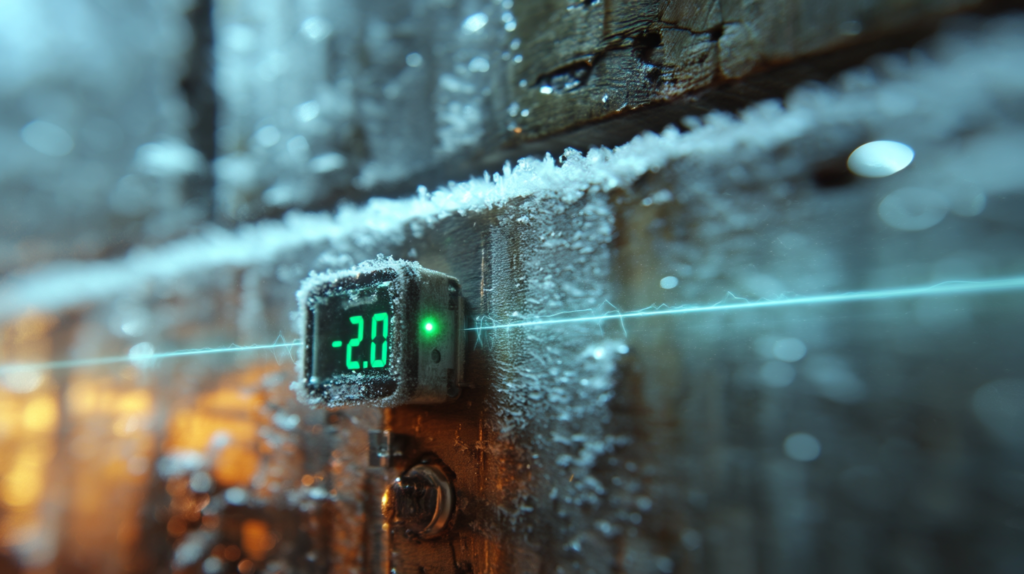
- Ocean transport, 20 February–16 March: readings described as approximately −2°C, with a stated range of −2.1°C to −2.0°C.
- Arrival and customs, 17–18 March: readings described as rising from −1.9°C to 13.7°C.
- Unloading, 19 March: a reported reading of 19.7°C.
- Overall summary: 83.1% reported at or below 0°C. The underlying readings and calculation method have not been checked here.
What needs to be reconciled
The original graph’s plotted line does not align with its approximately −2°C annotation during the ocean-transport stage. It is therefore not reproduced here as measurement evidence. The source logger export is needed before a corrected chart or verified temperature statistics can be published.
The exact start and end timestamps, time zone, sampling intervals and any missing or duplicate readings also need to be checked. A count of 2,796 evenly spaced readings at 15-minute intervals spans 2,795 intervals, or 29 days, 2 hours and 45 minutes. The count, dates and duration should not be treated as reconciled without those details.
Limits of the temperature record
A logger measures temperature at its sensor location. Without the sensor’s placement and calibration information, its readings cannot be treated as the temperature inside every bottle. The original account attributes warming to arrival handling, but establishing its cause and duration requires the corresponding operating records.
The original article also referred to subsequent storage at −7°C. A transport record ending at unloading does not verify warehouse conditions. Warehouse settings, measured temperatures and the relevant storage period require separate records.
How this case can be used
This case identifies the information needed to review transport and handover conditions: product instructions, sensor details, timed handling events, temperature records and the scope of each record. It does not demonstrate unchanged flavour or quality, a universally suitable storage temperature, or an uninterrupted cold chain for every shipment.
This article is intended solely to share information about cold chain logistics and quality management practices in the beverage industry, and does not aim to promote or encourage the consumption of alcohol. / บทความนี้จัดทำขึ้นเพื่อแบ่งปันข้อมูลเกี่ยวกับระบบโลจิสติกส์ควบคุมอุณหภูมิและการจัดการคุณภาพในอุตสาหกรรมเครื่องดื่มเท่านั้น มิได้มีเจตนาเพื่อส่งเสริมหรือโฆษณาเครื่องดื่มแอลกอฮอล์ สำหรับผู้มีอายุ 20 ปีขึ้นไป โปรดดื่มอย่างรับผิดชอบ
Discover the culture behind every bottle
We share brewery stories, tasting notes and the craft of koji & fermentation | for educational and cultural purposes only.
เราถ่ายทอดเรื่องราวจากผู้ผลิต บันทึกรสชาติ และศาสตร์แห่งโคจิและการหมัก | เพื่อการศึกษาและวัฒนธรรมเท่านั้น
Follow on Instagram FacebookRelated Articles
“One Shipment: −2°C Container Setpoint and Reported −7°C Storage” / “Sake Temperature Management by Product and Logistics Stage” / “Sake Storage in Bangkok: Product-Specific Handling” / “Three Hurdles a Bottle of Whisky Must Clear Before It Reaches Bangkok”