

The Science and Aesthetics of Hamada Syuzou’s “DAIYAME 40”
A Revelation in Aroma
If one were to hear, “This sweet-potato shochu carries the scent of lychee,” it would likely invite skepticism. Traditionally, imo shochu is associated with a rugged, earthy heritage—an unpretentious staple rooted in the dining culture of Kagoshima.
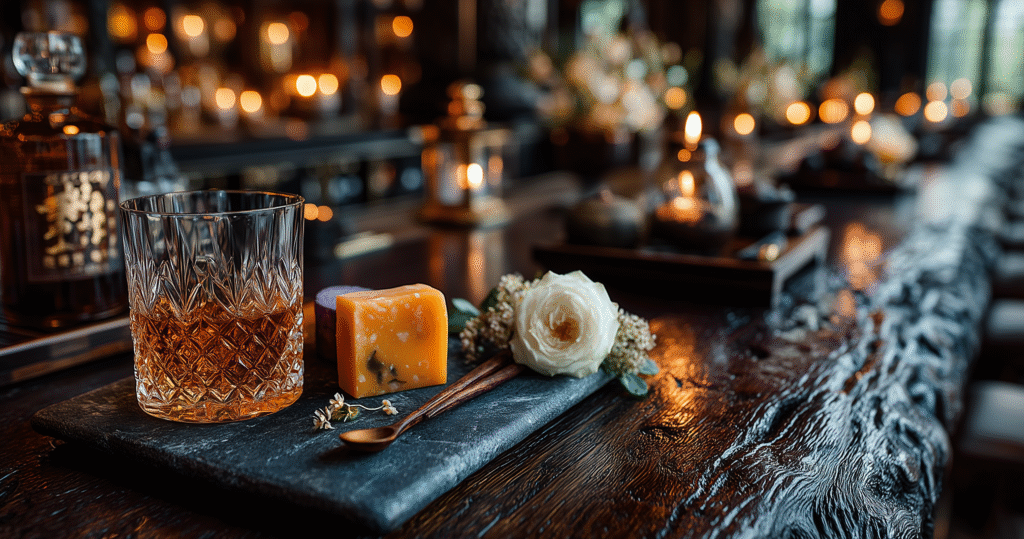
Yet, what rises from the glass of DAIYAME 40 is unmistakably lychee. Notes of white rose, muscat grape, and a whisper of melon unfold—a sensory world apart from the conventional image of imo shochu.
In Ichiki-Kushikino City, a port town on the Satsuma Peninsula’s western edge, Hamada Syuzou. has crafted spirits since 1868, the dawn of the Meiji era. Now, with over 150 years of history, this storied house releases DAIYAME 40 to fundamentally redefine shochu orthodoxy.
The Alchemy of “Koujuku-imo”, Defying Convention
In the realm of sweet-potato shochu, one law was long considered immutable: “Freshness is everything.” Any imperfection in the potato was thought to compromise the spirit.
Hamada Syuzou’s research team challenged this assumption. They questioned what might happen if sweet potatoes were intentionally matured under strictly controlled conditions. The result was a startling discovery: the maturation process awakens abundant aromatic compounds—including monoterpene alcohols like linalool, geraniol, nerol, and citronellol.
These are the very same compounds found in Gewürztraminer wines and Muscat of Alexandria grapes. At a molecular level, the sweet potato and the grape began to speak the same aromatic language.
From this insight emerged their proprietary ingredient: “Koujuku-imo” (aroma-matured sweet potatoes). This is the genesis of DAIYAME 40’s allure.
The Triad of Craftsmanship
DAIYAME 40’s profile is no accident; it is built on a design philosophy where three technologies orchestrate a perfect harmony.
First, Koujuku-imo provides the flamboyant “aroma”—fruit-forward notes reminiscent of lychee and rose. Next, Black Kouji fermentation creates the “structural backbone”: richness, crispness, and a sharp acidity that keeps the finish dry and taut. Finally, Vacuum Distillation—a rare technique employed by fewer than 1% of producers—gently extracts delicate aromatics at low temperatures.
A technology for fragrance, a technology for taste. This synergy gives DAIYAME 40 its layered, multi-dimensional character.
Three Sanctuaries of Craft
Hamada Syuzou operates three distinct distilleries, each with a unique mission.
Denbeegura 「伝兵衛蔵」preserves Meiji-era traditions with wooden-tub stills and jar fermentation—an atelier dedicated to origins. Denzouingura「傳藏院蔵」 serves as an innovation hub with cutting-edge facilities; the birthplace of DAIYAME 40. And Kinzangura 「金山蔵」, a globally rare underground aging facility, repurposes the tunnels of a former gold mine to store time itself.
Tradition, Innovation, and Time. This structure embodies the weight of 150 years of history.
The Intent of 40%, A Global Standard
DAIYAME 40 is bottled at 40% ABV—a deliberate departure from the domestic standard of 25%.
This is a strategic choice. Forty percent aligns with the global language of gin, vodka, and tequila. It is engineered to feel natural in the hands of the world’s top bartenders.
Unlike vodka, which often prizes neutrality, DAIYAME 40 stands at the opposite pole. It does not fade into the background of a cocktail; rather, it asserts itself with a distinct lychee signature. It is designed not merely as a supporting player, but as the lead.
Architectural Beauty, The “Urushi Cut”
The bottle design reflects a deep philosophy. The form, known as the “urushi cut,” employs the Yamato proportion (1:√2)—a golden ratio historically used in Japanese architecture, such as the Horyu-ji Temple「法隆寺」.
A radically innovative liquid encased in traditional Japanese aesthetics. This contrast signals an exceptional experience even before the seal is broken.
“Daiyame”, The Art of Unwinding
The name “Daiyame” stems from the Kagoshima dialect: dare (fatigue) + yameru (to stop). It refers to the evening ritual of washing away the day’s weariness with a drink.
Hamada Syuzou elevates this local culture, overlaying it with global concepts like the “aperitif” or “cocktail hour.” A dialect finding new resonance in a global context—this deft act of translation is part of the brand’s depth.
Global Acclaim
DAIYAME 40 has garnered over 12 awards, including top honors at the world’s three major spirits competitions: IWSC (London), SFWSC (San Francisco), and ISC.
Notable accolades include IWSC Top Gold (2023, 2025), SFWSC Double Gold (2022), and ISC Top Gold (2023). Judged alongside global giants like gin and vodka, DAIYAME 40 is recognized not just as a superb shochu, but as a world-class spirit.
From Kagoshima to the World’s Best Bars
A sweet-potato spirit born in a Japanese port town now graces bar counters in London, San Francisco, New York, and Bangkok. The fact that lychee aromas can be drawn from sweet potatoes speaks to the uncharted potential of Japan’s spirits culture. (Mr.Bacchus)
This article is intended solely to explore the distillation techniques and cultural heritage of Hamada Syuzou and the DAIYAME 40 brand, and does not aim to promote or encourage the consumption of alcohol. / บทความนี้จัดทำขึ้นเพื่อนำเสนอข้อมูลเกี่ยวกับเทคนิคการกลั่นและมรดกทางวัฒนธรรมของ Hamada Syuzou และแบรนด์ DAIYAME 40 เท่านั้น มิได้มีเจตนาเพื่อส่งเสริมหรือโฆษณาเครื่องดื่มแอลกอฮอล์ สำหรับผู้มีอายุ 20 ปีขึ้นไป โปรดดื่มอย่างรับผิดชอบ