

The Story of a Family and a 0.5-Hectare Plot Protected by Stone Walls
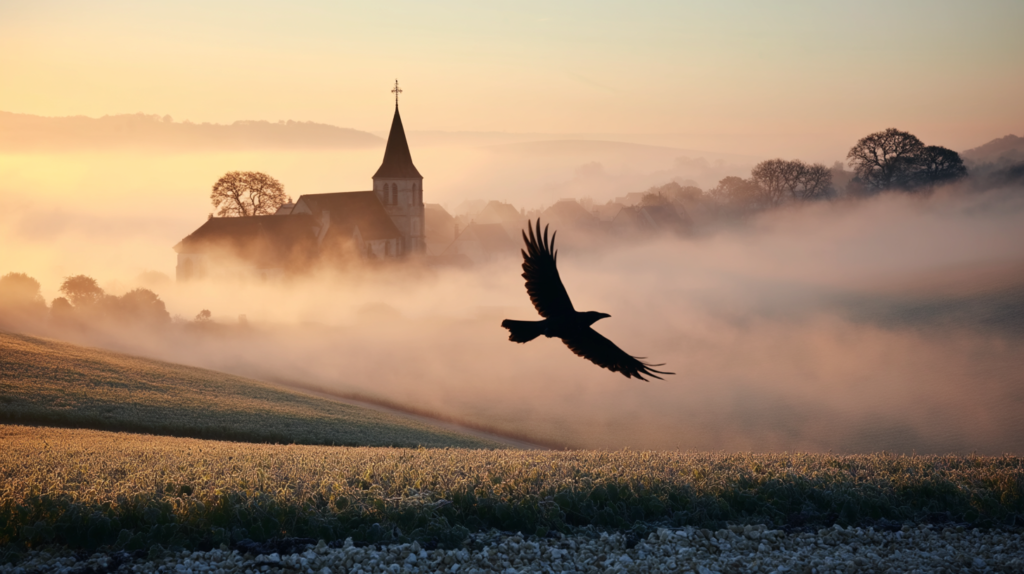
A Family Name That Means “Crow” in Finnish In the Côte des Blancs, one of Champagne’s most renowned regions, the Waris family lives in the village of Avize, one of the area’s 17 Grand Cru villages.
“Waris” means “crow” in Finnish. The family moved to this village from Finland about five generations ago and began growing grapes in 1918. Then, in 1997, fourth-generation Olivier Waris married Stéphanie Hubert, and together they founded their maison with just 0.9 hectares of vineyard.
There is one small plot they planted with their own hands: a 0.5-hectare parcel enclosed by stone walls. They named it Clos de la Corneille, French for “the crow’s enclosure.” It is a place where the family name is quite literally etched into the land.
2012, a Year of Trial The first wine from this vineyard was produced in 2012. But that year brought challenging weather conditions to Champagne: severe spring frosts, poor weather during flowering, followed by hailstorms and heavy rain in early summer. Harvest yields across the region fell sharply.
And then, from August onward, the weather changed dramatically. With abundant sunshine and a dry climate, the surviving grapes achieved optimal ripeness and concentration. The result was fruit with both distinct richness and precise acidity—grapes powerful enough to support long aging.
It may have been a coincidence that the first vintage came in such a difficult year. But in many ways, that hardship is what defined the character of this wine.
Ten Years Resting on the Lees The harvested Chardonnay was vinified half in oak barrels and half in stainless steel tanks, then aged quietly on the lees for ten years in an underground cellar kept at a constant 11°C.
It is finished as a zero-dosage wine, Brut Nature, with no added sugar. There is no filtration and no cold stabilization. Whatever happened in the vineyard is left intact in the bottle. This is the Waris family’s philosophy: winemaking with as little human intervention as possible.
The maison received AB certification, France’s organic farming label, in 2023. In its Grand Cru parcels, the soil is tilled by horse, and sheep are used to manage the cover crops.
A Category-Defying Wine A senior buyer at the historic British wine merchant Berry Bros. & Rudd described this wine as “a UFO in the world of clos Champagne,” highlighting its distinct character. The French guidebook Gault & Millau awarded it 94 points out of 100.
Among the lineage of Champagne’s historically renowned clos wines—such as Clos du Mesnil, Clos des Goisses, and Salon—the fact that a family-run maison farming just 0.5 hectares has earned such acclaim is proof that the size of a vineyard and the quality of its wine do not necessarily go hand in hand.
The Waris family works its own vines, makes its own wine, and sends into the world a bottle born from a vineyard bearing its own name. As récoltant-manipulants—grower-producers who cultivate and vinify their own fruit—they stand at the opposite end of the spectrum from the grandes maisons. It is a small world, but that very smallness is the source of its character.
The name of a family that came from Finland is now inscribed on a vineyard in Champagne, enclosed by stone walls. The crow’s vineyard quietly stands as a testament to their dedication, offering a rare glimpse into a highly personal expression of Champagne.(Mr. Bacchus)
This article is intended solely to explore the winemaking artistry and cultural heritage of Waris Hubert and the Clos de la Corneille brand, and does not aim to promote or encourage the consumption of alcohol. / บทความนี้จัดทำขึ้นเพื่อนำเสนอข้อมูลเกี่ยวกับศิลปะการทำไวน์และมรดกทางวัฒนธรรมของ Waris Hubert และแบรนด์ Clos de la Corneille เท่านั้น มิได้มีเจตนาเพื่อส่งเสริมหรือโฆษณาเครื่องดื่มแอลกอฮอล์ สำหรับผู้มีอายุ 20 ปีขึ้นไป โปรดดื่มอย่างรับผิดชอบ