

Champagne in History and Art: From Dom Pérignon to the 19th Century
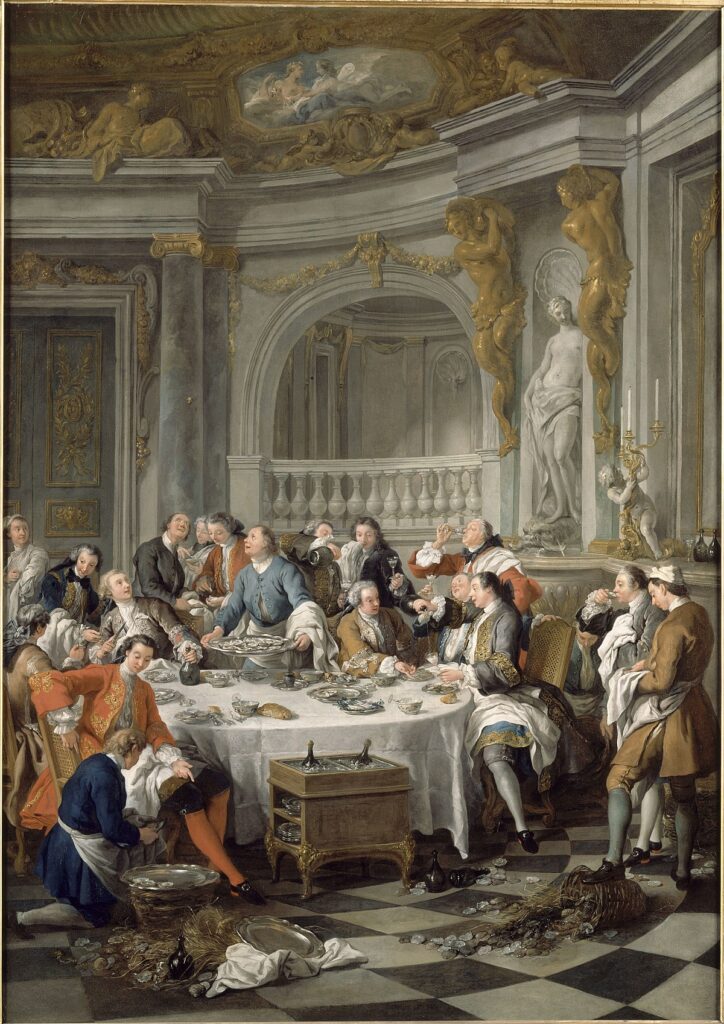
20 years after Dom Perignon’s death. Musée Condé, Château de Chantilly.
The First Cork in Art History
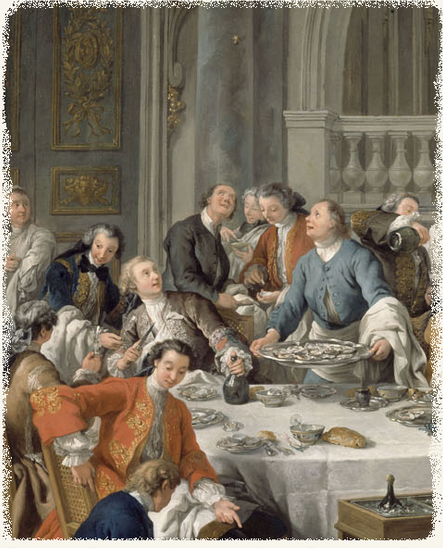
In the painting “Le Déjeuner d’huîtres” (The Oyster Lunch) by Jean-François de Troy (1735), preserved at the Château de Chantilly, we can observe a significant historical detail.
Painted twenty years after Dom Pérignon’s death, this work depicts one of the first known representations of a champagne cork in the history of painting. The artist captures it frozen in the air, a testament to the sparkling nature of the wine which was already considered an innovative product at the time.
The Legend and Reality of Dom Pérignon
The “wine of bubbles” was once difficult to control due to the pressure inside the bottles. It was domesticated over time, and the monk Dom Pérignon played a major role in this history.
It should be noted that while legend often credits him with inventing the sparkling process, his actual contribution was primarily in the art of blending (assemblage).
Brother Pierre, his pupil, wrote that Dom Pérignon excelled in composing cuvées based on the taste of the grapes and the conditions of the harvest years. With him, the blending of crus and grape varieties approached a science.
Furthermore, to manage the pressure within the bottles, he recommended the use of a cork stopper held in place by a hemp string, a technique that allowed the wine to preserve its quality. This innovation replaced the wooden plugs used previously.

HIC JACET DOM PETRUS PERIGNON HUIUS M[O]N[ASTE]RII PER ANNOS QUADRAGINTA SEPTEM CELLERARIUS QUI RE FAMILIARI SUMMA CUM LAUDE ADMINISTRATA VIRTUTIBUS PLENUS PATERNO QUE IMPRIMIS IN PAUPERES AMORE. OBIIT AETATIS 77° ANNO 1715 REQUISCAT IN PACE AMEN”
The Royal Court and the Spread of Champagne
Under the reign of Louis XV, the consumption of sparkling champagne was confirmed within the French Court.
In 1728, a law prohibiting the transport of wine in bottles was repealed. The glass bottle and the cork stopper, advocated by Dom Pérignon, allowed for the wider distribution of Champagne.
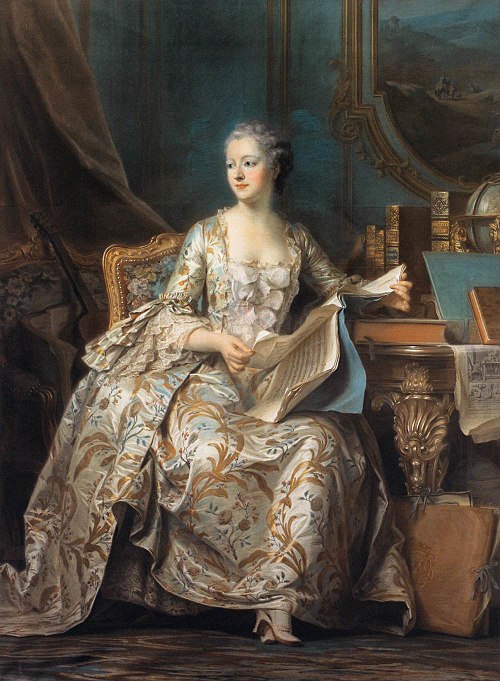
Madame de Pompadour, a prominent figure at the Court, was a patron of the arts and played a role in the popularity of Champagne in high society. It is said that she influenced the adoption of the “Flute” glass shape.
Champagne in 19th Century Art
Champagne continued to inspire painters of the 18th and 19th centuries as a symbol of French “Art de Vivre” (Art of Living).
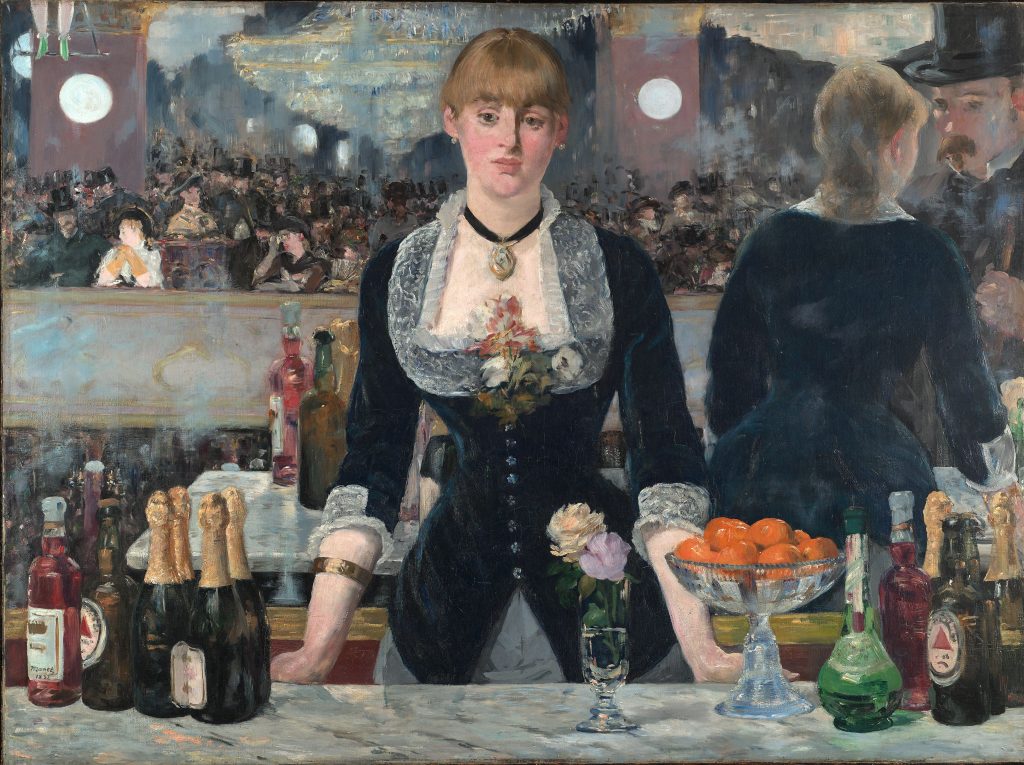
Edouard Manet depicted scenes of modern life where champagne appeared naturally as part of the cultural landscape. In his famous work “A Bar at the Folies-Bergère” (1882), champagne bottles are visible on the counter, illustrating how the drink had become integrated into Parisian society since the French Revolution.
Conclusion
The 18th century, a time of great artistic flourishing with painters like Boucher and Fragonard and composers like Mozart and Beethoven, also saw the birth of the first Champagne Houses.
Ruinart was founded in 1729, followed by Moët and Clicquot. This marked the beginning of an industry that would share French heritage with the world.

(Dr.FX)
”เนื้อหาบนหน้านี้มีวัตถุประสงค์เพื่อให้ข้อมูลและความรู้เท่านั้น และไม่มุ่งหมายเพื่อการส่งเสริมหรือการโฆษณาเครื่องดื่มแอลกอฮอล์ ผู้เข้าชมต้องมีอายุ 20 ปีขึ้นไป โปรดดื่มอย่างรับผิดชอบ”