

THAIFEX 2026 and the Quiet Transformation of Bangkok’s F&B Scene
In late May 2026, THAIFEX-Anuga Asia 2026, one of Asia’s largest food and beverage trade fairs, was held on the outskirts of Bangkok. Bringing together exhibitors from around the world, the event has long been seen as a barometer for the direction of Thailand’s F&B industry over the coming year.
This year, that barometer pointed to three major currents: gut health, food experienced through all five senses, and the reinvention of nostalgia. At first glance, these three trends may appear unrelated. But when viewed from the point where they converge, it becomes clear that they are each approaching the same question from different angles: how should we redesign the very meaning of eating and drinking?
From Quantity to Quality: A Market in Transition
According to forecasts by Krungsri Research, Thailand’s foodservice industry is expected to continue growing at an annual rate of 4–5% from 2024 to 2026, reaching a market size of 275–300 billion baht. Importantly, this growth reflects not merely a post-pandemic recovery, but a profound qualitative transformation of the market itself.
The First Current: Wisdom from the Gut
The first trend highlighted in THAIFEX’s trend report was gut health. Probiotics and prebiotics are no longer terms confined to supplement aisles; they are becoming guiding criteria in menu design.
What is especially interesting is the fact that Asia has long had a deeply rooted culture of fermented foods. Miso, soy sauce, pickles, kimchi—fermented foods are part of the everyday Asian table. This is not a new discovery, but a thoughtful rediscovery. That is precisely why their application in professional kitchens is becoming increasingly sophisticated. According to an annual report by the Culinary Institute of America, koji-based fermentation techniques have become one of the methods spreading rapidly in professional kitchens, with around 30% of chefs saying they actively use them.
The Second Current: Engaging the Five Senses
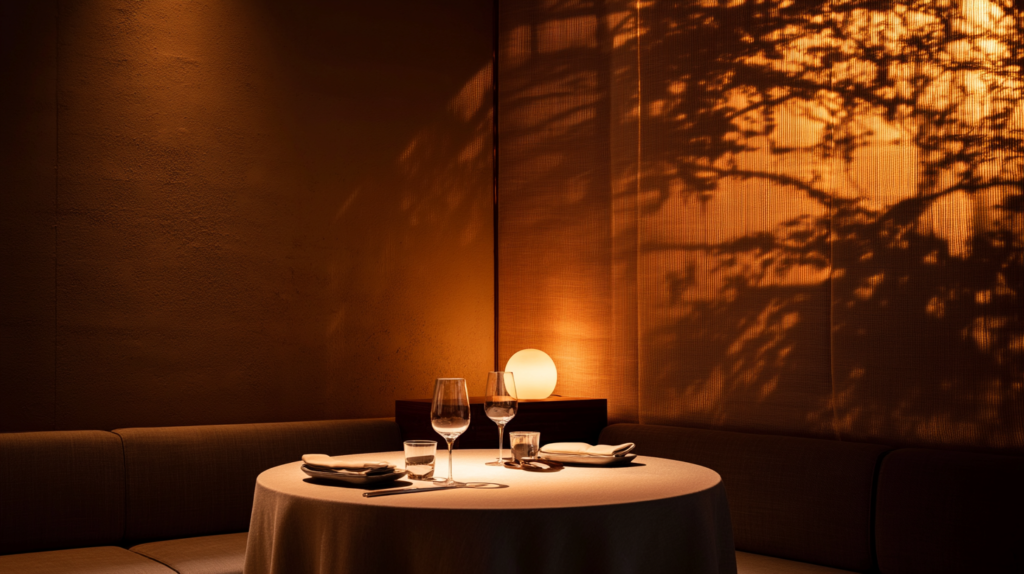
The second current is the rise of food experienced through all five senses. This approach treats not only taste and smell, but also sight, sound, and touch as elements to be deliberately designed. It is not simply an extension of “Instagrammable” cuisine, but a structural shift toward experiences that remain in memory as entire spaces. In fiercely competitive Bangkok, where new restaurants open one after another, the ability to design for the five senses is increasingly tied directly to survival.
The Third Current: The Innovation of Nostalgia
The third current is the fusion of nostalgia and innovation. Traditional recipes are being updated by incorporating new techniques and healthier ingredients. This is also something Japanese brewing has long practiced. Examples include the revival of the kimoto method and the reappraisal of aged sake. These are attempts to draw out unknown value hidden within old things using contemporary techniques.
The Convergence of Three Currents
Gut health, the five senses, and the reinvention of nostalgia. At their point of intersection, these three currents converge into a single proposition: eating and drinking are acts that work simultaneously on the human body, memory, and senses.
Fermentation may be the technique that embodies this most clearly. Fermentation by koji and yeast is drawing attention for its relationship with the gut environment, while the complex aromas it produces appeal to the senses. Moreover, although it is a method with thousands of years of history, it continues to evolve today. The answer to all three currents resides within a single process.
Bangkok’s culinary map continues to be quietly rewritten, extending far past the exhibition halls. (Mr. Bacchus)
This article is intended solely to explore the cultural and industry trends of the Bangkok food and beverage market, and does not aim to promote or encourage the consumption of alcohol. / บทความนี้จัดทำขึ้นเพื่อนำเสนอข้อมูลเกี่ยวกับแนวโน้มทางวัฒนธรรมและอุตสาหกรรมของตลาดอาหารและเครื่องดื่มในกรุงเทพฯ เท่านั้น มิได้มีเจตนาเพื่อส่งเสริมหรือโฆษณาเครื่องดื่มแอลกอฮอล์ สำหรับผู้มีอายุ 20 ปีขึ้นไป โปรดดื่มอย่างรับผิดชอบ