

How Asia’s Bars Are Redefining the ‘Third Place’
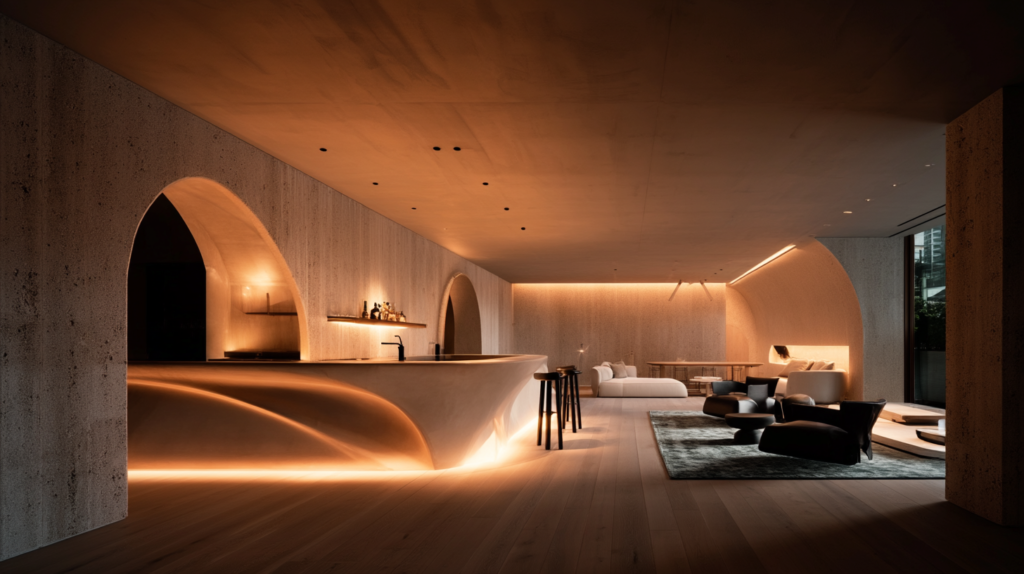
At HOTELEX Shanghai in March 2026, the traditional exhibition booth felt like a relic of the past. In its place stood fully realized bar counters and intimate lounge spaces, built directly inside the hall. Rather than distributing catalogs, brands invited guests into curated worlds of light, sound, and texture. It was a tangible sign of a broader shift reshaping Asia’s beverage landscape: the value of a venue is no longer measured solely by what is in the glass, but by the atmosphere that surrounds it.
The Silent Language of Space
The concept of the “third place”—a sanctuary between the demands of home and work—has long been associated with cafés or libraries. Today, across Asia, the modern bar is claiming that title.
This evolution is written into the physical surroundings. The inclusion of dedicated design accolades in global bar rankings highlights that architecture and spatial experience are now judged with the same rigour as the cocktails themselves. The precise dimming of a light, the tactile warmth of a wooden counter, the ergonomics of a chair—these are no longer mere decor; they are the narrative of the venue.
This is driven by a subtle cultural shift. A new generation of patrons approaches hospitality with intention, often seeking connection earlier in the evening. As the low- and no-alcohol movement matures, the bar has transformed from a place centered on alcohol into a space curated for presence. The environment itself is the destination.
Bangkok’s Quiet Revolution
Bangkok finds itself at the heart of this transition, guided by an intersection of local culture and changing times.
Regulatory shifts have played an unexpected role. With the tighter restrictions on digital alcohol advertising introduced in late 2025, venues have turned their focus inward. Deprived of easy social media promotion, the emphasis has returned to the physical space itself, demanding environments so compelling that guests seek them out by word of mouth.
Yet, this regulatory nudge meets an already fertile cultural ground. Bangkok’s social fabric has always been woven around the table, defined by a natural warmth and a desire to share time. When external constraints met this innate hospitality, it accelerated the evolution of the city’s bars into sophisticated sanctuaries.
Echoes of the Japanese ‘Snack’
This craving for intimacy recalls a distinct pillar of Japanese nightlife: the snack bar.
Defined by a modest counter, a welcoming host, and a tight-knit community of regulars, the snack has always prioritized connection over the curation of the backbar. For decades, these unpretentious spaces have embodied the “third place” long before the term entered the design lexicon.
Perhaps what today’s avant-garde spaces are attempting to capture is not so different from the quiet warmth these vintage bars have always provided. It is not a matter of scale or opulence, but the reassurance of belonging—the subtle understanding between host and guest, and the effortless rhythm of a neighborhood institution.
It is no coincidence that Japanese-style snack bars are finding a quiet, appreciative audience in Bangkok. While contemporary high design and the nostalgic counters of the Showa era appear mismatched on the surface, they are bound by the same timeless human pursuit: a desire for genuine belonging.
Where the Story Resides
The modern patron is no longer just looking for a well-made drink or a rare vintage; they are seeking a container for their time. A space where the friction of the day falls away.
Crafting this sense of ease is the true challenge of modern hospitality. Whether through the careful curation of material textures, the intuitive flow of a room, or the cultivation of a welcoming atmosphere, the goal remains the same: creating a sanctuary where people can simply be.
Across Asia, the definition of a bar is being rewritten—not by the bottles on display, but by the spaces that bring us together. (Mr. Bacchus)
This article is intended solely to explore the evolving culture of bars and social “third places” in Asia, and does not aim to promote or encourage the consumption of alcohol. / บทความนี้จัดทำขึ้นเพื่อนำเสนอข้อมูลเกี่ยวกับวัฒนธรรมที่เปลี่ยนแปลงของบาร์และ “พื้นที่ที่สาม” ทางสังคมในเอเชียเท่านั้น มิได้มีเจตนาเพื่อส่งเสริมหรือโฆษณาเครื่องดื่มแอลกอฮอล์ สำหรับผู้มีอายุ 20 ปีขึ้นไป โปรดดื่มอย่างรับผิดชอบ