

Charting the Next Decade
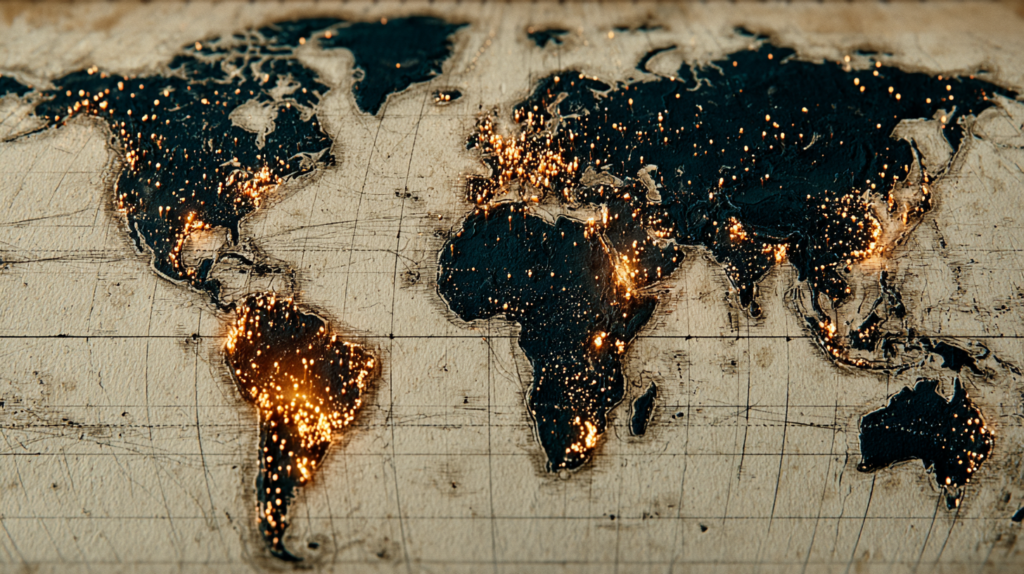
Latin America, the Middle East, and Africa: Unfolding New Cultural Frontiers
In 2025, Japanese sake achieved a quiet yet profound milestone. Export value grew by 6% year over year, with volume gracefully climbing 8% to approximately 33,500 kiloliters. Today, sake reaches a remarkable 81 countries and regions, weaving its way into diverse global cultures.
While these figures reflect a steady global embrace, looking beyond the statistics reveals a more profound cultural shift underway. The industry’s long-standing reliance on its two most prominent markets—China and the United States—is quietly, but unmistakably, evolving.
A Maturing Landscape in Traditional Strongholds
China remained the foremost export destination by value in 2025, growing 13.9% year over year and establishing a new benchmark. The United States ranked second, though exports experienced a slight 3.5% moderation from the previous year. Together, these distinguished markets still account for over half of all sake exports globally.
Yet, close observers of the culinary landscape recognize that both markets are entering a phase of maturation. While external factors such as economic fluctuations, policy nuances, and currency dynamics continuously shape these regions, 2025 was naturally poised as a year of sophisticated adjustment following the dramatic 125.9% surge in U.S.-bound exports in 2024.
Concurrently, exports to the European Union reached unprecedented levels, with nations like France and South Korea also celebrating new milestones. The map of global sake appreciation has elegantly transitioned into a multipolar era.
Latin America: A Culinary Synergy Taking Root
Within this multipolar evolution, Latin America is experiencing the most captivating transformation.
Over the past five years, the value of sake exports to this vibrant region has flourished by 288%. While the market remains intimate in scale, the number of destination countries has reached ten for the first time. This indicates an awakening to sake’s potential that stretches well beyond early adopters like Brazil and Mexico.
Brazil offers a particularly fascinating narrative. In late 2025, Brazilian wine professionals embarked on an immersive journey to the historic sake breweries of Japan’s Tohoku region, guided by the Japan Sake and Shochu Makers Association. Participants observed that sake’s intricate flavor profile and profound cultural heritage resonate deeply with the Brazilian palate and sensibility.
This is far more than diplomatic sentiment. São Paulo’s Liberdade district stands as a testament to the world’s largest Japanese diaspora, nurturing a rich culinary ecosystem. Furthermore, the global ascendance of Nikkei cuisine—an exquisite Peruvian fusion of Japanese and South American culinary philosophies—has naturally positioned sake as a compelling pairing companion.
Across the region, progressive sommeliers are exploring the delicate interplay between vivid Latin American flavors and the refined characteristics of premium sake. Here, sake is gracefully transcending the label of an “exotic import” to become an integral, respected element of serious gastronomy.
The Middle East: Dubai and the Redefinition of Luxury
Sake exports to the Middle East and Africa elegantly surpassed 500,000 liters in 2024. The UAE forms the nucleus of this appreciation, representing over 60% of the region’s total.
In cosmopolitan hubs like Dubai and Abu Dhabi, the presence of sake in fine-dining establishments expanded by 19% in 2024 alone. It is finding its home primarily within the luxurious confines of five-star hotel restaurants and avant-garde Japanese fusion concepts.
While navigating regional dietary customs requires cultural sensitivity, licensed venues in international cities offer foreign residents and discerning travelers curated gastronomic experiences. Within this framework, sake is cultivating a highly distinctive positioning in Dubai. While fine wine and rare whisky remain traditional mainstays of luxury, premium sake is increasingly sought after by those with refined palates. For Dubai’s affluent epicureans, it is not merely a beverage, but a deeply immersive luxury experience anchored in authentic Japanese craftsmanship.
Africa: Cultivating a New Appreciation
Statistically, sake’s footprint in Africa remains modest. However, a reported 12% rise in retail sales in South Africa during 2024 hints at a quiet awakening. Thoughtfully curated tasting experiences and educational initiatives are steadily nurturing the soil for broader understanding.
In the sophisticated dining scenes of Cape Town and Johannesburg, sake is naturally accompanying the elevation of Japanese gastronomy. Crucially, as a distinguished wine-producing nation, South Africa boasts a wealth of deeply knowledgeable sommeliers. Their growing fascination with the complexities of sake is a promising indicator for a sustainable, enduring culture of appreciation.
The Meaning of 81 Markets: An Evolution of Culture
The presence of sake in 81 countries and regions signifies much more than expanded distribution.
For generations, sake’s presence abroad was intrinsically tied to the traditional Japanese restaurant experience—a chilled glass savored alongside a sushi counter. It was a beautiful, yet specific, context.
Today, however, sake is being invited to the table through entirely new cultural gateways: the vibrant spices of Nikkei cuisine in Latin America, the zenith of luxury hospitality in Dubai, and the sophisticated wine culture of South Africa.
This illustrates sake’s evolution from a gentle accompaniment for Japanese fare into a celebrated, independent category of its own. Much like wine has long transcended the borders of French cuisine, artisanal sake is gracefully finding its place at diverse tables worldwide, honoring its brewers’ devotion while embracing global culinary artistry.
A Perspective from Bangkok
Thailand stands proudly as the 12th-largest market for sake globally, and second only to Singapore in Southeast Asia. In the vibrant metropolis of Bangkok, premium sake is increasingly gracing the cellars not only of Japanese establishments, but also of esteemed French, Italian, and progressive Thai fine-dining venues.
The unfolding narratives in Latin America and the Middle East offer valuable inspiration for Bangkok’s culinary visionaries. It invites a departure from the traditional paradigm of “sake exclusively for Japanese cuisine,” encouraging sophisticated pairings with complex Thai spices and international flavors.
This creative exploration is already breathing new life into Bangkok’s premier bars and restaurants. As this momentum accelerates, the possibilities are boundless.
With its map now spanning 81 countries and regions, sake’s narrative is no longer confined to the dining capitals of New York or Paris. In São Paulo, Dubai, and Cape Town, new cultural dialogues are taking root. These nuanced shifts are not merely changing the market; they are gently shaping the next decade of sake’s global legacy. (Mr. Bacchus)
This article is intended solely to explore the structural transformation and multi-polar expansion of the global sake export market, particularly the rise of Latin American, Middle Eastern, and African frontiers, and does not aim to promote or encourage the consumption of alcohol. / บทความนี้จัดทำขึ้นเพื่อ นำเสนอข้อมูลเกี่ยวกับการเปลี่ยนแปลงเชิงโครงสร้างและการขยายตลาดส่งออกสาเก
ทั่วโลกแบบหลายขั้ว โดยเฉพาะการเติบโตของภูมิภาคชายแดนใหม่ในละตินอเมริกา ตะวันออกกลาง และแอฟริกา เท่านั้น มิได้มีเจตนาเพื่อส่งเสริมหรือโฆษณา เครื่องดื่มแอลกอฮอล์ สำหรับผู้มีอายุ 20 ปีขึ้นไป โปรดดื่มอย่างรับผิดชอบ