

A Narrative Fostered in the Vineyards at ProWine Tokyo 2026
From April 15 to 17, ProWine Tokyo 2026, an international trade fair for wines and spirits, was held at Tokyo Big Sight. A total of 188 exhibitors from 23 countries and regions took part, and of the 22 seminars held during the event, seven focused directly on Japanese wine itself. The globally renowned wine critic Jancis Robinson MW appeared by video in a session titled “The Current State of Japanese Wine,” while wineries from Nagano, Yamanashi, Hokkaido, and Kumamoto took the stage as producers. In its closing summary, the organizers named “Japanese wine” as one of the three major trends of the fair. The other two were rosé wine and the rise of South America. In Tokyo in April 2026, it was quietly recorded that Japan, as a wine-producing region, had taken its place squarely on the agenda of global industry trends.
A few days later, I found myself in the Nobori district of Yoichi, Hokkaido.
The Thawing Slopes of Nobori, Yoichi
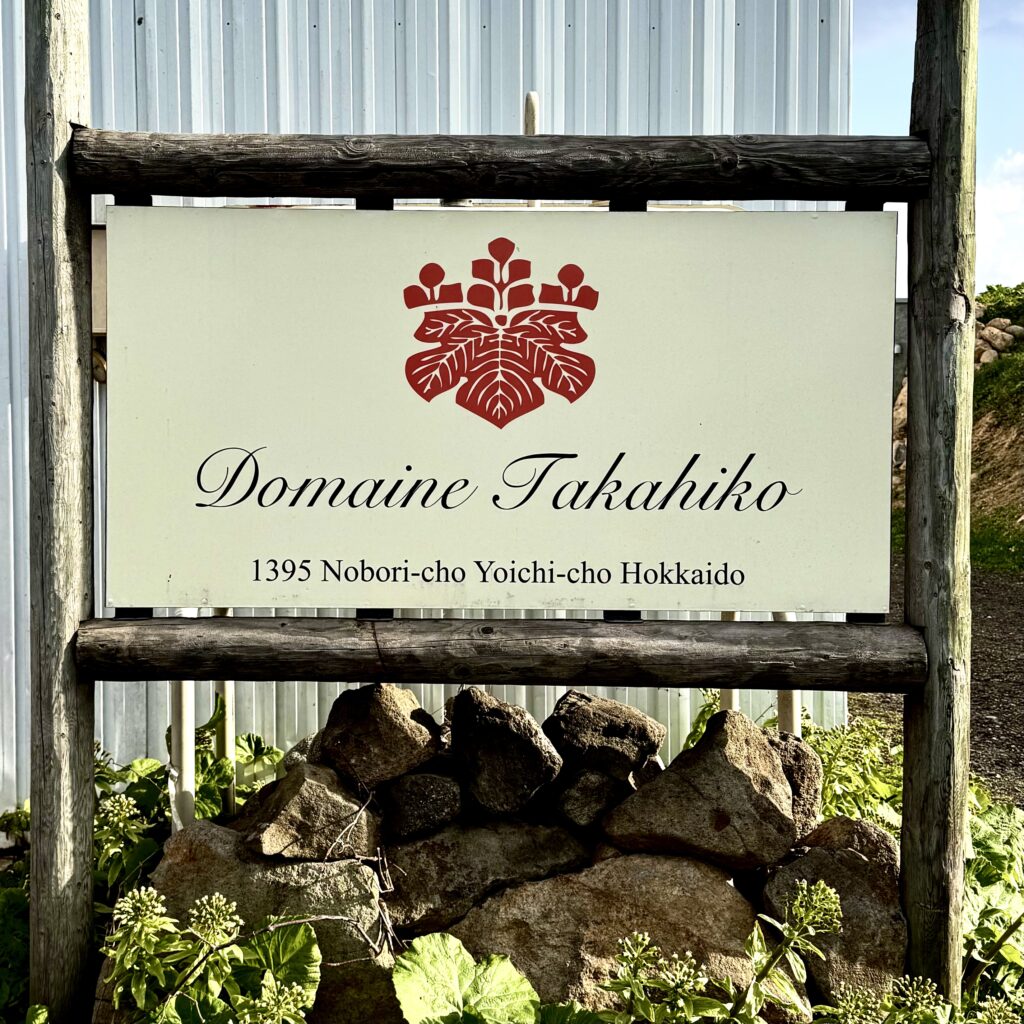
A little over an hour by car from Sapporo, heading west along the coastline and then crossing a single hill, you come upon vineyards etched along the contour lines of a gentle south-facing slope. This is Domaine Takahiko, a small domaine centered on Pinot Noir, built around vineyards first planted in 2010 by Takahiko Soga, who was born into the family behind Obuse Winery in Nagano.
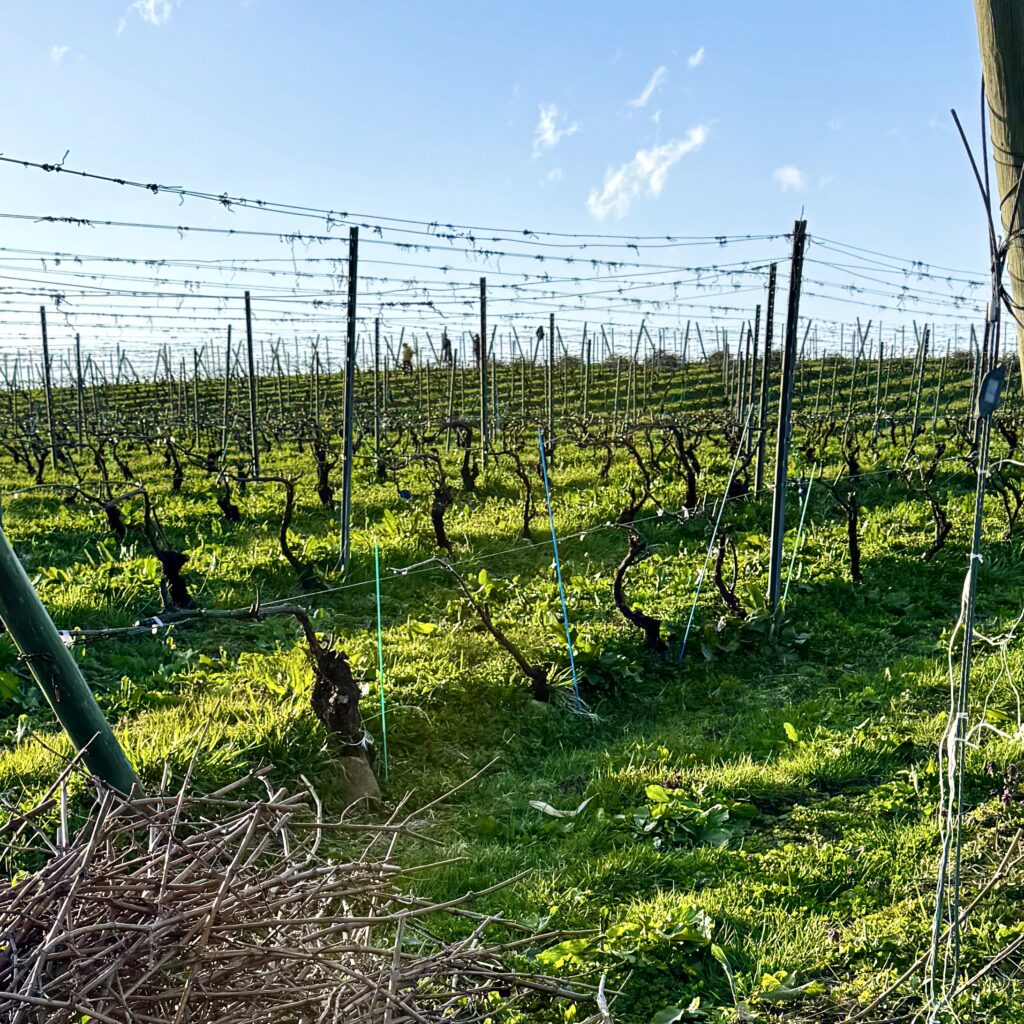
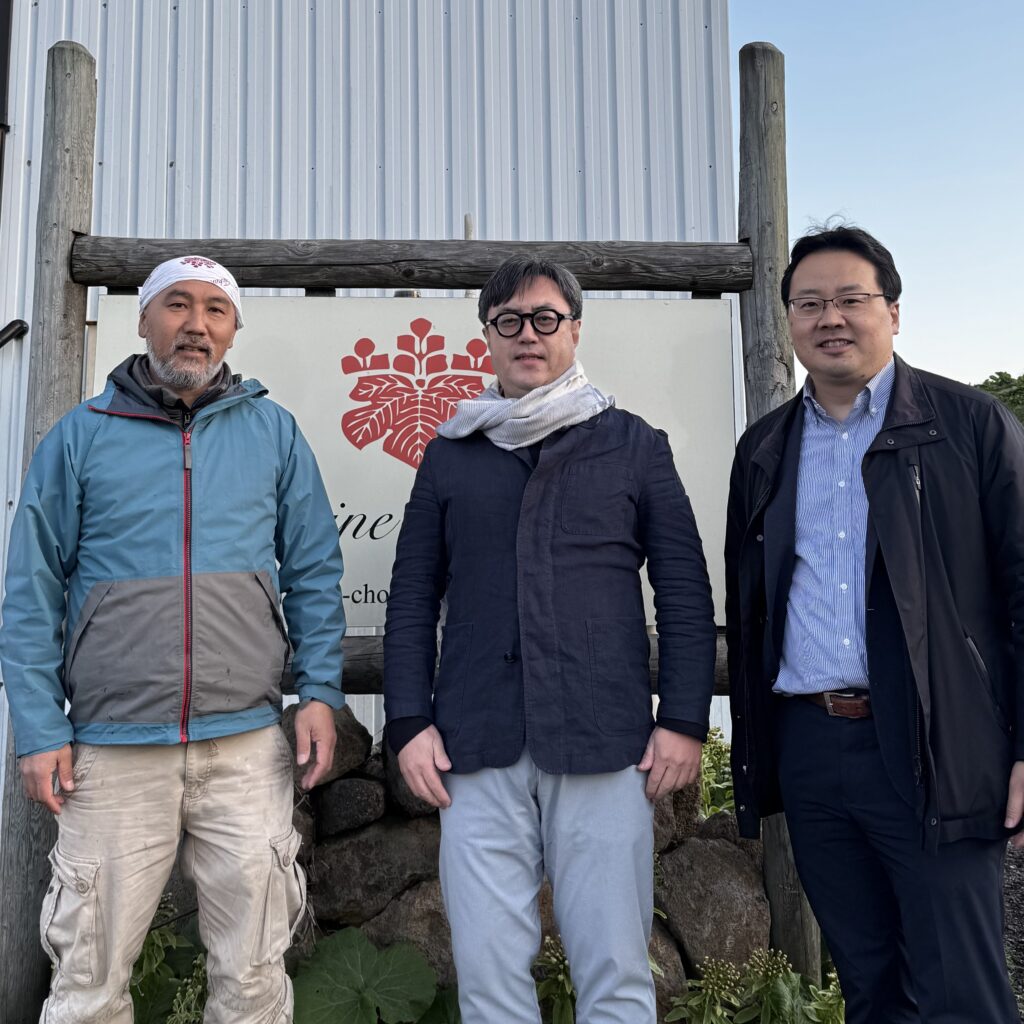
When I visited in late April, snowmelt was still running in thin streams at the foot of the slope, and a cold wind moved across the rows after pruning had been completed. Guided by Soga, I walked through parcels of vines of different ages. The vines were low, the spacing tight. He repeated several times that one must not rush the vineyard. This is the vineyard that gives rise to Nana-Tsu-Mori Pinot Noir, the domaine’s signature cuvée. Walking the vineyard itself was also a time in which the image I had long carried of Pinot Noir was quietly rewritten from the perspective of the soil and the wind.
“Wine with Dashi”: A Vocabulary That Could Only Come from Japan
If Burgundy Pinot Noir is often described in terms of taut acidity derived from limestone terroir and the poised contours of red fruit, many sommeliers say that Nana-Tsu-Mori’s style exists somewhere else entirely. What rises first is a faint note of iron, followed by layers of umami that evoke shiitake mushrooms and kombu. What then emerges is not a sharp edge of acidity, but a lingering finish with a generous sense of dashi. For now, there seems to be no single word in either French or English that can fully capture this sensation. Perhaps this is why the word “umami,” long used in Japanese wine criticism, has been exported into international media as-is, in Roman letters.
As for this “dashi-like” quality, one view is that Japanese people, having grown up with the culture of dashi in washoku as part of their sensory memory, are especially attuned to the umami components found in wine. Glutamic acid, succinic acid, and various amino acids bring umami and a natural sense of sweetness. These qualities tend to emerge from winemaking that avoids excessive intervention, such as extended skin contact, whole-cluster fermentation, and restrained use of sulfur dioxide. Domaine Takahiko’s winemaking is quietly grounded in a philosophy of minimal sulfur use, aging mainly in old barrels, and fermentation rooted in the vineyard itself. It is an approach that designs wine not from the standpoint of technique, but from the culture that has shaped the palate. In this sense, it shares the same roots as the mindset of sake artisans, who work backward from koji, water, and rice.
Scarcity Is Not the Goal, but the Result
Today, Domaine Takahiko’s wines are receiving an extraordinary level of recognition for Japanese wine on the global secondary market. They appear on the wine lists of starred restaurants, including Copenhagen’s noma, and are sought after by sommeliers in Hong Kong, Taipei, Bangkok, and London. As global demand outpaces domestic distribution, the profound scarcity of these vintages has become a testament to their enduring allure.
Soga himself says he has no intention of rushing to increase production. Vines only give back what the vineyard allows. Scarcity is not a designed objective; it is the result of that stance. This same stance has become a shared backbone among the dozen or so wineries now gathering in Yoichi, Hokkaido. There are still not many places in Japan capable of expressing this style, with this much depth, through Pinot Noir, one of the most delicate and exacting grape varieties. The fact that market prices are now being discussed on an international scale is also a natural consequence of the world’s recognition of that depth.
ProWine Tokyo’s Implications for Bangkok
At ProWine Tokyo 2026, buyers attending the Japanese wine sessions repeatedly asked not about grape varieties or barrel usage, but about the wines’ relationship to local food culture. Bangkok’s wine scene has matured rapidly in recent years. The Michelin Guide Thailand 2026 lists two three-star restaurants, both equipped with highly refined drinks programs. When a Japanese Pinot Noir with a sense of dashi finds its way onto Bangkok’s wine lists, it will not merely expand the selection. It will become the design of a new experience, one that speaks of “Japan as an origin” from multiple angles.
The fact that Japan is “also a wine country” does not mean speaking about wine in the language of France or Italy. Around the world, sommeliers are beginning to describe Japanese Pinot Noir using the Japanese word “dashi” itself. Beyond a glass in Bangkok, the south-facing slopes of Yoichi, the cold wind of Nobori, and the attitude toward the vineyard carried across two generations of the Soga family all breathe with equal weight. That is what Tokyo in April 2026 and snowmelt-season Yoichi have begun to show at the same time. (Mr. Bacchus)
This article is intended solely to explore the winemaking artistry and cultural heritage of Domaine Takahiko and the Japanese wine tradition, and does not aim to promote or encourage the consumption of alcohol. / บทความนี้จัดทำขึ้นเพื่อนำเสนอข้อมูลเกี่ยวกับศิลปะการทำไวน์และมรดกทางวัฒนธรรมของ Domaine Takahiko และวัฒนธรรมไวน์ญี่ปุ่นเท่านั้น มิได้มีเจตนาเพื่อส่งเสริมหรือโฆษณาเครื่องดื่มแอลกอฮอล์ สำหรับผู้มีอายุ 20 ปีขึ้นไป โปรดดื่มอย่างรับผิดชอบ
Discover the culture behind every bottle
We share brewery stories, tasting notes and the craft of koji & fermentation — for educational and cultural purposes only.
เราถ่ายทอดเรื่องราวจากผู้ผลิต บันทึกรสชาติ และศาสตร์แห่งโคจิและการหมัก — เพื่อการศึกษาและวัฒนธรรมเท่านั้น
Follow on Instagram Facebook