

14 Years of Maturation in the Sake Market

Japan’s global sake exports reached ¥45.88 billion in 2025, setting a record high for the second consecutive year. Beyond the steady increases in both value and volume, a deeper shift is quietly unfolding: export destinations now span 81 regions, and the average unit price per liter has nearly doubled over the past decade. This reflects a global landscape maturing from a focus on sheer volume to an appreciation of refined craftsmanship.
Looking Beyond the Statistical Surges In 2023, Southeast Asian nations recorded remarkable triple-digit growth in sake imports. While it might be tempting to view ASEAN as a sudden new epicenter for the industry, context is essential. Until late 2022, Thailand navigated strict pandemic measures that severely impacted its vibrant food service sector. The subsequent surge largely reflected a natural rebound from an unusually low baseline.
What truly matters is the landscape that remains after this initial wave settles. By 2024 and 2025, global exports transitioned into a stable growth phase. In Thailand, this return to normal revealed a discerning trend: a distinct rise in the appreciation of premium categories. Selections requiring intricate brewing techniques, such as Junmai Daiginjo, alongside limited releases and barrel-aged varieties, have found a dedicated audience. The initial spike may have been a statistical anomaly, but the shift toward premiumization is undeniably real.
A Market Rooted in Local Culture While some neighboring trade hubs feature prominently in export rankings due to their role in re-exporting, Thailand possesses a fundamentally different structure. The sake arriving in Bangkok is primarily embraced domestically, woven into the fabric of local dining tables and bar counters.
The audience is quietly expanding. It encompasses Japanese residents, international expatriates, and an increasingly engaged local demographic. This shared appreciation bridges diverse culinary settings, from traditional Japanese establishments to contemporary Thai restaurants and modern mixology bars. Interestingly, while the sheer number of Japanese restaurants in Thailand saw a slight contraction in 2025 after years of rapid expansion, this signals a meaningful transition. The era of quantitative expansion has paved the way for a more mature, discerning culinary landscape.
KANPAI THAILAND 2025: A Reflection of Evolving Tastes A tangible manifestation of this cultural shift was KANPAI THAILAND 2025, held at the Queen Sirikit National Convention Center. The three-day gathering brought together over 40 esteemed sake and shochu breweries, offering a rare opportunity to engage directly with the artisans.
The diversity of the attendees was particularly striking. A vibrant cross-section of Bangkok residents engaged in thoughtful conversations with brewers. Inquiries regarding the delicate milling processes of Junmai Ginjo or the nuanced fermentation of sparkling sake were exchanged fluidly in multiple languages. As the broader restaurant market shifts from rapid openings to careful curation, consumers are undergoing a similar evolution: moving from a general awareness of sake to a genuine curiosity about regional characteristics and brewing philosophies.
Cultivating a Culture Over 14 Years The introduction of specialized spaces like Nadaya Saketen in 2012 marked an early step in Bangkok’s sake journey. This was followed by concepts such as Salon du Japonisant in 2019, which emphasized mindful tasting, and Kouji Alkemiist in early 2026, which delves deeper into the foundational element of koji. Together, these continuous efforts over the past 14 years reflect a deep commitment to nurturing Thailand as an authentic destination for sake appreciation.
The remarkable export figures achieved by the Japanese sake industry are the culmination of the brewers’ dedication and the quiet, persistent work of local advocates worldwide. The fact that deeper roots have been carefully laid in the Thai market over the past decade is a testament to this shared journey. Bangkok is no longer merely an emerging market for sake; it stands as a sophisticated hub where craftsmanship and local culture respectfully intertwine. (Mr. Bacchus)
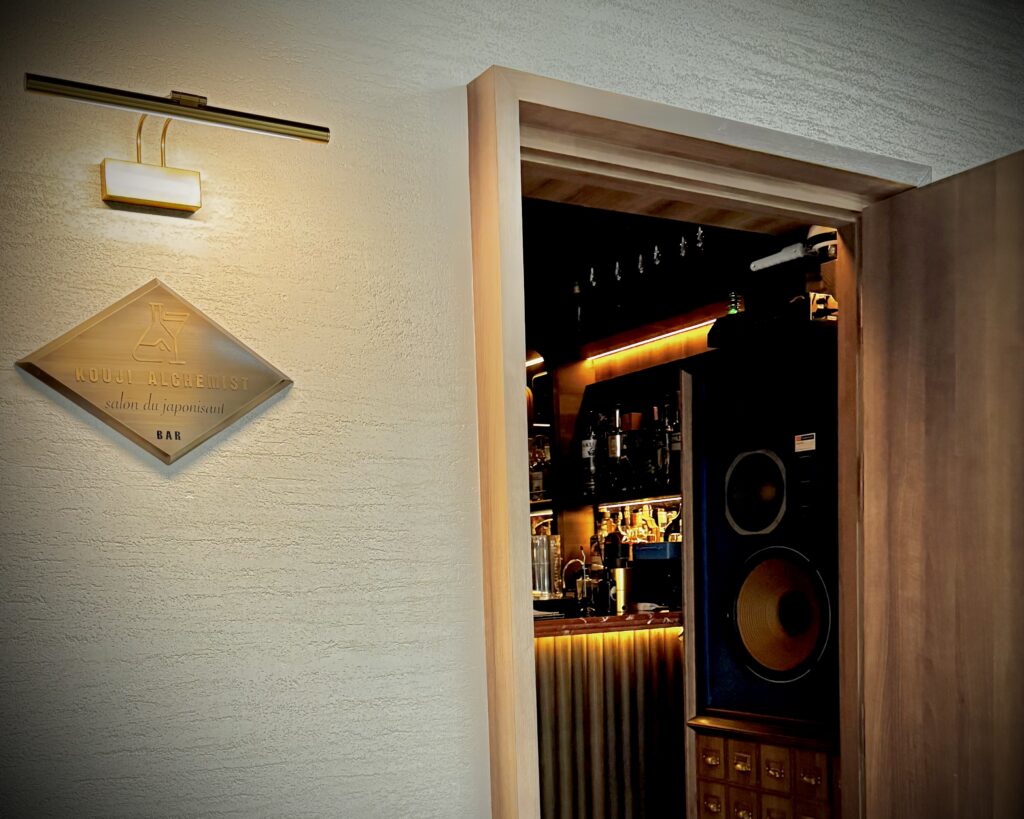
KOUJI ALCHEMIST by salon du japonisant is a premium spirits bar and experiential space in Bangkok’s Sukhumvit district, opened in February 2026. Centered on Japan’s koji fermentation culture, it offers Japanese sake, shochu, and craft spirits alongside koji-inspired cocktails and non-alcoholic beverages. Operated by Bacchus Global Co., Ltd., a Bangkok-based importer specializing in Japanese sake, shochu, and spirits, all products are delivered through a consistent -7°C cold chain from the brewery to Bangkok.
This article is intended solely to explore the market context and cultural heritage of Japanese sake exports to Thailand, and does not aim to promote or encourage the consumption of alcohol. / บทความนี้จัดทำขึ้นเพื่อนำเสนอข้อมูลเกี่ยวกับบริบทของตลาดและมรดกทางวัฒนธรรมของการส่งออกสาเกญี่ปุ่นไปยังประเทศไทย มิได้มีเจตนาเพื่อส่งเสริมหรือโฆษณาเครื่องดื่มแอลกอฮอล์ สำหรับผู้มีอายุ 20 ปีขึ้นไป โปรดดื่มอย่างรับผิดชอบ
Discover the culture behind every bottle
We share brewery stories, tasting notes and the craft of koji & fermentation — for educational and cultural purposes only.
เราถ่ายทอดเรื่องราวจากผู้ผลิต บันทึกรสชาติ และศาสตร์แห่งโคจิและการหมัก — เพื่อการศึกษาและวัฒนธรรมเท่านั้น
Follow on Instagram FacebookRelated Articles
“Cuisine Has Evolved. What About Drinks?” / “The 2026 Table According to Michelin” / “The Day Sake Stands Beside Wine” / “The Liquid Narrative”