

The Aroma of Lychee
In the world of imo shochu, there is an unspoken rule. Sweet potatoes are all about freshness. Once harvested, they should be steamed and processed as quickly as possible. Leave them too long, and they begin to deteriorate. Damaged potatoes create off-odors. So everything moves fast. In imo shochu production, that has long been considered common sense. Hamada Syuzou, based in Ichikikushikino, Kagoshima, chose to challenge that assumption. Not “spoiling,” but “ripening.” What the research team at Hamada Syuzou, founded in 1868, discovered was this: when sweet potatoes are aged in a carefully controlled environment with managed temperature and humidity, they produce abundant precursors of aromatic compounds known as monoterpene alcohols. Linalool, geraniol, nerol. These are the same chemical components found in wine grape varieties such as Gewürztraminer and Muscat. Inside what had been dismissed as “overripe potatoes” lay a vivid fruit aroma reminiscent of lychee and rose. The company named this discovery the “Kojuku Imo” method—literally, “ripened sweet potato” production. By using vacuum distillation, a technique adopted by fewer than 1% of imo shochu producers, they are able to draw out the aroma without destroying it. Black koji then gives the spirit a dry acidity and a rich structural backbone, allowing it to retain a strong presence even in cocktails.
Shochu’s “Mezcal Moment” In June 2025, an article by the British drinks trade publication The Spirits Business drew industry attention. It reported that Iichiko, the world’s largest shochu brand, was aiming to establish itself in the U.S. bar market as a base spirit for cocktails. Iichiko’s general manager said, “Shochu has strong potential to follow the same path as mezcal and enter the mainstream.” Mezcal was once an obscure spirit hidden in tequila’s shadow. Then bartenders in the craft cocktail world “discovered” it, and with terroir and craftsmanship as its strengths, it earned its place among global spirits. The industry believes shochu can follow the same path. The article describes shochu as “under the radar,” but that very lack of visibility may also be its greatest room for growth.
The Workhorse and the Star Player Shochu is finding its way into cocktail culture. This is not just an Iichiko story. DAIYAME 40, too, is a spirit designed from the outset as a cocktail base. Its 40% ABV places it on the same shelf as gin and vodka. From its launch in 2021, it was aimed primarily at overseas bar markets, and it was not sold in Japan until February 2026. That said, even among “cocktail-focused shochu,” the roles could not be more different. While Saiten, Iichiko’s 43% expression for the U.S. market, aims to be a workhorse that blends into any cocktail through its umami and versatility, DAIYAME 40 is a star player—taking center stage with the commanding individuality of its lychee aroma. This distinctive profile has resonated on a global scale, earning accolades at major spirits competitions such as the IWSC, SFWSC, and ISC. Rather than being confined to the shochu category, it is increasingly appreciated as a versatile spirit in its own right. At first glance, the bottle of DAIYAME 40 departs from traditional shochu expectations. Its black “urushi-cut” design, proportioned according to the Yamato ratio (1:1.414)—the same geometry found in historic structures like Horyuji Temple—holds a striking, quiet presence on any shelf.
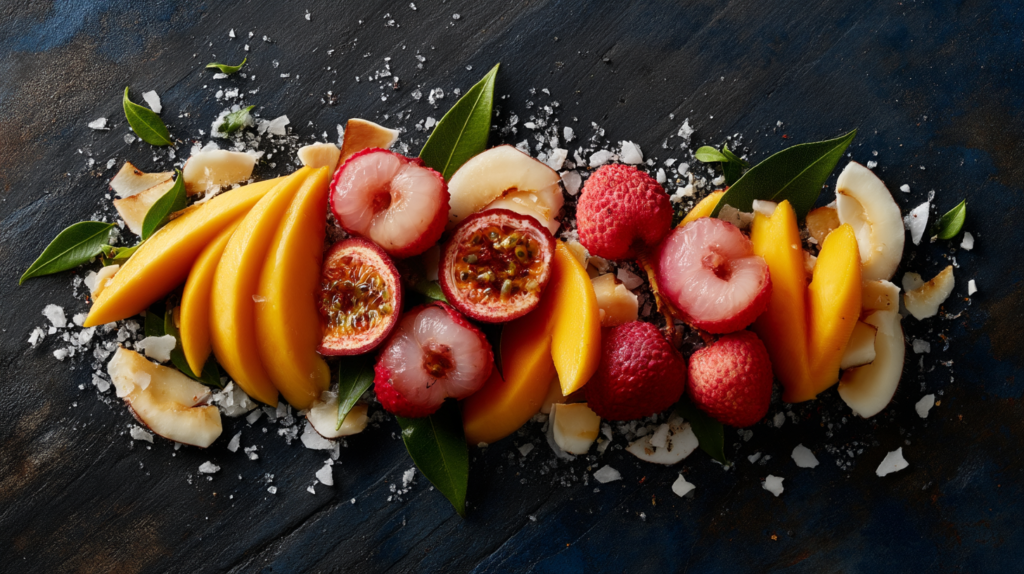
Lychee Connecting Kagoshima and Bangkok There is an intriguing coincidence here. At the core of DAIYAME 40’s aroma is lychee. And Thailand is also known as a place where lychee is grown. What reads as an “exotic flavor” to a bartender in New York becomes, in Bangkok, “a familiar aroma from an unexpected source.” Kagoshima’s sweet potatoes and Bangkok’s food culture meet at a single point: lychee. Mango, passion fruit, coconut. The territory where the tropical fruits overflowing through this city intersect with DAIYAME 40’s aromatic profile remains a fascinating frontier, inviting quiet contemplation of where this pairing might lead. (Mr. Bacchus)
This article is intended solely to explore the distillation techniques and cultural heritage of Hamada Syuzou and the DAIYAME 40 brand, and does not aim to promote or encourage the consumption of alcohol. / บทความนี้จัดทำขึ้นเพื่อนำเสนอข้อมูลเกี่ยวกับเทคนิคการกลั่นและมรดกทางวัฒนธรรมของ Hamada Syuzou และแบรนด์ DAIYAME 40 เท่านั้น มิได้มีเจตนาเพื่อส่งเสริมหรือโฆษณาเครื่องดื่มแอลกอฮอล์ สำหรับผู้มีอายุ 20 ปีขึ้นไป โปรดดื่มอย่างรับผิดชอบ
Discover the culture behind every bottle
We share brewery stories, tasting notes and the craft of koji & fermentation — for educational and cultural purposes only.
เราถ่ายทอดเรื่องราวจากผู้ผลิต บันทึกรสชาติ และศาสตร์แห่งโคจิและการหมัก — เพื่อการศึกษาและวัฒนธรรมเท่านั้น
Follow on Instagram FacebookRelated Articles
“A Debut Recognition” / “The Lychee Aroma Rising from Imo Shochu” / “The Renaissance of Shochu in the High-End Cocktail Scene” / “Lychee Aromas Born from Sweet Potatoes”
Related Product(s)
SEKITOBA Macha / CHILL GREEN Bitter & Tropical / CHILL GREEN / DAIYAME 40 / SASSHU SPIRIT