

Exploring the Potential of Umami
Beyond Sweetness and Acidity For a long time, cocktails have been built on a foundation of sweetness and acidity—the balance between sugary syrups, citrus tang, and the alcoholic backbone of spirits. These three elements have largely defined the structure of modern mixology. But in bars around the world in 2026, a new dimension is being embraced: umami. In a 2026 flavor trend survey conducted by U.S. beverage media outlet VinePair, which gathered insights from 30 prominent bartenders, koji-derived ingredients repeatedly surfaced. Amazake, miso, shio koji, yuzu kosho—these fermented elements are now being explored as foundational components in cocktail construction. Around the same time, Southern Glazer’s Wine & Spirits highlighted the growing influence of Asian flavor profiles as a defining trend for the year.
Why Koji? Koji (Kouji) mold (Aspergillus oryzae) produces enzymes such as proteases and amylases, which break down proteins into amino acids and starches into sugars. Notably, glutamic acid—generated during protein breakdown—is one of the primary sources of umami. This is precisely why miso and soy sauce have become indispensable in global gastronomy. Bartenders’ growing fascination with this process is closely tied to the culinary world. As koji establishes itself in fine dining kitchens as a versatile fermentation medium, its applications naturally extend behind the bar. At KOJICON 2026, an international fermentation conference, experiments demonstrated koji’s enzymatic potential in diverse areas, ranging from cheesemaking and tea production to cacao substitutes.
Shochu as the Bridge Within this movement, shochu plays a vital role. White koji, a mutated strain of black koji discovered in Kagoshima in 1918, is known for naturally producing high levels of citric acid. Cocktails crafted with white-koji shochu offer a delicate, citrus-like brightness that is difficult to replicate with gin or vodka. With an ABV of around 25%, shochu is relatively mild yet rich in complex, koji-derived flavor compounds. It introduces a depth born of fermentation, distinct from botanical infusions or barrel aging. For the contemporary bartender, it represents a third axis alongside sweetness and acidity. In cities like New York, innovative variations of the Negroni using white-koji shochu are already making their mark.
Connections with Bangkok’s Fermentation Culture Thailand possesses its own rich heritage of fermentation, exemplified by staples like kapi (shrimp paste) and nam pla (fish sauce). The glutamic acid found in fish sauce is chemically identical to that derived from koji. In a culture with such a sophisticated culinary palate, the sensitivity to umami is inherently high. At KOUJI ALCHEMIST by salon du japonisant, which opened in February 2026, cocktail development unfolds naturally within this context. Utilizing sake and shochu as a base, the concept invites guests to experience Japan’s fermentation culture through thoughtfully crafted beverages. A menu dedicated to koji-driven experiences is quietly taking shape.
Concurrently, Bangkok’s bar scene is welcoming a range of liqueurs and spirits produced by Shingo Gokan, founder of SG Group—a collective recognized globally for its innovative approach to hospitality. Known for thoughtfully integrating traditional Japanese elements like Okinawan kokuto (brown sugar) and katsuobushi into spirits, this distinctly bartender-driven philosophy resonates deeply with the current evolution of flavors. The presence of these crafted spirits, alongside koji-derived ingredients on Bangkok’s bar counters, reflects how seamlessly the city’s dining culture connects with the forefront of global mixology. Thailand’s fermentation traditions and Japan’s koji culture are now intersecting in a shared space. Bangkok, with its deep-rooted culinary heritage and receptive audience, serves as a natural stage for this continuing dialogue. In December 2024, traditional sake brewing utilizing koji mold was recognized as a UNESCO Intangible Cultural Heritage. Today, that centuries-old tradition is moving beyond the brewery walls, being respectfully reinterpreted at the bar counter. The profound knowledge cultivated by brewers in dialogue with koji is now reaching the world, one glass at a time. (Mr. Bacchus)
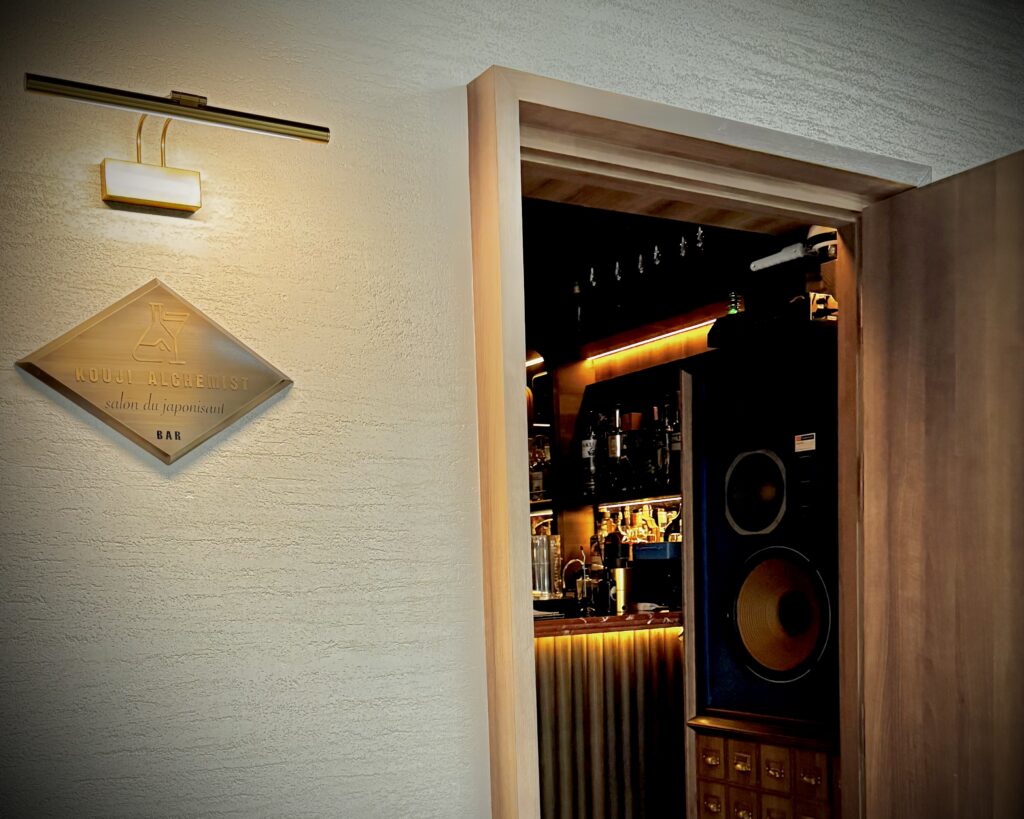
KOUJI ALCHEMIST by salon du japonisant is a premium spirits bar and experiential space in Bangkok’s Sukhumvit district, opened in February 2026. Centered on Japan’s koji fermentation culture, it offers Japanese sake, shochu, and craft spirits alongside koji-inspired cocktails and non-alcoholic beverages. Operated by Bacchus Global Co., Ltd., a Bangkok-based importer specializing in Japanese sake, shochu, and spirits, all products are delivered through a consistent -7°C cold chain from the brewery to Bangkok.
This article is intended solely to explore the cultural heritage and evolving applications of koji fermentation in the global beverage industry, and does not aim to promote or encourage the consumption of alcohol. / บทความนี้จัดทำขึ้นเพื่อนำเสนอข้อมูลเกี่ยวกับมรดกทางวัฒนธรรมและการประยุกต์ใช้การหมักโคจิในอุตสาหกรรมเครื่องดื่มระดับโลกเท่านั้น มิได้มีเจตนาเพื่อส่งเสริมหรือโฆษณาเครื่องดื่มแอลกอฮอล์ สำหรับผู้มีอายุ 20 ปีขึ้นไป โปรดดื่มอย่างรับผิดชอบ