The Ascent of Japan’s “National Fungus” to Global Culinary Stardom

In 2026, there is one keyword no discerning dialogue on global gastronomy is complete without: “Kouji.” Michelin-starred establishments have heralded fermentation and a revival of fire-based cooking as two of the year’s defining movements, and even the James Beard Foundation’s restaurant trend forecast highlights Kouji-infused cocktails. This microscopic marvel, which has anchored Japan’s brewing heritage for over a millennium, has now transcended continents, inspiring visionary chefs across the globe.
The Title of “National Fungus” — The True Essence of Kouji Kouji mold (Aspergillus oryzae) is a filamentous fungus officially crowned Japan’s “national fungus” by the Brewing Society of Japan in 2006. It plays an indispensable role in nearly all of Japan’s artisanal fermented foods—miso, soy sauce, premium sake, shochu, mirin, and vinegar—boasting a lineage that stretches back at least a thousand years. The unparalleled brilliance of Kouji lies in its ability to master two functions simultaneously: saccharification, converting starches into refined sugars, and protease activity, breaking proteins down into rich amino acids. This dual enzymatic action pioneered the highly complex parallel multiple fermentation process utilized in sake brewing—a technique virtually unrivaled globally—and imparts the profound umami found in miso and soy sauce. In essence, Kouji is the grand architect of Japanese flavor and the foundational force behind the nation’s fermentation artistry.
The Noma Phenomenon — How the Nordics Sparked the Kouji Renaissance Kouji’s definitive arrival in Western haute cuisine can largely be traced back to Noma in Copenhagen. Their renowned fermentation lab cultivated Kouji not on traditional soybeans, but on indigenous grains and nuts, crafting avant-garde creations like “local garum” and “Nordic-style miso.” This revolutionary philosophy—marrying time-honored Japanese techniques with distinct local terroirs—ignited a spark among elite chefs worldwide. By 2026, the culinary applications of Kouji have become breathtakingly diverse. In Philadelphia, shio Kouji elevates avant-garde desserts. In Mexico City, it graces bespoke martinis, imparting a captivating salinity and complexity. In Washington, D.C., and Honolulu, it is highly coveted both for tenderizing prime cuts and for lending unparalleled umami to plant-based charcuterie. Increasingly, elite dining venues are culturing their own bespoke Kouji to craft proprietary garums and soy sauces, heralding a new era of “terroir fermentation.”
Elevating the Art of Mixology — A New Frontier in Fermented Cocktails Kouji’s allure no longer remains confined to the kitchen. In the sophisticated 2026 bar scene, the fascination with fermented botanicals is soaring, particularly within the refined low-ABV cocktail repertoire. Artisanal tepache, kombucha, lacto-fermented fruit essences, and Kouji are taking center stage as luxurious elements that introduce vibrant acidity, velvety texture, and profound complexity to the glass. The James Beard Foundation has pinpointed a shift toward savory, texturally rich drink profiles as a hallmark trend of 2026, making the umami dimensions derived from Kouji absolutely essential. High-end cocktail architecture is shifting away from conventional sweetness, evolving toward structures defined by the elegant depth that only master fermentation can provide. This evolution perfectly mirrors the luxury industry’s broader pivot towards premiumization and immersive experiential value.
Pioneering Sustainable Gastronomy — Kouji’s Potential in Protein Innovation Kouji’s transformative power extends far beyond the realm of epicurean indulgence. A groundbreaking 2025 study in npj Science of Food revealed that by enriching rice and corn with a nitrogen source and fermenting them with Kouji, scientists successfully amplified the protein content by an astounding 2.32 times. Because this elegant technique requires no highly specialized industrial equipment and rapidly enhances grain profiles, it presents a highly promising avenue for global food security. This same microscopic entity seamlessly bridges “the future of food via advanced biotechnology” with a millennium of artisanal heritage. This duality alone speaks volumes about the breathtaking scope of Kouji’s potential.
Transcending Boundaries, The Alchemy of White and Black Kouji The innovation surrounding Kouji is not exclusive to international kitchens. Japan’s own distinguished brewing industry is accelerating boundaries with extraordinary vigor. Historically, sake brewing relied predominantly on yellow Kouji (A. oryzae). Recently, however, progressive master brewers have introduced white Kouji—a staple of premium shochu—and black Kouji, the soul of awamori, into their sake crafting. White Kouji yields an abundance of citric acid, blessing the sake with a luminous, citrus-driven elegance rarely seen in traditional profiles. Black Kouji, similarly, is birthing entirely new sake paradigms characterized by bold acidity and a remarkably distinct persona. Simply alternating the Kouji strain can orchestrate completely different expressions from the very same harvest of rice. It is a mesmerizing testament to the vast enzymatic repertoire Kouji possesses—and a gentle reminder that the majestic world of fermentation remains a boundless frontier.
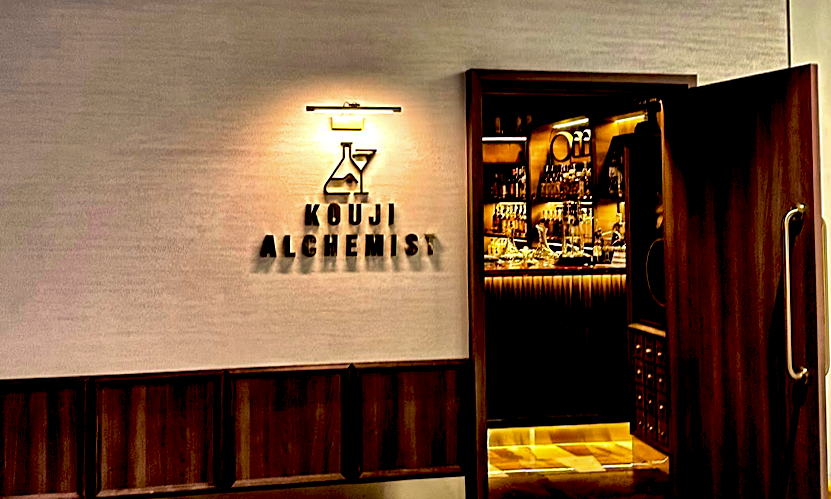
The Future of Kouji, A Bangkok Perspective Bangkok’s dynamic epicurean landscape is vibrantly embracing the Kouji renaissance. Following the historic relaxation of afternoon alcohol sales restrictions in December 2025—a first in 53 years—the landscape for upscale dining and bespoke bars has been beautifully transformed. With a rapidly expanding demographic of premium-oriented connoisseurs, exquisite Kouji-derived techniques, such as delicate miso glazes and artisanal garums, are poised to become true hallmarks of exclusivity within Bangkok’s haute cuisine. Simultaneously, Bangkok’s mixology scene stands as one of the most sophisticated in Southeast Asia. The global ascension of fermentation-forward cocktails feels like a seamless evolution for the city’s master bartenders. Furthermore, the presence of distinguished boutiques like KOUJI ALCHEMIST by Salon du Japonisant at Velaa Sindhorn Village, offering immersive journeys into Japanese fermentation and premium craft spirits, beautifully illustrates that the passion for Kouji is radiating far beyond standard dining venues. Kouji now stands as a magnificent cultural bridge, elegantly connecting Japan’s brewing legacy with Thailand’s vibrant culinary soul.
What Kouji Asks Us to Consider Kouji is also inspiring captivating academic discourse. The term itself is wonderfully layered—referencing the delicate mold spores, the master enzymes they yield, or the final fermented masterpiece. How this nuanced heritage will be curated in the global luxury market—and who will emerge as the ultimate stewards of this artisanal legacy—are compelling questions currently captivating cultural anthropologists. Japan’s national fungus, carrying the weight of a thousand years of history, has triumphantly emerged as one of the most exhilarating ingredients in the modern global kitchen of 2026. This is far more than a fleeting culinary trend. It is a profound moment in which fermentation—one of humanity’s most ancient arts—is being beautifully reimagined through the visionary lens of modern luxury gastronomy. The true legacy of Kouji is only just unfolding.
This article is intended solely to explore the cultural heritage and global significance of koji (Aspergillus oryzae) in fermentation and gastronomy, and does not aim to promote or encourage the consumption of alcohol. / บทความนี้จัดทำขึ้นเพื่อนำเสนอข้อมูลเกี่ยวกับมรดกทางวัฒนธรรมและความสำคัญระดับโลกของโคจิ (Aspergillus oryzae) ในการหมักและศาสตร์การทำอาหาร เท่านั้น มิได้มีเจตนาเพื่อส่งเสริมหรือโฆษณาเครื่องดื่มแอลกอฮอล์ สำหรับผู้มีอายุ 20 ปีขึ้นไป โปรดดื่มอย่างรับผิดชอบ
KOUJI ALCHEMIST by Salon du Japonisant — An exclusive, experiential boutique in Bangkok, curating the finest in Japanese fermentation culture and premium craft spirits. (Velaa Sindhorn Village, 87 Lang Suan Rd.,)