

Domaine de Cazaban and the Practice of Non-Intervention in AOP Cabardès”
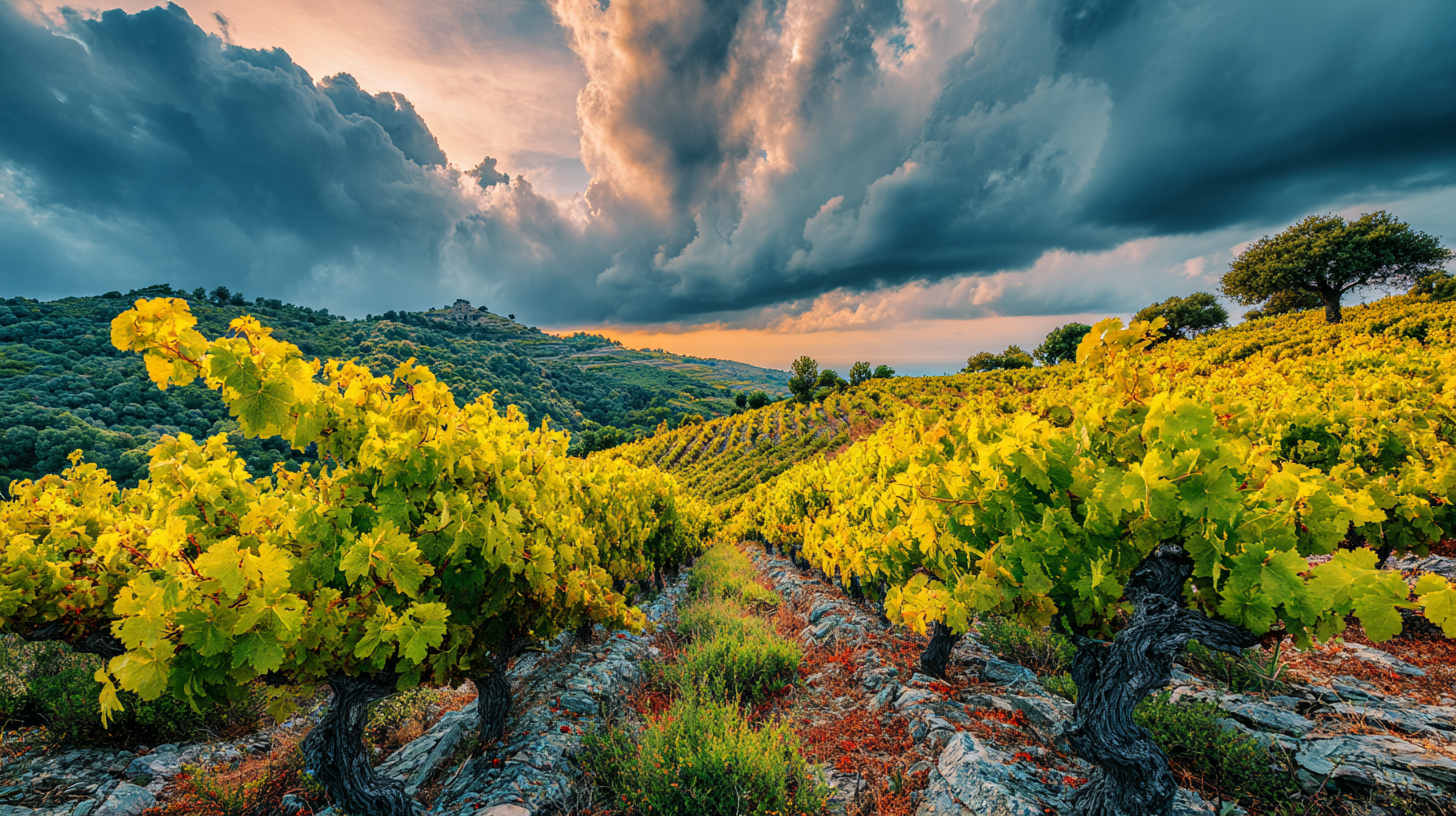
At the northern edge of the Languedoc in southern France, just a few kilometers from the fortified walls of Carcassonne, lies the exclusive appellation of AOP Cabardès. Even within the vast landscape of French wine regions, its origins are exceptionally rare. Warm, dry winds blowing in from the Mediterranean gracefully converge with cool, humid air currents from the Atlantic. This climatic tension between two opposing influences gives rise to wines unlike those produced anywhere else.
A Masterful Symphony — Mediterranean and Atlantic Varieties in Coexistence The defining characteristic of AOP Cabardès lies in its prestigious blending standards. Unlike other southern French appellations, honored traditions dictate that both Mediterranean varieties (such as Syrah and Grenache) and Atlantic varieties (such as Merlot, Cabernet Sauvignon, and Cabernet Franc) be cultivated and harmoniously blended. Domaine de Cazaban’s flagship wine, Cuvée Domaine 2020, is composed of Syrah and Merlot. Syrah, ripened under the Mediterranean sun, contributes spice and structure, while Merlot—shaped by cooler Atlantic influences—brings supple fruit and roundness. The masterful union of these contrasting personalities creates a depth and complexity that no single variety could achieve on its own.
Equestrian-Tended Vineyards at 400 Meters — Practicing Biodynamics Founded in 2007, Domaine de Cazaban received organic certification from Ecocert in 2010 and biodynamic certification from Demeter in 2013. In the vineyards, biodynamic preparations made from plants such as nettle, horsetail, and valerian are used, eschewing synthetic interventions entirely. On the steep plots reaching 400 meters in elevation at the foothills of the Montagne Noire, cultivation is carried out through the gentle strength of draft horses rather than heavy machinery. Horse plowing prevents excessive soil compaction and preserves the delicate physical conditions that allow vine roots to grow deep. This deliberate choice—prioritizing soil health and microbial life over mere efficiency—clearly expresses the true philosophy of the domaine. Schist and clay-limestone soils, the cooling Tramontane wind descending from the northwest, and the aromatic scrubland of the garrigue all converge here. Together, these elements imprint the wines with a taut mineral structure and the unmistakable aromatics of this breathtaking landscape.
Pure and Untouched — Winemaking According to Vin Méthode Nature Winemaking follows the rigorous standards of Vin Méthode Nature, guided by a philosophy of strict non-intervention. All grapes are harvested by hand and transported to the cellar in small 15-kilogram crates. This prevents the delicate fruit from being crushed under its own weight, ensuring no unintended oxidation or premature fermentation occurs. Grapes flow gracefully into vats via gravity rather than harsh pumps. No cultured yeasts, enzymes, or additives are used; fermentation relies entirely on native yeasts present on the grape skins and within the sanctuary of the cellar. Maceration lasts four to five weeks, with temperatures carefully maintained at a maximum of 24°C. Rather than aggressive extraction techniques, a gentle extraction is allowed to unfold naturally over time. After maturation in wooden vats, the wine is aged for approximately eight months in Burgundy barrels. The wine is bottled unfined and unfiltered, with sulfur added only at the faintest whisper. Free from animal-derived fining agents, these wines cater to the mindful lifestyle of vegans and vegetarians alike. An expression of pure elegance: just grapes and a trace amount of sulfur. For the discerning connoisseur who values uncompromising purity and ethical refinement, this clarity of composition represents the ultimate luxury.
The 2020 Vintage — Rare Concentration and Unyielding Elegance In Languedoc-Roussillon, the 2020 growing season began with unusually warm spring temperatures that advanced budbreak by thirteen days. A hot, dry summer reduced yields by 20–30 percent. Harvest began in August—an exceptionally early start. The reduced yields graced the remaining fruit with remarkable concentration. Experts described the vintage as achieving a rare balance of elegance, freshness, and complexity. A yield of just 20 hectoliters per hectare is a testament to the domaine’s uncompromising pursuit of perfection, even in a demanding year. On these hills where two climates meet, human intervention is elevated through mindful restraint. The wines of Domaine de Cazaban are crafted through a quiet, masterful technique—one that listens carefully to the true voice of the terroir. (Mr.Bacchus)
This article is intended solely to explore the winemaking artistry and cultural heritage of Domaine de Cazaban and the Cuvée Domaine brand, and does not aim to promote or encourage the consumption of alcohol. / บทความนี้จัดทำขึ้นเพื่อนำเสนอข้อมูลเกี่ยวกับศิลปะการทำไวน์และมรดกทางวัฒนธรรมของ Domaine de Cazaban และแบรนด์ Cuvée Domaine เท่านั้น มิได้มีเจตนาเพื่อส่งเสริมหรือโฆษณาเครื่องดื่มแอลกอฮอล์ สำหรับผู้มีอายุ 20 ปีขึ้นไป โปรดดื่มอย่างรับผิดชอบ