

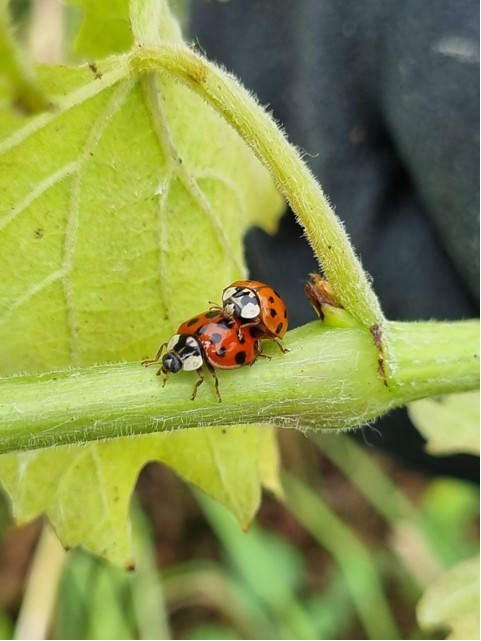
“Observing the living while listening to his organized murmur.”
Alain Moueix, using certified biodynamic cultivation at Château Fonroque, AOC St Emilion Grand Cru and Château Mazeyres, AOC Pomerol.
Quick overview
We’re often asked this question by our customers. They find it difficult to distinguish the realities behind each of these terms: conventional wine, sustainable wine, organic wine, biodynamic wine, vegan wine, natural wine or “Vin Méthode Nature”.
It’s true that it’s easy to get confused. Overview.
Let’s start by recalling two things. “Bio”, in ancient Greek, means “life”. We all know what the opposite of life is.
For 8000 years, from the time man had the idea of pressing grapes, fermenting their juice and making wine, until the two world wars, all wines were organic. For the simple reason that pesticides, insecticides, herbicides and fungicides derived from synthetic industrial chemistry did not exist. They arrived after the two world wars that generated research on chemical weapons.
Look at the 1855 classification of Bordeaux wines. Do you see any mention of “Organic Wine”? The concept itself did not exist. Pesticides were still non-existent at that time. A concept is born of the need to formulate an idea, a fact, a new reality.
What are the common points & the differences?
The common denominator in these three terms is the rejection of what is called “conventional” viticulture; that is to say, the rejection, in the name of respect for the living, whatever form it takes, of vine cultivation methods based on the widespread use of synthetic chemicals to optimise production, whose environmental impact is catastrophic: soil depletion, biodiversity impoverishment, water and air contamination, accelerated disappearance of numerous species of insects, birds, fungi and bacteria, all essential for the maintenance of life on Earth. Curve of cancers and other diseases related to the ingestion of chemical plant protection products in exponential increase.
In clear terms, a threat for the environment, our environment, our common home, for the health of all living beings. For our survival.
In 70 years, man has destroyed more than in these past 8000 years. We are all well aware that this madness must be stopped if we want to survive as a species.
Here are the common points. Let’s now see the differences.
_
ORGANIC WINES
Agricultural practices
The use of pesticides, herbicides, fungicides and synthetic chemical fertilizers is prohibited. Producers must use natural methods to fertilize the soil and control diseases and pests. Compost, green manure, mechanical weeding or mulching, which prevents weeds from growing between the rows and maintains moisture, are part of the range of possible practices[1].
To prevent vine diseases such as mildew, organic winegrowers only use “contact” natural products, like copper and sulphur, which do not penetrate the plants; when “conventional” viticulture uses “systemic” chemicals products which penetrate the plant and end up in the fruit, then in the juice, then in the wine, then in our organisms. This is a crucial point.
However, the specifications only concern the vine and not the winemaking.
[1] Note that many winemakers fully practice organic viticulture and yet do not seek certification for financial, bureaucratic, or any other personal reasons.
Winemaking practices
Indeed, if an organic wine is made from grapes grown in accordance with the principles of organic farming, the specifications do not require the use of indigenous yeasts, which are the signature of the terroir. Additives, such as sulfite, and oenological inputs can be widely used.
So, it’s important to know the producers, to know their way of working. That’s where we can make a difference, where our work takes on its full meaning. Meeting them, talking to them, visiting their estates, listening to them and tasting their wines, in order to be able to guarantee our customers products of high quality and irreproachable sanitary quality.
Certification
Organic wines are certified by an approved body to ensure they meet specific standards for organic production. There are five approved certifying bodies, the most well-known of which is “Ecocert”. There are two logos: a French one and a European one, the European leaf, mandatory for pre-packaged food of European origin.


_
BIODYNAMIC WINES
Rémy de Gourmont
Spirit & agricultural practices
Spirit
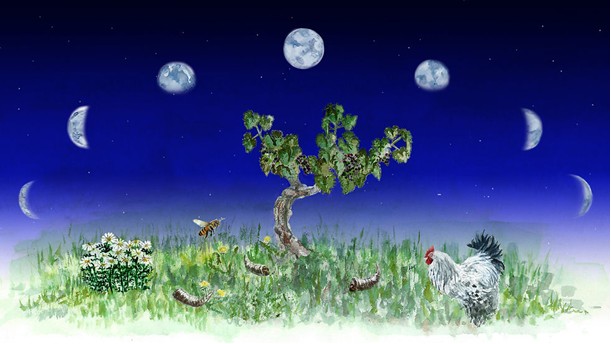
The concept behind biodynamics is that everything in the universe is interconnected. That interconnectivity implies taking into consideration all the actors in this natural conversation: soil, plants, animals, people and planets. In one word, our environment, from the nearest to the furthest. Everything counts.
Agricultural practices
Biodynamic agricultural practices – etymologically, a practice that uses the energy that moves life – are influenced by the work of Rudolf Steiner (his writings of 1924).
From 1960 and during fifty years of research, Maria Thun, a pioneer of biodynamic gardening and the use of cosmic and lunar rhythms, deepened the concept by highlighting the link between plants and certain planets in the solar system, their influence on the proper development and health of plants.
In practice, this materializes by:
- herbal preparations, sprayed on the vine
- soil fertilization based on cow dung buried in the ground
- the consideration of cosmic and lunar rhythms in order to make the best use of natural forces favourable to plants, animals, and humans. This led her to establish a lunar calendar.
The “Maria Thun Biodynamic Calendar”, first published in the 1950s, became a cornerstone of biodynamic agriculture, providing detailed guidance for farmers and gardeners based on moon and cosmic rhythms. All in all, nothing but common sense. A return to thousand-year-old farming practices that humans have developed over the ages through their fine observation of the rhythms of nature. And beyond that, of the Universe. Without forgetting the new contributions of actors like Steiner and Thun.
Winemaking practices
Like in biologic agriculture, the wine is made from grapes grown without any types of synthetic chemical pesticides. But the specifications are more demanding. The list of oenological inputs is much more strictly limited, and flavouring additives are prohibited. Yeasts produced using petrochemicals or synthetic chemicals are strictly prohibited. Only indigenous yeasts, which are the signature of the terroir, are authorised. Biodynamics values natural yeasts, seeking to maximize the unique expression of the terroir and climatic conditions of each vintage.
Certification
There are two main certifying organisations, each with its own certification logo: Demeter, – name of the goddess of fertility and mother of the Earth in Greek mythology – created in Germany in 1928, which certifies agricultural and processed products, and Biodyvin, created in 1995, which only concerns viticulture and winemaking.


–
VIN NATURE or VIN NATUREL
There is no official definition of the term, no legislation defining this practice. Consequently, this term is prohibited and cannot be displayed on a label.
Agricultural & wine making practices
However, following an international demand that is constantly increasing, a desire is emerging for a definition that provides a legal framework for marketing. The road to legalisation has been a three-stage process.
2000, creation of the “Association des Vins Naturels” – AVN -. It proposes the following definition of a Natural Wine,
- A wine whose grapes come from organic or biodynamic agriculture, manually harvested;
- A wine vinified with its indigenous yeasts and bottled without any input or additive.
2010, creation of the “Association des vins S.A.I.N.S.” Sans Aucun Intrant Ni Sulfite (ajouté) – Without Any Input or Sulfite (added) -.
2019, creation of an union, a label and a charter dedicated to natural wine with the aim of finding a legal framework officially recognized by the competent authorities. This is the real innovation. This is how the “Vin méthode Nature” was born, an appellation now recognized by the French competent authorities.
Certification
Small change in the definition of Natural Wine from AVN 2000. If no sulphite is added before and during fermentation, a possibility of addition less than or equal to 30 mg/l is allowed before bottling, regardless of the color and type of wine. There is then an obligation to provide information on the addition of sulphites on the label via a dedicated logo. Hence the existence of two logos, one without any sulfite, the other with added sulphites.
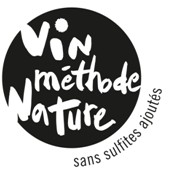
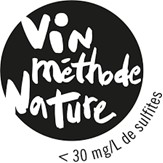
The maximum permitted level for conventional wines is 150 mg/l for the reds, 200 mg/l for the whites.
_
What is important to remember about this movement is its desire to insist on respect for life, in whatever form it takes. It is an ethical positioning, a global vision that goes beyond the sole framework of viticulture to embrace, with respect and gratitude, the entire Living.
What is wine? What are we asking him? We give the floor to Alain Moueix, the winemaker at Château Fonroque, one of the leading figures in Bordeaux who initiated this movement towards a return to an agriculture respectful of the Living, producing healthy, lively and authentic wines. And bearer of a global vision.
“Because a wine’s vocation is to express what its terroir has to offer, our role as winemakers is to reveal its uniqueness. If we let it express itself, it tells the story of the place, its history, and reveals a large part of the winemaker’s personality.”
And we who, as an importer, have chosen to collaborate in this work of life, are committed to respecting and promoting the vital forces that drive it. To provide our customers with healthy and living wines. High quality wines that convey the delicate murmur of the forces that animate their Terroir. And beyond, those of the universe. There is our place.
Discover the culture behind every bottle
We share brewery stories, tasting notes and the craft of koji & fermentation — for educational and cultural purposes only.
เราถ่ายทอดเรื่องราวจากผู้ผลิต บันทึกรสชาติ และศาสตร์แห่งโคจิและการหมัก — เพื่อการศึกษาและวัฒนธรรมเท่านั้น
Follow on Instagram FacebookRelated Articles
“An 8,000-Year-Old Earthen Vessel” / “Natural Wine is Quietly Reshaping Asia’s Culinary Landscape” / “Champagne! Vincent Charlot: A Biodynamic Approach in Champagne” / “Vine and Wine in the Bible” / “The 1924 Lectures and the Bangkok Wine List”